简体中文
简体中文 English
- PRODUCTSIndustrial PoE Media Converter Industrial Media Converter Industrial Unmanaged PoE Switch Industrial Managed PoE Switch Industrial Unmanaged Ethernet Switch Industrial Managed Ethernet Switch Industrial PoE Injector Industrial PoE Splitter Industrial PoE Extender DIN-Rail Power Supply Rackmount DIN-Rail BracketHDMI Over Fiber ConverterSDI Over Fiber ConverterSDI Over Fiber Converter 12G-SDI Over Fiber Converter 3G-SDI Over Fiber Converter HD-SDI Over Fiber ConverterDVI Over Fiber ConverterAHD/CVI/TVI Over Fiber
- SOLUTIONS
- Download
- ABOUT
- CONTACT


Outdoor surveillance systems play a critical role in protecting industrial facilities, transportation networks, utility substations, smart cities, and remote infrastructure. Unlike indoor networks, outdoor deployments must withstand extreme temperatures, lightning strikes, dust, humidity, and long transmission distances.
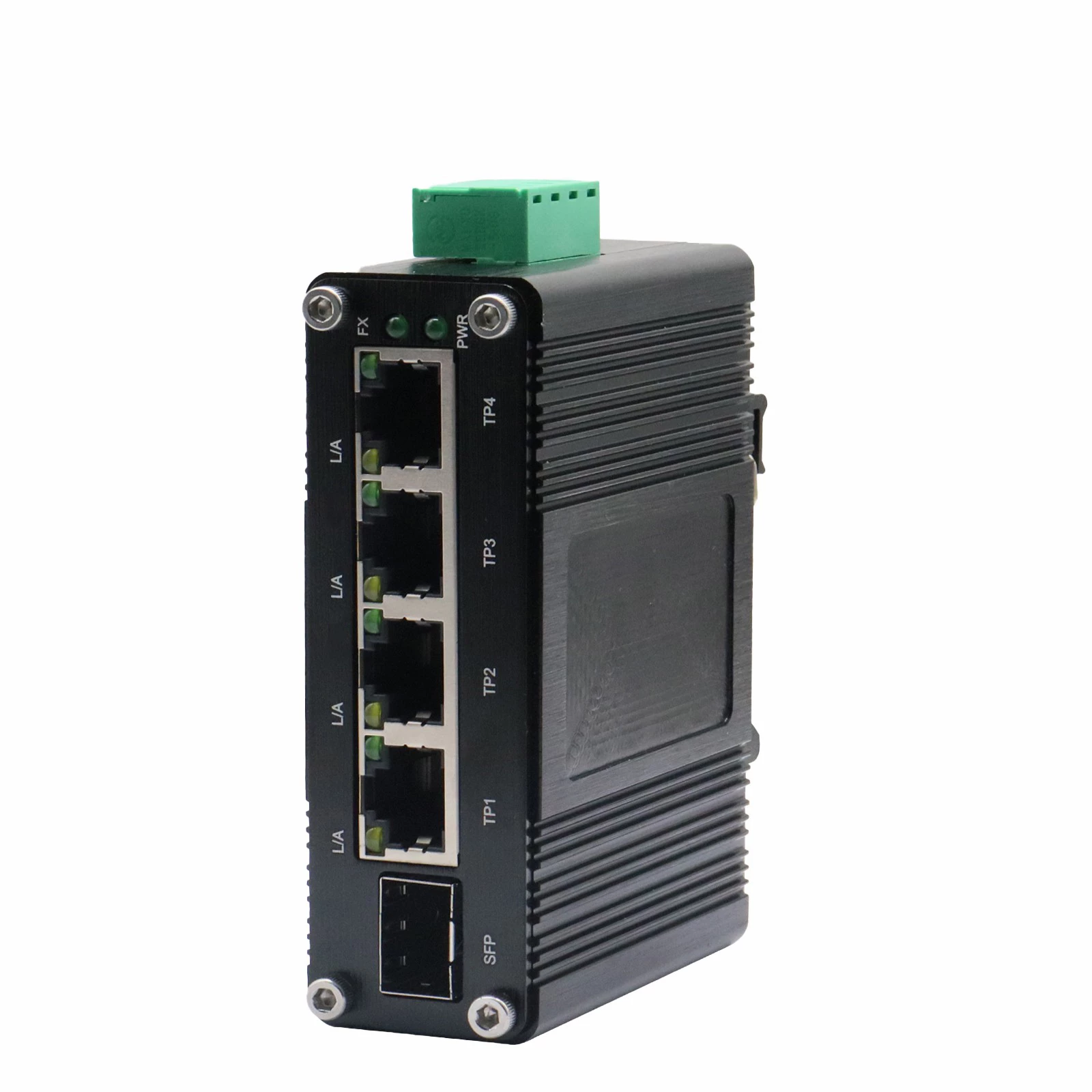
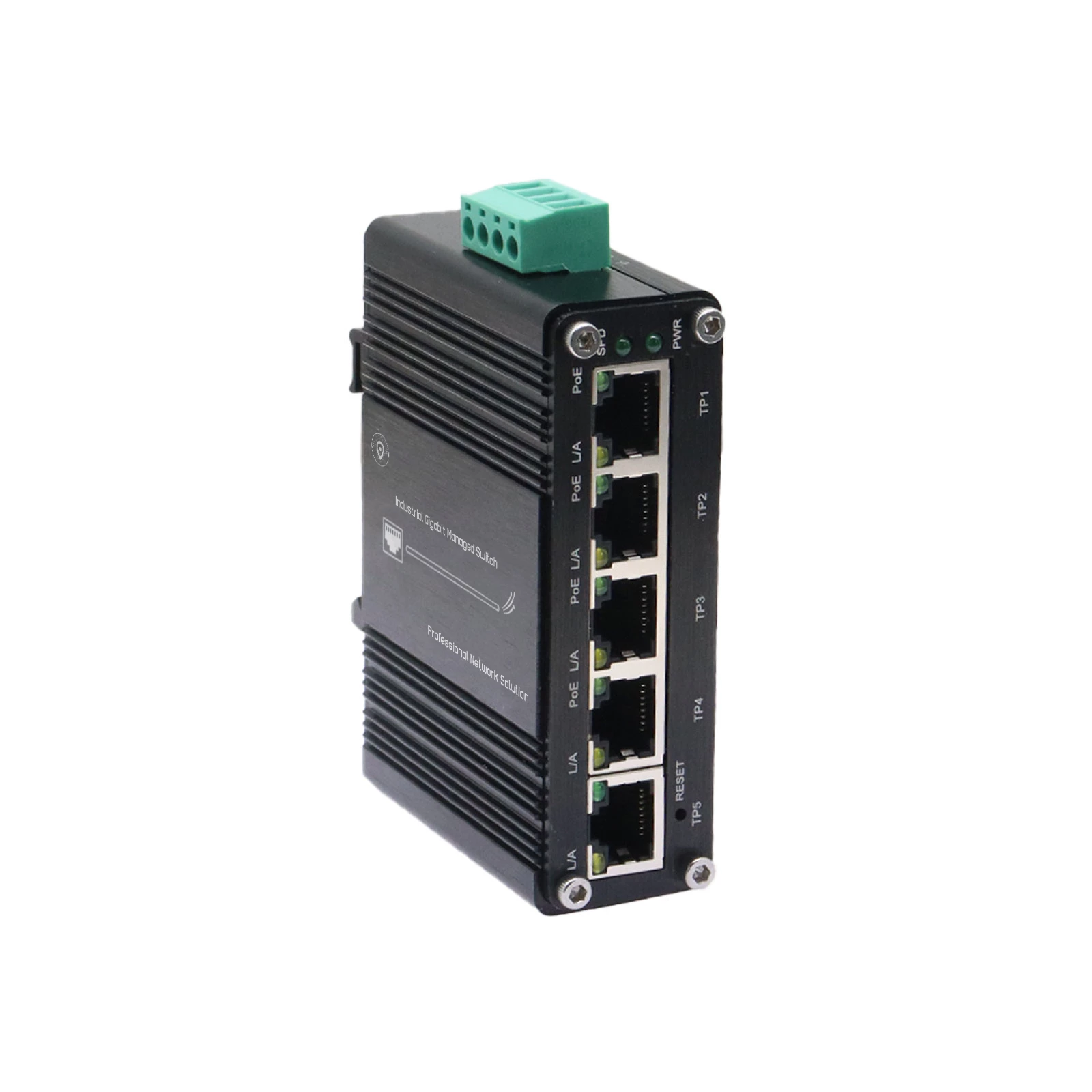
A reliable Industrial PoE Switch provides both power and data connectivity to IP cameras through a single Ethernet cable while ensuring stable operation in harsh environments. This guide explains how to design and deploy outdoor surveillance networks using Industrial PoE Switches.
Why Outdoor Surveillance Requires Industrial PoE Switches
Standard commercial switches are typically designed for office environments and may fail when exposed to outdoor conditions.
Industrial PoE Switches offer:
Wide operating temperature range (-40°C to 75°C)
Industrial-grade surge protection
Redundant power inputs
Fanless cooling design
Rugged metal housing
Long MTBF service life
These features ensure reliable network operation in demanding outdoor applications.
Key Challenges of Outdoor Surveillance Networks
Extreme Weather Conditions
Outdoor equipment may experience:
High summer temperatures
Freezing winter conditions
Rain and humidity
Dust and sand exposure
Industrial Ethernet Switches are specifically designed to maintain stable performance under these conditions.
Long-Distance Transmission
Cameras are often deployed hundreds or thousands of meters away from the control center.
Examples include:
Highways
Railways
Airports
Oil and gas facilities
Utility substations
Long-distance connectivity requires careful network planning and fiber integration.
Power Delivery Requirements
Modern IP cameras consume more power than ever before.
Common devices include:
PTZ cameras
AI cameras
Thermal imaging cameras
License plate recognition systems
Selecting a switch with sufficient PoE budget is essential.
Benefits of Using PoE for Outdoor Cameras
Simplified Installation
PoE technology allows both power and data to be delivered through one Ethernet cable.
Benefits include:
Reduced cabling costs
Faster deployment
Easier maintenance
Improved reliability
Centralized Power Management
Managed Industrial PoE Switches allow operators to:
Monitor power consumption
Reboot cameras remotely
Detect faults quickly
Manage connected devices
This reduces maintenance costs and downtime.
Choosing the Correct PoE Standard
IEEE 802.3af
Maximum Power:
15.4W per port
Suitable for:
Fixed IP cameras
Basic surveillance cameras
IEEE 802.3at (PoE+)
Maximum Power:
30W per port
Suitable for:
PTZ cameras
Infrared cameras
Advanced surveillance devices
IEEE 802.3bt
Maximum Power:
60W–90W per port
Suitable for:
Multi-sensor cameras
AI-powered devices
High-power edge equipment
Always verify camera power requirements before deployment.
Calculating Outdoor PoE Power Budget
Example:
12 PTZ Cameras × 25W
Total Power:
300W
Recommended Safety Margin:
300W × 1.3 = 390W
Recommended Switch:
16-Port Industrial PoE Switch
400W–480W PoE Budget
Maintaining spare capacity improves network reliability and future scalability.
Why Fiber Uplinks Are Essential
Outdoor surveillance networks often cover large areas where copper cables become impractical.
Fiber uplinks provide:
Longer Transmission Distance
Copper: up to 100 meters
Fiber: several kilometers
Improved EMI Protection
Fiber is immune to:
Lightning interference
Electromagnetic noise
Ground loop issues
Higher Bandwidth
Ideal for:
4K cameras
AI video analytics
Large-scale surveillance systems
Industrial PoE Switches with SFP or SFP+ ports are highly recommended.
Recommended Network Architecture
Small Outdoor Deployment
Components:
4–8 IP Cameras
1 Industrial PoE Switch
NVR
Applications:
Parking lots
Small warehouses
Building perimeters
Medium Outdoor Deployment
Components:
Multiple PoE Switches
Fiber aggregation
Centralized storage
Applications:
Industrial parks
Logistics centers
Commercial campuses
Large Outdoor Deployment
Components:
Layer 3 Industrial Switches
10G fiber backbone
Core aggregation switches
Applications:
Smart cities
Airports
Rail transit systems
Utility infrastructure
Surge Protection Considerations
Outdoor cameras are vulnerable to lightning strikes and power fluctuations.
Choose Industrial PoE Switches with:
Surge protection
ESD protection
Over-voltage protection
Short-circuit protection
Additional external surge protectors may be required in lightning-prone areas.
Advantages of Managed Industrial PoE Switches
Managed switches provide advanced functions such as:
VLAN
Separates surveillance traffic from business traffic.
QoS
Prioritizes video streams to prevent packet loss.
IGMP Snooping
Optimizes multicast video transmission.
SNMP
Enables centralized monitoring and diagnostics.
ERPS Ring Protection
Provides rapid network recovery in case of cable or equipment failure.
Common Deployment Mistakes
Insufficient PoE Budget
Many installations underestimate camera power consumption.
Always calculate total power demand and include a safety margin.
No Fiber Backbone
Large outdoor deployments should use fiber uplinks to improve performance and reliability.
Ignoring Environmental Conditions
Commercial switches may fail quickly in harsh outdoor environments.
Industrial-grade equipment offers significantly longer service life.
Lack of Redundancy
Single points of failure can cause complete surveillance outages.
Use redundant power supplies and ring network architectures whenever possible.
Best Industries for Outdoor Industrial PoE Switches
Industrial PoE Switches are widely used in:
Smart City Surveillance
Highway Monitoring Systems
Railway Security Networks
Utility Substations
Solar Power Plants
Oil & Gas Facilities
Manufacturing Plants
Port and Harbor Operations
Conclusion
Outdoor surveillance systems require more than just cameras. A properly designed network infrastructure built around an Industrial PoE Switch ensures reliable power delivery, stable connectivity, and long-term operation in challenging environments.
By selecting the correct PoE standard, calculating sufficient power budgets, utilizing fiber uplinks, and implementing redundancy mechanisms, organizations can build secure and scalable outdoor surveillance networks capable of supporting future growth.