简体中文
简体中文 English
- PRODUCTSIndustrial PoE Media Converter Industrial Media Converter Industrial Unmanaged PoE Switch Industrial Managed PoE Switch Industrial Unmanaged Ethernet Switch Industrial Managed Ethernet Switch Industrial PoE Injector Industrial PoE Splitter Industrial PoE Extender DIN-Rail Power Supply Rackmount DIN-Rail BracketHDMI Over Fiber ConverterSDI Over Fiber ConverterSDI Over Fiber Converter 12G-SDI Over Fiber Converter 3G-SDI Over Fiber Converter HD-SDI Over Fiber ConverterDVI Over Fiber ConverterAHD/CVI/TVI Over Fiber
- SOLUTIONS
- Download
- ABOUT
- CONTACT


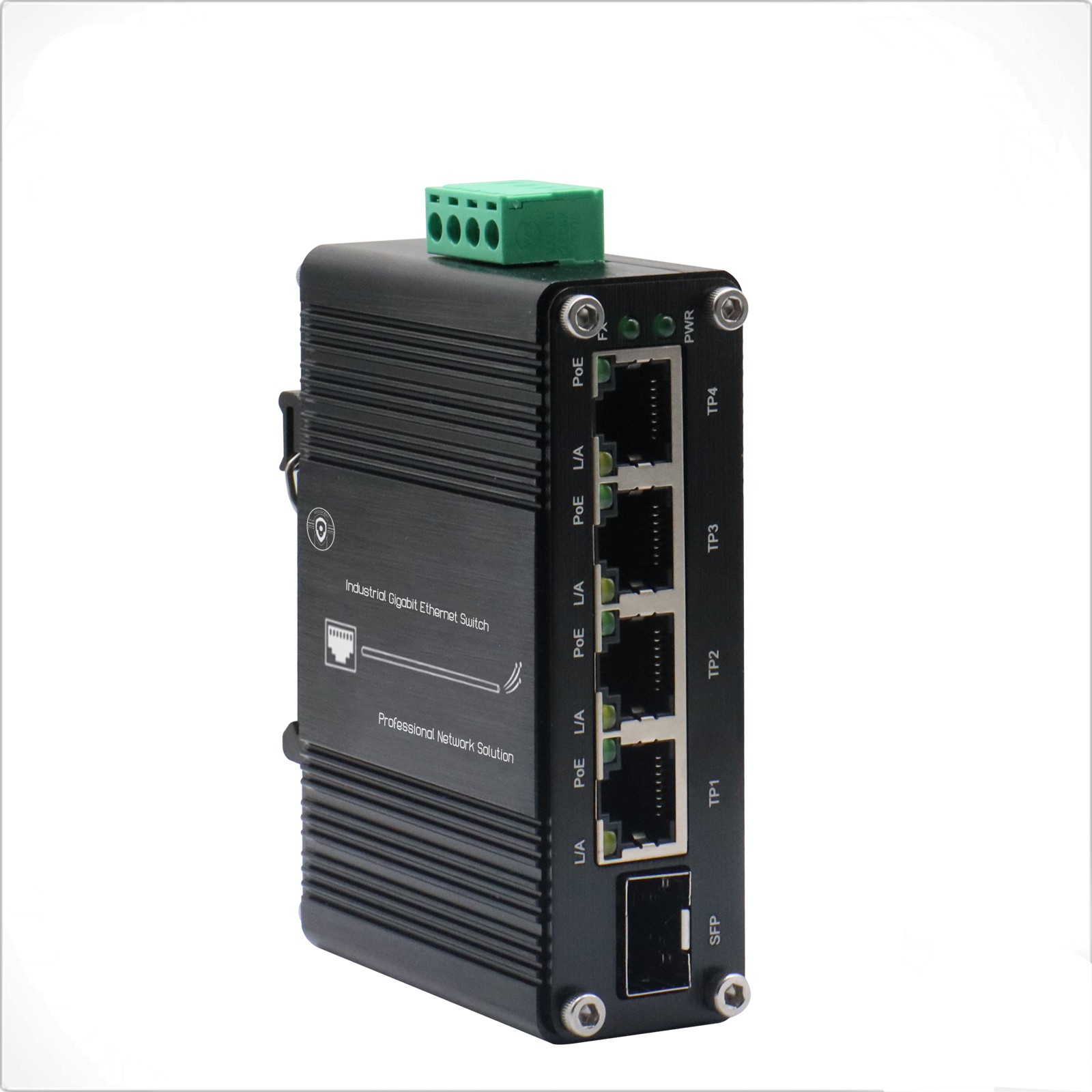
The Industrial PoE Switch receives DC power from an external industrial power supply.
The switch transmits both power and network data through Ethernet ports.
Connected PoE-enabled devices automatically receive power while communicating with the network.
Data and electrical power travel independently within the same cable without interfering with each other.
This greatly simplifies installation, especially in locations where electrical outlets are unavailable or difficult to install.
Why Choose an Industrial PoE Switch Instead of a Commercial PoE Switch?
Although commercial PoE switches are suitable for offices and indoor environments, industrial applications require significantly higher levels of durability and reliability.
Industrial PoE Switches provide several important advantages.
Wide Operating Temperature
Industrial switches are designed to operate reliably under extreme environmental conditions.
Typical operating range:
-40°C to +75°C
This makes them ideal for:
Outdoor control cabinets
Manufacturing plants
Transportation systems
Mining sites
Power substations
Industrial-Grade Reliability
Industrial environments often involve:
Continuous 24/7 operation
Heavy vibration
Dust
Moisture
Electromagnetic interference
Industrial PoE Switches are specifically engineered to withstand these conditions while maintaining stable network performance.
Fanless Cooling
Most industrial PoE switches use a fanless design.
Benefits include:
Silent operation
Reduced maintenance
Improved dust resistance
Longer product lifespan
Without cooling fans, there are fewer mechanical components that can fail over time.
Dual Redundant Power Input
Many industrial PoE switches feature dual redundant power inputs.
This design allows the switch to continue operating if one power source fails, improving network availability for critical industrial systems.
Advantages include:
Higher reliability
Reduced downtime
Improved system safety
Easier maintenance
Rugged Metal Housing
Industrial PoE switches commonly feature aluminum alloy housings that offer:
Better heat dissipation
Impact resistance
Corrosion resistance
Long-term durability
This rugged construction makes them suitable for harsh industrial environments where commercial plastic enclosures would not perform reliably.
IEEE PoE Standards
Industrial PoE switches typically comply with international IEEE standards to ensure compatibility with powered devices.
Common standards include:
| IEEE Standard | Maximum Power Output |
|---|---|
| IEEE 802.3af | Up to 15.4W |
| IEEE 802.3at (PoE+) | Up to 30W |
| IEEE 802.3bt (Optional) | Up to 60W / 90W |
Supporting these standards allows one switch to power a wide range of industrial equipment while maintaining stable network communication.
Key Features of an Industrial PoE Switch
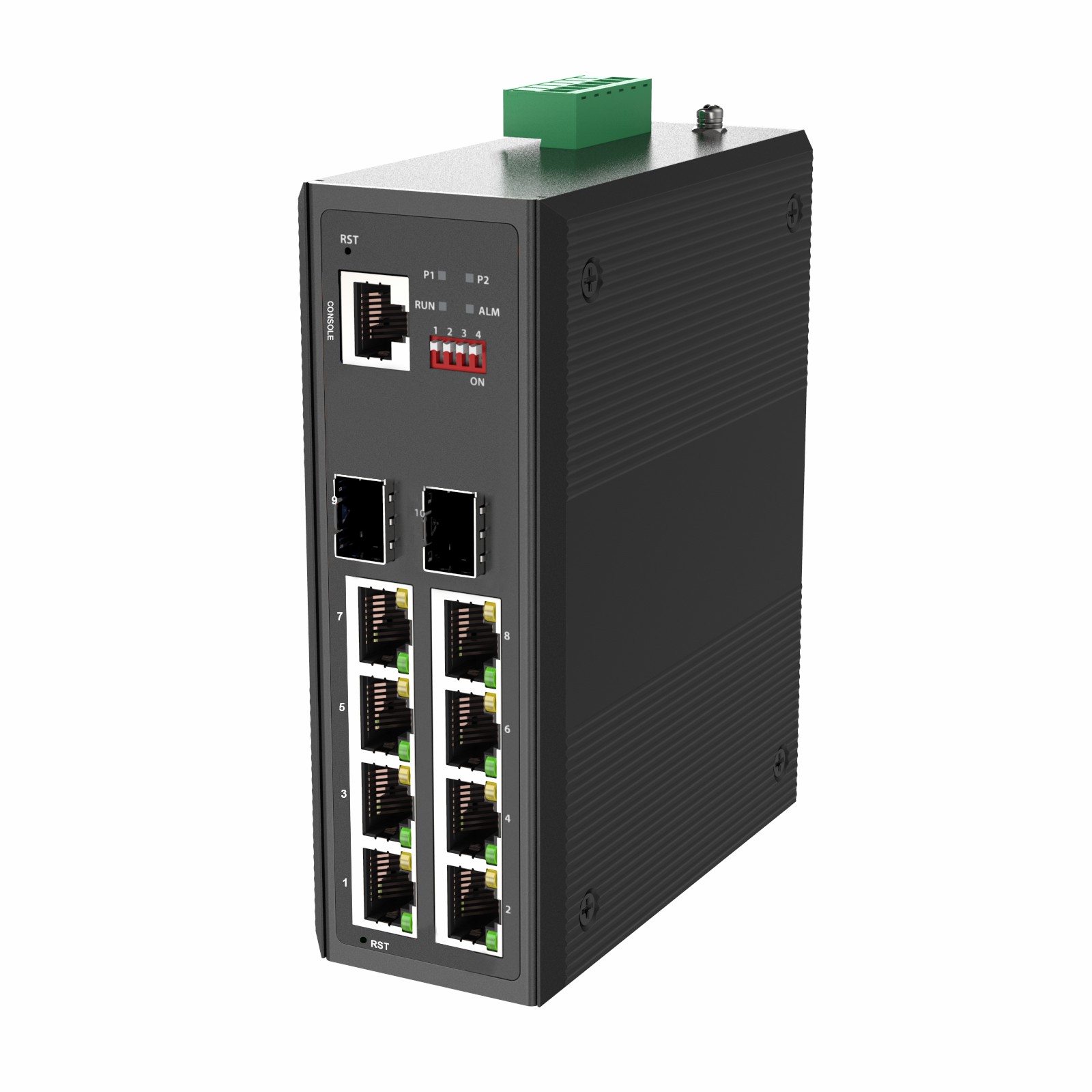
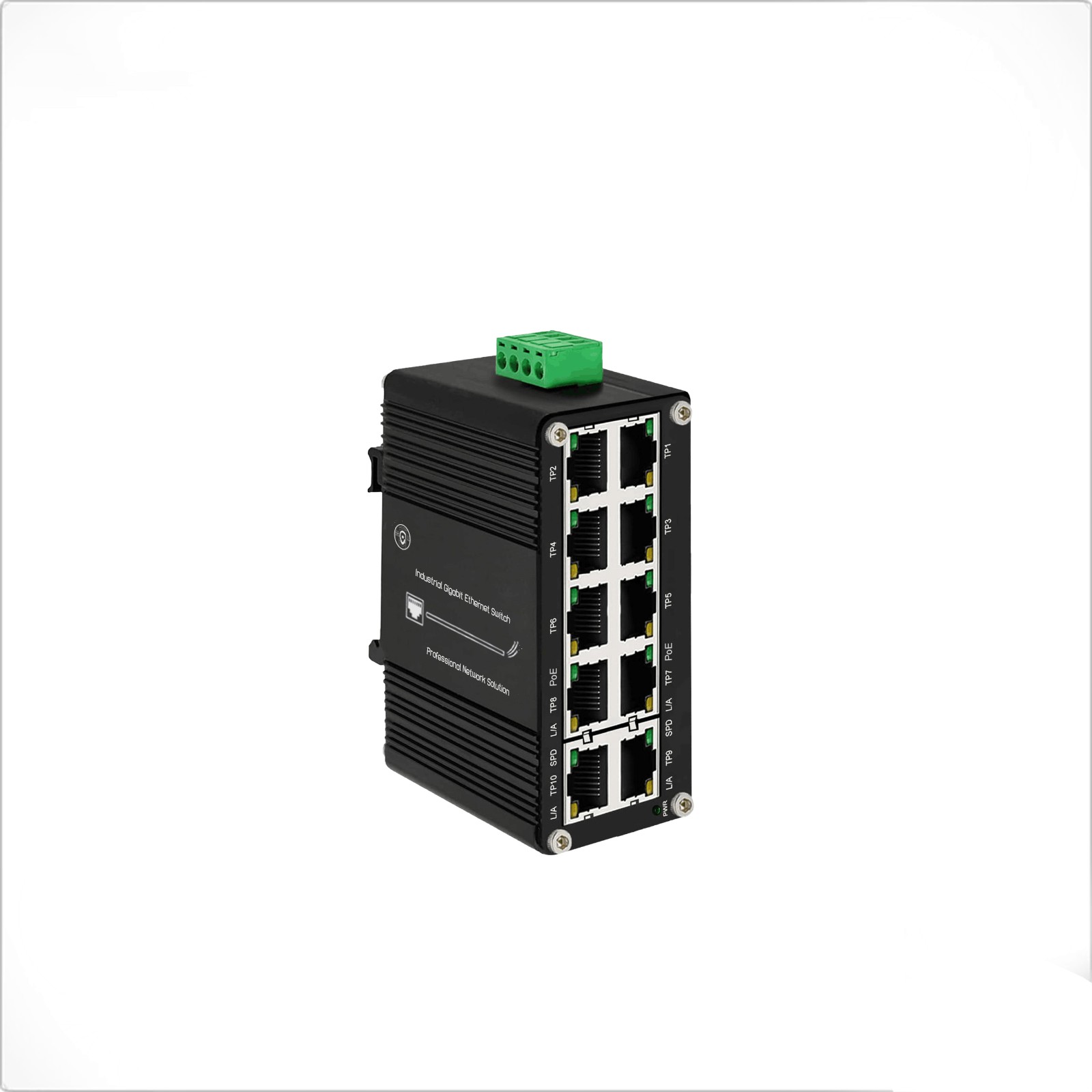
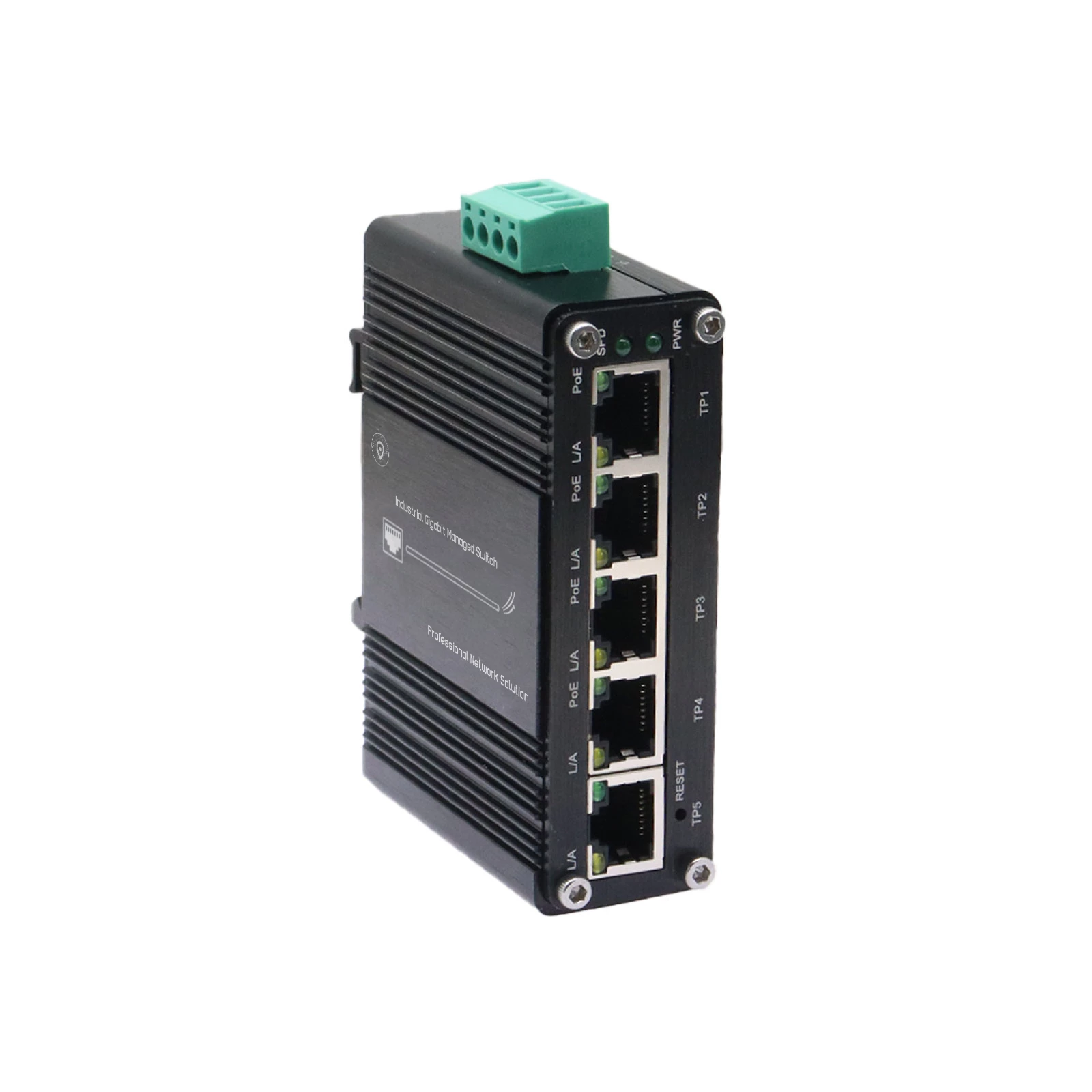
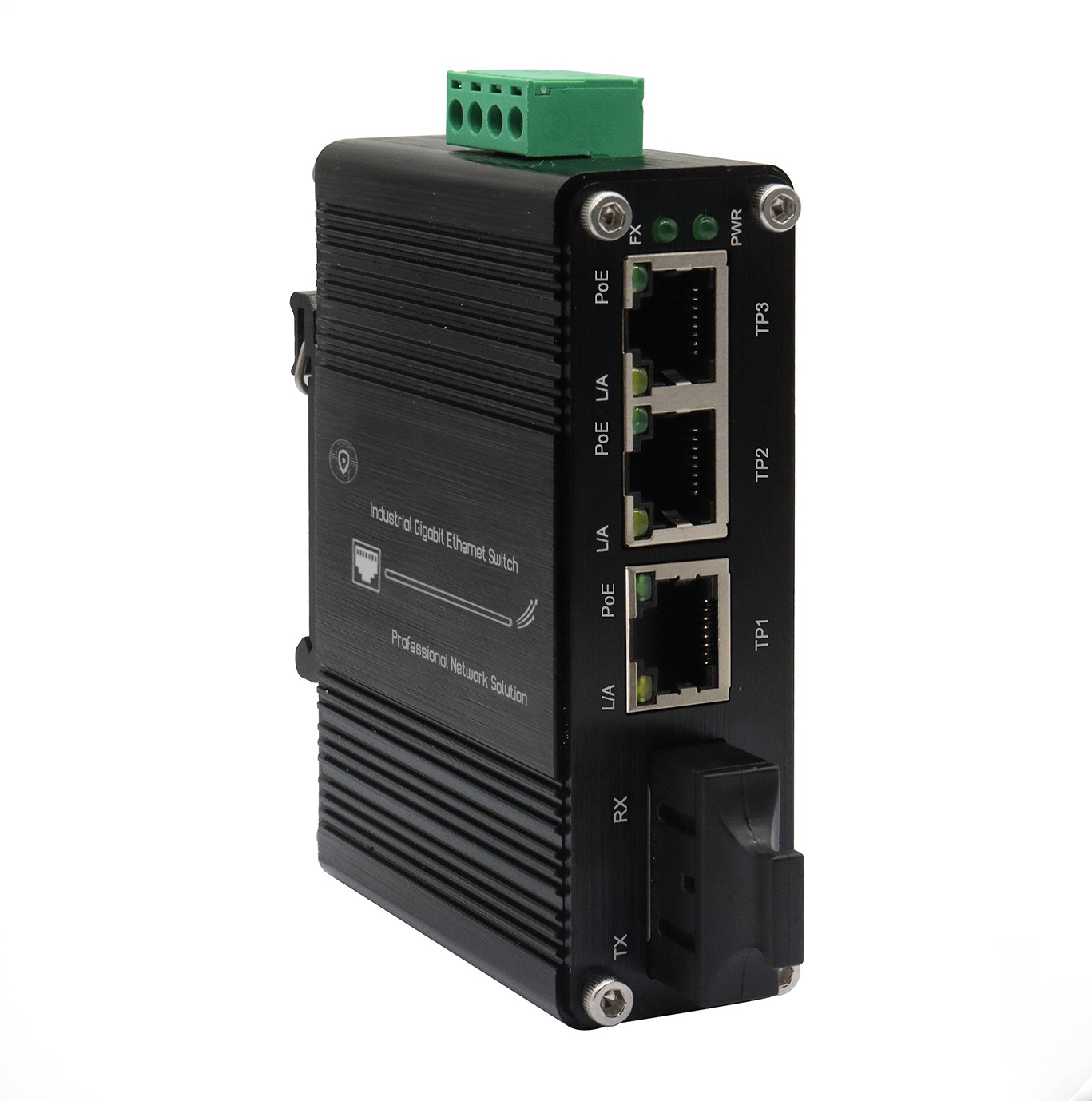
Industrial PoE Switches are engineered to provide reliable performance in demanding industrial environments. Beyond basic Ethernet switching, they incorporate advanced features that enhance network stability, simplify deployment, and reduce maintenance costs.
Gigabit High-Speed Data Transmission
Most modern Industrial PoE Switches support 10/100/1000Mbps Ethernet ports, providing sufficient bandwidth for high-definition video, industrial automation, and large-volume data transmission.
Benefits include:
Faster communication
Lower latency
Improved network efficiency
Smooth HD video transmission
Some models also include Gigabit SFP fiber uplink ports for long-distance communication.
Intelligent PoE Power Management
Industrial PoE Switches automatically detect connected PoE devices and supply the appropriate amount of power according to IEEE standards.
Advantages include:
Automatic device detection
Safe power allocation
Protection against overload
Improved energy efficiency
VLAN Support (Managed Models)
Virtual Local Area Networks (VLANs) divide a physical network into multiple logical networks.
Benefits include:
Improved network security
Reduced broadcast traffic
Better bandwidth utilization
Easier network management
Quality of Service (QoS)
QoS prioritizes important network traffic to ensure critical applications receive sufficient bandwidth.
Typical applications include:
IP surveillance
Voice communication
Industrial automation
Real-time monitoring
SNMP Network Management
Managed Industrial PoE Switches commonly support SNMP, allowing administrators to remotely monitor network status and simplify maintenance.
Administrators can monitor:
Port status
Traffic utilization
Power consumption
Device health
Alarm notifications
Surge and EMC Protection
Industrial environments often contain heavy electrical equipment that generates electromagnetic interference.
Industrial PoE Switches provide enhanced protection against:
Electrical surges
Electrostatic discharge (ESD)
Electromagnetic interference (EMI)
Power fluctuations
These protections improve long-term network reliability.
Managed vs. Unmanaged Industrial PoE Switch
Selecting the right switch depends on the size and complexity of your network.
Unmanaged Industrial PoE Switch
Unmanaged switches are plug-and-play devices that require no configuration.
Ideal for:
Small factories
Warehouses
IP camera systems
Industrial monitoring
Remote equipment
Advantages:
Easy installation
Lower cost
No configuration required
Stable operation
Managed Industrial PoE Switch
Managed switches provide advanced configuration and monitoring capabilities.
Common management functions include:
VLAN
QoS
SNMP
RSTP
ERPS
Link Aggregation
Port Mirroring
Remote Management
IGMP Snooping
Managed switches are recommended for:
Large factories
Industrial automation
Smart transportation
Data centers
Smart city infrastructure
Industrial PoE Switch Applications
Industrial PoE Switches are used in a wide variety of industries where reliable communication and centralized power delivery are essential.
Factory Automation
Industrial PoE Switches connect PLCs, industrial computers, machine vision systems, and monitoring equipment throughout manufacturing facilities.
Typical applications include:
Automated production lines
Robotics
CNC machinery
Industrial control cabinets
Quality inspection systems
Security Camera Systems
PoE technology greatly simplifies surveillance deployment by powering IP cameras through Ethernet cables.
Common applications include:
Factories
Warehouses
Parking lots
Transportation hubs
Outdoor surveillance
Smart Transportation
Industrial PoE Switches support intelligent transportation systems by connecting:
Traffic cameras
Electronic road signs
Toll collection systems
Traffic monitoring equipment
Industrial IoT (IIoT)
Industrial IoT relies on stable communication between intelligent devices.
Industrial PoE Switches connect:
Sensors
Wireless access points
Industrial gateways
Edge computing devices
Environmental monitoring equipment
Power Utilities
Power generation and distribution facilities require reliable networking for SCADA systems, remote monitoring, and substation automation.
Industrial PoE Switches ensure stable communication across utility networks.
Marine, Mining, and Oil & Gas
Harsh industrial environments demand networking equipment capable of withstanding vibration, humidity, dust, and extreme temperatures.
Industrial PoE Switches are ideal for:
Offshore platforms
Marine vessels
Mining operations
Oil refineries
Pipeline monitoring
How to Choose the Right Industrial PoE Switch
Before selecting an Industrial PoE Switch, evaluate the following factors.
Number of Ethernet Ports
Choose a switch with sufficient ports for current equipment while allowing room for future expansion.
PoE Power Budget
Ensure the total available PoE power can support all connected powered devices simultaneously.
Network Speed
Choose Fast Ethernet or Gigabit Ethernet based on application bandwidth requirements.
Fiber Connectivity
If long-distance communication is required, select models equipped with SFP fiber uplink ports.
Management Requirements
For simple installations, unmanaged switches are often sufficient.
For larger industrial networks requiring traffic optimization and remote monitoring, managed switches are recommended.
Environmental Conditions
Consider:
Operating temperature
Humidity
Dust exposure
Electromagnetic interference
Vibration
Choose a switch designed specifically for the intended installation environment.
Industrial PoE Switch | Managed PoE Switch | Gigabit PoE Switch | DIN Rail PoE Switch | Industrial Ethernet Switch | Smart Transportation Network | Traffic Monitoring System | Outdoor PoE Switch | PoE for CCTV | Fiber Uplink PoE Switch