简体中文
简体中文 English
- PRODUCTSIndustrial PoE Media Converter Industrial Media Converter Industrial Unmanaged PoE Switch Industrial Managed PoE Switch Industrial Unmanaged Ethernet Switch Industrial Managed Ethernet Switch Industrial PoE Injector Industrial PoE Splitter Industrial PoE Extender DIN-Rail Power Supply Rackmount DIN-Rail BracketHDMI Over Fiber ConverterSDI Over Fiber ConverterSDI Over Fiber Converter 12G-SDI Over Fiber Converter 3G-SDI Over Fiber Converter HD-SDI Over Fiber ConverterDVI Over Fiber ConverterAHD/CVI/TVI Over Fiber
- SOLUTIONS
- Download
- ABOUT
- CONTACT


Choosing an Industrial PoE Switch involves much more than selecting the right number of ports. Modern industrial networks demand high reliability, stable power delivery, advanced management capabilities, and long-term scalability. Whether you are deploying a factory automation system, expanding an IP surveillance network, or building an Industrial IoT infrastructure, selecting a switch with the right features can significantly reduce maintenance costs and improve network performance.
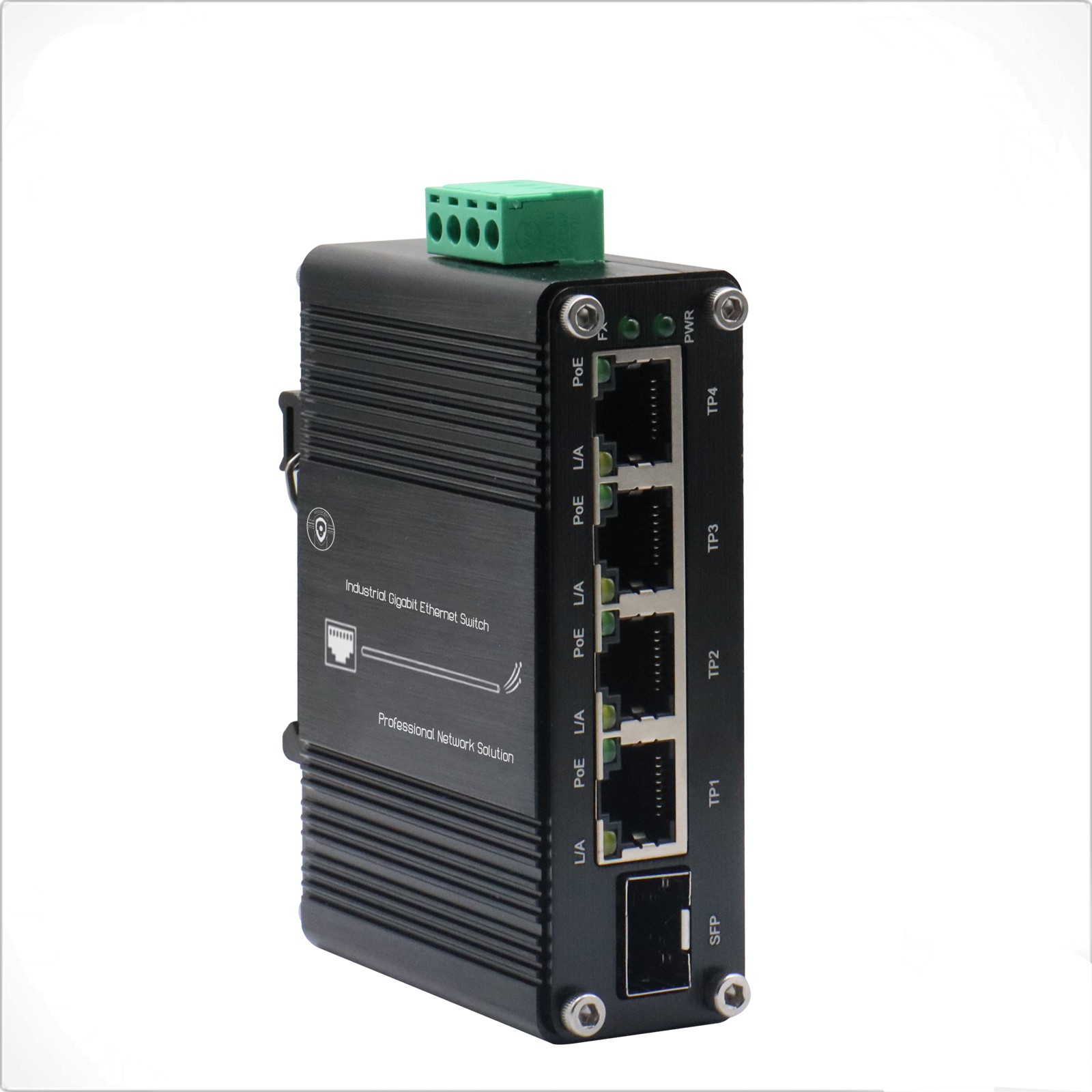
Industrial PoE Switches are specifically designed to operate in harsh environments where commercial networking equipment cannot provide the required durability or reliability. They support continuous 24/7 operation, withstand extreme temperatures, resist vibration and electromagnetic interference, and supply both data and power over a single Ethernet cable.
This guide explains the ten most important features to consider before purchasing an Industrial PoE Switch and why each one matters for industrial applications.
1. Industrial-Grade Design
The first feature to evaluate is whether the switch is truly industrial-grade rather than a commercial product with an industrial appearance.
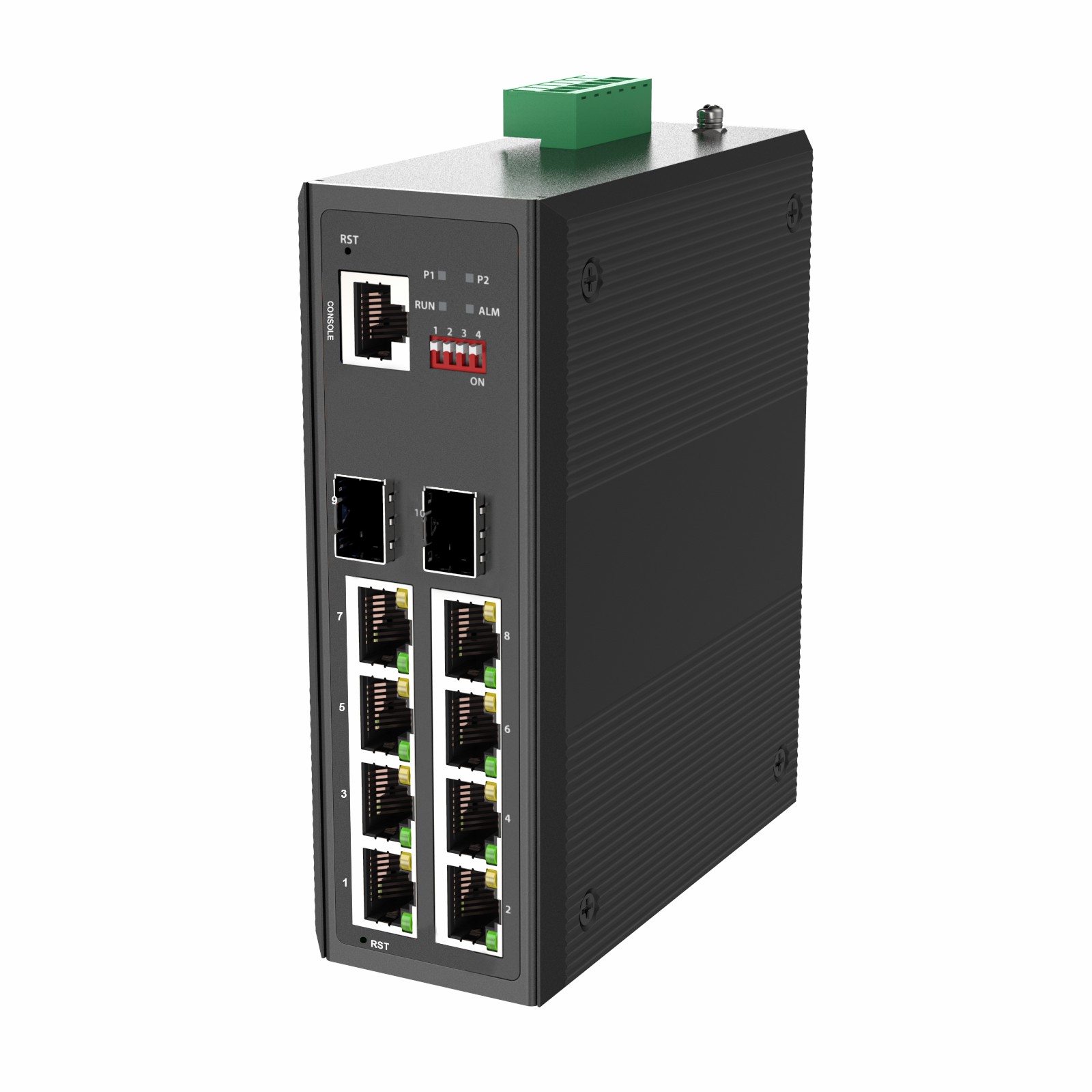
A genuine Industrial PoE Switch is engineered for demanding environments and typically includes:
Wide operating temperature range
Fanless cooling design
Rugged aluminum housing
High EMC protection
Shock and vibration resistance
DIN Rail and wall mounting options
These characteristics help ensure stable performance in manufacturing plants, outdoor cabinets, substations, transportation systems, and other challenging environments.
2. Adequate PoE Power Budget
A sufficient PoE power budget is critical for maintaining reliable operation of connected devices.
Each powered device—such as an IP camera, wireless access point, or industrial sensor—consumes a specific amount of power. The switch must be capable of supplying the combined power required by all connected devices while leaving additional capacity for future expansion.
For example:
| Device | Typical Power |
|---|---|
| Standard IP Camera | 8–12W |
| PTZ Camera | 20–30W |
| Wireless Access Point | 15–25W |
| VoIP Phone | 5–10W |
| Industrial Sensor | 3–8W |
A practical recommendation is to reserve at least 20% additional PoE capacity beyond current requirements to accommodate future upgrades and prevent power shortages.
3. Gigabit Ethernet Performance
Industrial networks are carrying more data than ever before. High-resolution surveillance cameras, machine vision systems, industrial IoT devices, and edge computing applications all require greater bandwidth.
Gigabit Industrial PoE Switches provide:
Faster data transmission
Lower network congestion
Better support for HD and 4K video
Improved backbone performance
Enhanced scalability
While Fast Ethernet switches may still be suitable for basic applications, Gigabit connectivity has become the preferred choice for most new industrial deployments.
4. SFP Fiber Uplink Support
Many industrial networks extend well beyond the 100-meter limitation of copper Ethernet cables. For these applications, Industrial PoE Switches equipped with SFP fiber uplink ports provide greater flexibility and improved network reliability.
Fiber uplinks offer several advantages:
Long-distance data transmission
Immunity to electromagnetic interference (EMI)
Higher backbone bandwidth
Reduced signal loss
Easy expansion between buildings or remote sites
Common applications include:
Factory campus networks
Smart transportation systems
Utility substations
Railway communication
Mining operations
Outdoor surveillance
If your project requires communication over several hundred meters or even several kilometers, choosing a switch with one or more Gigabit SFP slots is highly recommended.
5. Wide Operating Temperature Range
Industrial environments often experience temperature extremes that exceed the operating limits of commercial networking equipment.
A high-quality Industrial PoE Switch should support a wide operating temperature range, typically from -40°C to +75°C.
This ensures reliable performance in environments such as:
Outdoor control cabinets
Steel mills
Chemical plants
Solar power stations
Wind farms
Cold storage facilities
Desert installations
Wide-temperature components significantly improve long-term reliability and reduce the risk of equipment failure caused by environmental conditions.
6. Dual Redundant Power Inputs
Power interruptions can cause costly downtime in industrial applications.
Industrial PoE Switches with dual redundant power inputs allow two independent power sources to be connected simultaneously. If one power supply fails, the switch automatically continues operating using the backup source.
Benefits include:
Increased system availability
Reduced production downtime
Improved operational safety
Easier maintenance
Enhanced network reliability
Redundant power is particularly important for mission-critical systems where uninterrupted communication is essential.
7. Advanced Network Management Features
For medium and large industrial networks, managed Industrial PoE Switches provide valuable tools for monitoring, optimization, and troubleshooting.
Key management features include:
VLAN for traffic segmentation
QoS for prioritizing critical applications
SNMP for remote monitoring
Port Mirroring for diagnostics
Link Aggregation for increased bandwidth
RSTP/ERPS for network redundancy
IGMP Snooping for multicast optimization
These functions help administrators maintain network stability while reducing maintenance time.
8. High EMC and Surge Protection
Industrial environments are often affected by electrical noise, power fluctuations, and lightning-induced surges.
Industrial PoE Switches should include protection against:
Electromagnetic interference (EMI)
Electrostatic discharge (ESD)
Electrical surges
Voltage spikes
Strong EMC performance helps prevent communication failures and extends the lifespan of connected equipment.
9. Flexible Mounting Options
Industrial installations vary significantly depending on the application. A versatile Industrial PoE Switch should support multiple installation methods.
Common mounting options include:
DIN Rail mounting
Wall mounting
Control cabinet installation
Flexible installation allows easier integration into existing industrial infrastructure and simplifies maintenance.
10. Reliable OEM & ODM Manufacturing Support
For distributors, system integrators, and industrial equipment manufacturers, selecting a supplier that offers OEM and ODM services can provide significant business advantages.
A reliable manufacturer should offer:
Custom branding
Private label services
Customized hardware configurations
Flexible packaging options
Stable production capacity
Strict quality control
Technical support
Fast delivery
Long-term cooperation with an experienced manufacturer ensures consistent product quality and reliable supply for future projects.
Why These Features Matter
Each of the ten features discussed above contributes to the overall performance, reliability, and longevity of an Industrial PoE Switch.
For example:
A sufficient PoE budget ensures stable power delivery to all connected devices.
Gigabit ports and SFP uplinks improve bandwidth and network scalability.
Redundant power inputs minimize downtime.
Advanced management functions simplify maintenance and troubleshooting.
Industrial-grade construction protects the switch in harsh environments.
Selecting a switch that combines these features helps reduce operating costs while improving overall network efficiency.
Typical Applications
Industrial PoE Switches equipped with these features are widely used in:
Factory Automation
Connecting PLCs, industrial PCs, robots, HMIs, and machine vision systems while maintaining stable communication throughout the production line.
Security Surveillance
Powering IP cameras and PTZ cameras through Ethernet cables while simplifying installation and reducing cabling costs.
Smart Transportation
Supporting traffic cameras, electronic signs, and intelligent transportation systems that require reliable communication under challenging environmental conditions.
Industrial IoT
Connecting sensors, gateways, wireless access points, and edge computing devices for real-time monitoring and data collection.
Energy and Utilities
Providing reliable communication for substations, renewable energy facilities, and power distribution networks where continuous operation is essential.
Common Buying Mistakes
Avoid these common mistakes when selecting an Industrial PoE Switch:
Choosing based only on price.
Ignoring the total PoE power budget.
Selecting too few Ethernet ports.
Overlooking future network expansion.
Purchasing commercial-grade switches for industrial environments.
Ignoring environmental operating conditions.
Not considering management requirements.
A careful evaluation before purchase helps avoid unnecessary replacement costs and improves long-term network performance.
Frequently Asked Questions
What is the most important feature of an Industrial PoE Switch?
There is no single most important feature. Buyers should evaluate PoE power budget, industrial protection, Gigabit performance, management functions, and environmental suitability together.
Do I need Gigabit Ethernet?
Yes. Gigabit Ethernet is recommended for most modern industrial applications because it supports higher bandwidth requirements and future network expansion.
Are SFP fiber uplinks necessary?
If your network extends beyond 100 meters or operates in environments with significant electromagnetic interference, SFP fiber uplinks are highly recommended.
Why is a fanless design preferred?
Fanless cooling eliminates moving parts, reduces maintenance, prevents dust accumulation, and improves long-term reliability.
What is the benefit of dual power inputs?
Dual redundant power inputs keep the switch operational if one power source fails, improving network availability.
Should I choose a managed switch?
Managed switches are ideal for larger or more complex networks that require monitoring, traffic optimization, and remote management.
Industrial PoE Switch | Managed PoE Switch | Gigabit PoE Switch | DIN Rail PoE Switch | Industrial Ethernet Switch | Smart Transportation Network | Traffic Monitoring System | Outdoor PoE Switch | PoE for CCTV | Fiber Uplink PoE Switch