简体中文
简体中文 English
- PRODUCTSIndustrial PoE Media Converter Industrial Media Converter Industrial Unmanaged PoE Switch Industrial Managed PoE Switch Industrial Unmanaged Ethernet Switch Industrial Managed Ethernet Switch Industrial PoE Injector Industrial PoE Splitter Industrial PoE Extender DIN-Rail Power Supply Rackmount DIN-Rail BracketHDMI Over Fiber ConverterSDI Over Fiber ConverterSDI Over Fiber Converter 12G-SDI Over Fiber Converter 3G-SDI Over Fiber Converter HD-SDI Over Fiber ConverterDVI Over Fiber ConverterAHD/CVI/TVI Over Fiber
- SOLUTIONS
- Download
- ABOUT
- CONTACT


As IP surveillance systems continue to replace traditional analog CCTV, Power over Ethernet (PoE) has become the preferred solution for powering and connecting security cameras. A PoE switch simplifies installation by delivering both power and data through a single Ethernet cable, reducing wiring costs and improving network reliability.
However, not all PoE switches are suitable for every surveillance project. Choosing the wrong model can lead to insufficient power, unstable video transmission, limited scalability, and costly upgrades.
In this guide, you'll learn how to choose the right PoE switch for your IP camera system based on port count, PoE budget, network speed, management features, and installation environment.
What Is a PoE Switch?
A PoE (Power over Ethernet) switch is a network switch that supplies both electrical power and data to connected devices through standard Ethernet cables.
For IP camera systems, a PoE switch eliminates the need for separate power adapters, making installation faster, cleaner, and more cost-effective.
PoE switches are commonly used to power:
IP Cameras
Wireless Access Points
VoIP Phones
Access Control Devices
Industrial Sensors
IoT Devices
Why Use a PoE Switch for IP Cameras?
Compared with traditional power solutions, PoE switches offer several important advantages.
Simplified Installation
Only one Ethernet cable is required for each camera, reducing installation time and cable clutter.
Lower Installation Costs
No additional electrical outlets or power cables are needed near camera locations, helping reduce labor and material costs.
Centralized Power Management
All connected cameras receive power from a single switch, making maintenance and troubleshooting much easier.
Flexible Camera Deployment
Cameras can be installed in locations where power outlets are unavailable, provided the Ethernet cable length is within the supported distance.
Improved Network Reliability
Managed PoE switches offer advanced monitoring and control features that help ensure stable camera operation.
Determine the Number of Camera Connections
The first step is to count how many cameras need to be connected.
Choose a switch that provides enough ports for your current project while leaving room for future expansion.
Typical options include:
| Number of Cameras | Recommended PoE Switch |
|---|---|
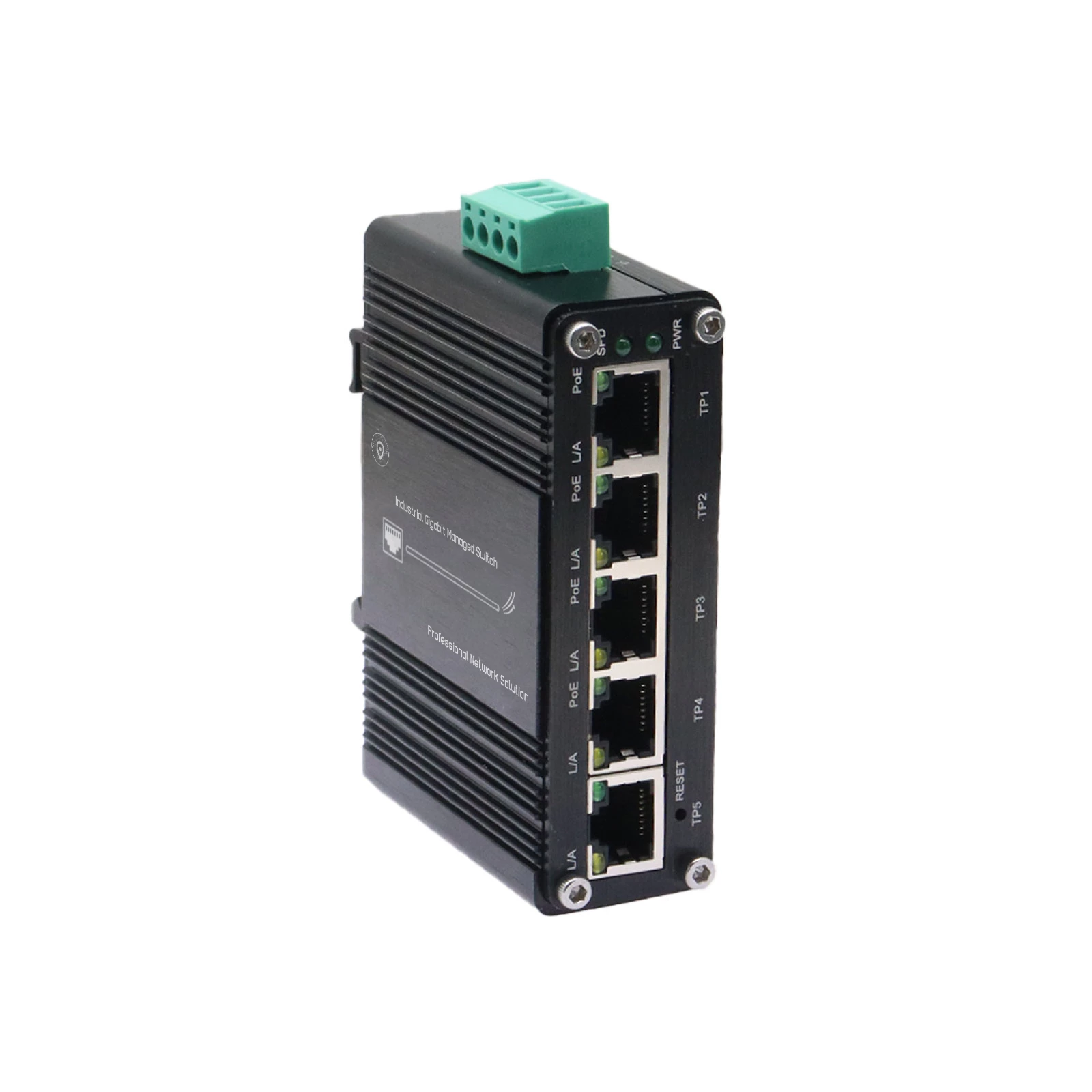
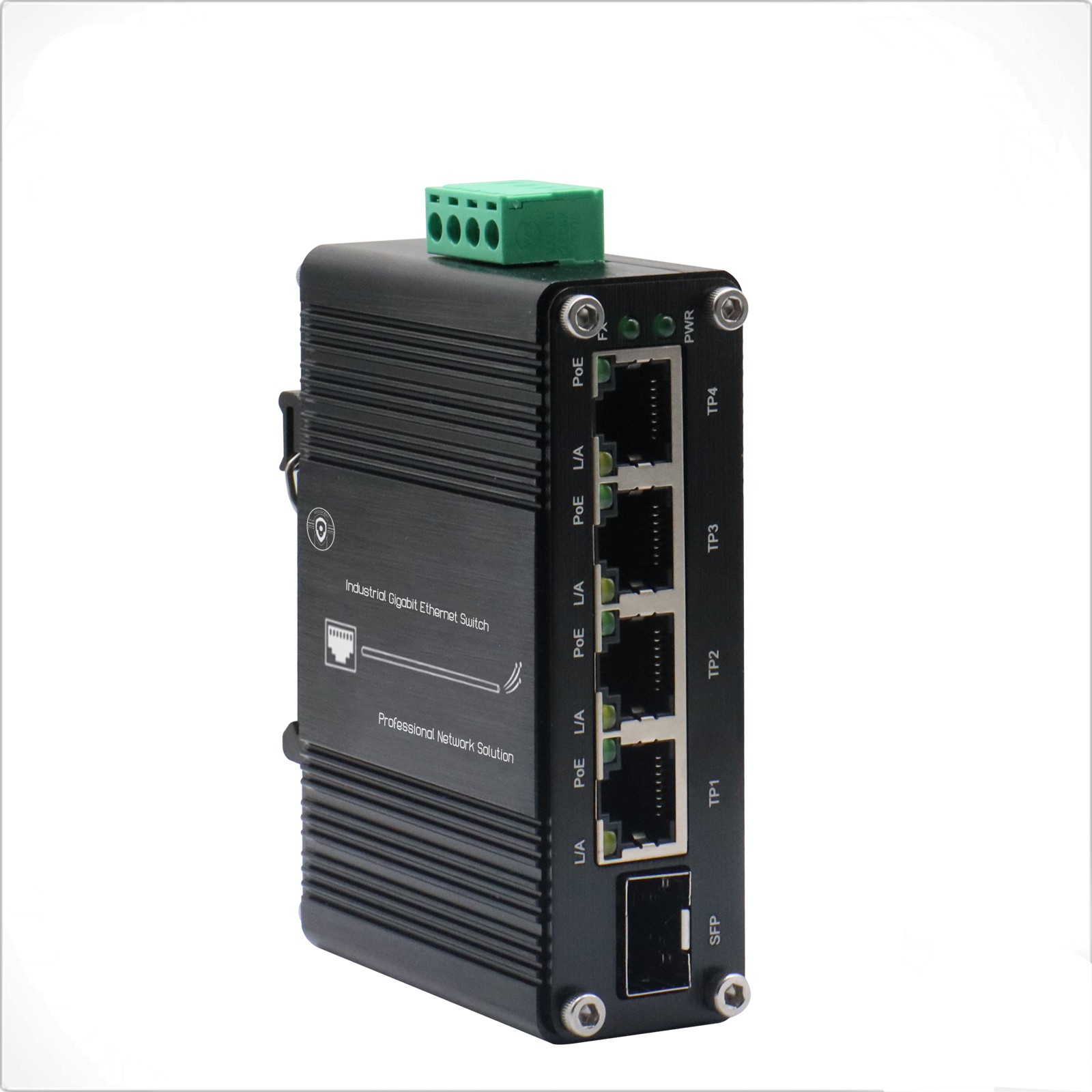
| 4 Cameras | 4-Port PoE Switch with Uplink Ports |
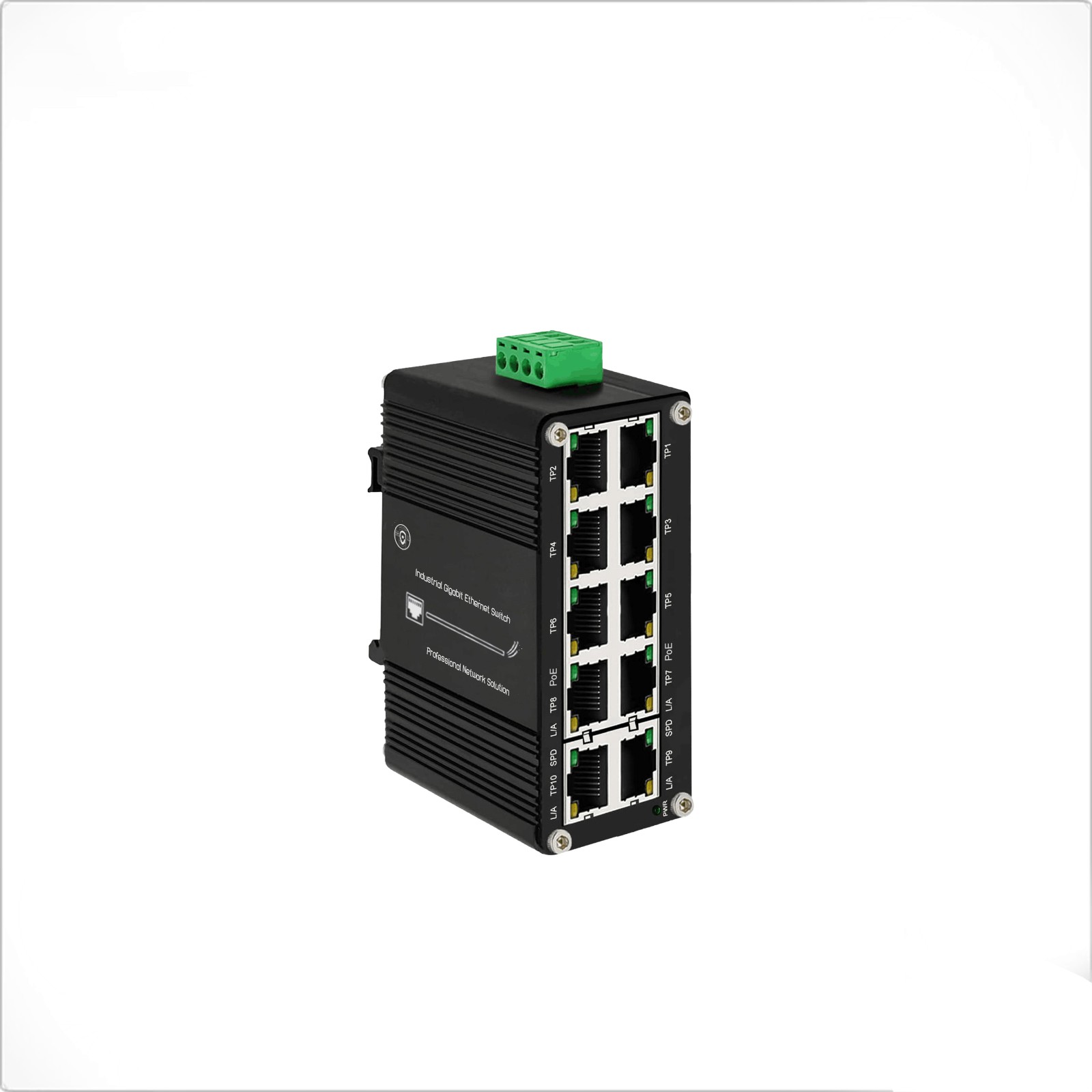
| 8 Cameras | 8-Port PoE Switch |
| 16 Cameras | 16-Port PoE Switch |
| 24 Cameras | 24-Port PoE Switch |
| 48 Cameras | 48-Port PoE Switch |
If you expect to add more cameras later, selecting a switch with additional available ports can reduce future upgrade costs.
Calculate the Required PoE Budget
One of the most important considerations is the PoE power budget, which is the total amount of power the switch can deliver to all connected devices.
For example:
8 IP Cameras
Each camera requires 12W
Total PoE requirement:
8 × 12W = 96W
Choose a switch with a power budget comfortably above this value to ensure reliable operation.
If your system includes PTZ cameras, infrared cameras, or AI-enabled cameras, remember that these devices often require significantly more power than standard fixed cameras.
Choose the Right PoE Standard
Different cameras require different PoE standards.
| Standard | Maximum Power per Port | Typical Applications |
|---|---|---|
| IEEE 802.3af | 15.4W | Standard IP Cameras |
| IEEE 802.3at (PoE+) | 30W | PTZ Cameras, High-Performance Cameras |
| IEEE 802.3bt (PoE++) | Up to 90W | AI Cameras, Industrial Equipment, Wireless Bridges |
Before purchasing, verify that the switch supports the power requirements of your cameras.
Managed or Unmanaged PoE Switch?
Managed PoE Switch
Managed switches provide advanced features that are valuable for medium and large surveillance projects.
Benefits include:
VLAN configuration
QoS traffic prioritization
Remote monitoring
Port management
SNMP support
Loop prevention
Link aggregation
Network diagnostics
Managed switches are recommended for:
Enterprise surveillance
Factory security
Smart city projects
Transportation systems
Large commercial buildings
Unmanaged PoE Switch
Unmanaged switches require no configuration.
Advantages include:
Plug-and-play installation
Lower cost
Easy deployment
Reliable operation for small systems
They are suitable for:
Small businesses
Retail stores
Homes
Small office surveillance
Should You Choose Gigabit or Fast Ethernet?
Modern surveillance systems increasingly use high-resolution cameras that generate large amounts of network traffic.
Gigabit PoE switches are recommended for:
4K IP Cameras
Multi-camera recording systems
Network Video Recorders (NVRs)
AI video analytics
Large surveillance networks
Fast Ethernet switches may still be suitable for small systems using lower-resolution cameras, but Gigabit switches provide greater bandwidth and better support future upgrades.
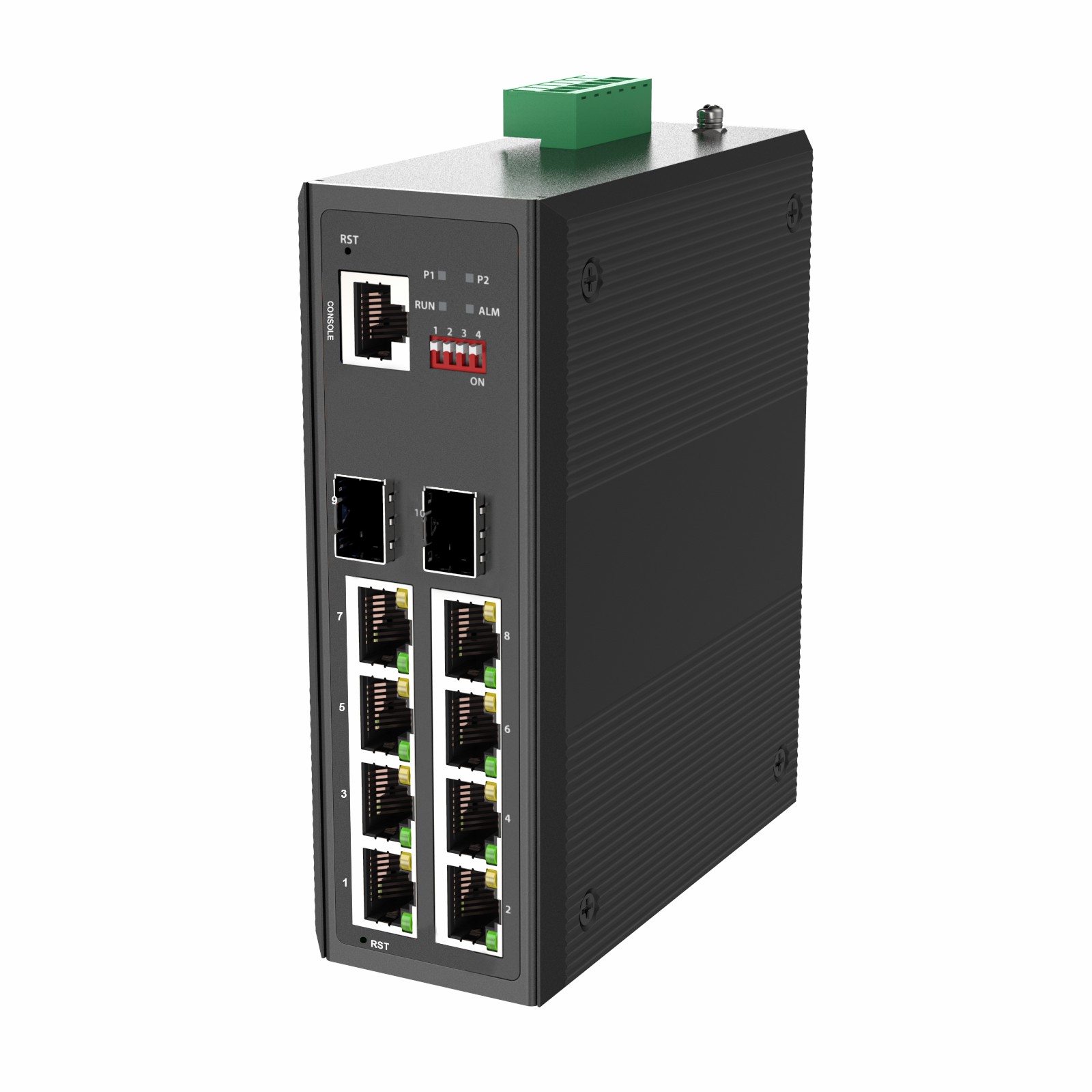
Do You Need SFP Fiber Uplink Ports?
For projects where cameras are installed far from the monitoring center, fiber connectivity offers clear advantages.
SFP uplink ports provide:
Longer transmission distances
Higher bandwidth
Better resistance to electromagnetic interference
Reliable backbone connectivity between buildings or outdoor locations
Fiber uplinks are widely used in:
Industrial facilities
Campuses
Warehouses
Airports
Railway systems
Smart city surveillance
Consider the Installation Environment
Installation conditions should also influence your choice.
For industrial or outdoor environments, look for features such as:
Wide operating temperature (-40°C to +75°C)
Fanless design
Industrial-grade aluminum housing
Surge protection
ESD protection
Dual redundant power inputs
DIN rail mounting options
These features improve long-term reliability in harsh environments.
Common Mistakes to Avoid
Many buyers overlook important factors when selecting a PoE switch.
Avoid these common mistakes:
Choosing too few ports
Ignoring the total PoE power budget
Purchasing Fast Ethernet when Gigabit is needed
Using commercial switches in industrial environments
Forgetting future network expansion
Overlooking fiber uplink requirements
Selecting unmanaged switches for complex surveillance systems
Careful planning helps prevent unexpected costs and network performance issues.
Why Choose WXA PoE Switches?
WXA manufactures industrial and commercial PoE switches designed for reliable surveillance and networking applications.
Our advantages include:
More than 13 years of manufacturing experience
Managed and unmanaged PoE switch solutions
IEEE 802.3af, 802.3at, and 802.3bt support
Gigabit and 10G uplink options
Industrial-grade hardware
Wide operating temperature from -40°C to +75°C
CE, FCC, and RoHS certified products
OEM and ODM customization services
Fast production and delivery
Professional technical support
Five-year warranty for industrial PoE switch series
Our products are widely used in surveillance, factory automation, transportation, smart city, and industrial communication projects around the world.
Frequently Asked Questions
How many IP cameras can one PoE switch support?
It depends on the number of ports and the total PoE power budget. For example, an 8-port PoE switch can typically support up to eight IP cameras if sufficient power is available.
Do all IP cameras require PoE?
No. Some cameras use separate power adapters. However, PoE-enabled cameras simplify installation and reduce wiring complexity.
Is a Gigabit PoE switch necessary for CCTV?
Gigabit switches are recommended for high-resolution cameras, NVR systems, and larger surveillance networks because they provide greater bandwidth and better overall performance.
Should I choose a managed or unmanaged PoE switch?
Choose a managed switch for large or complex surveillance systems that require VLANs, monitoring, and advanced traffic management. An unmanaged switch is suitable for smaller, plug-and-play installations.
Can I use a PoE switch outdoors?
Yes, but the switch should either be an industrial-grade outdoor model or be installed inside a weatherproof enclosure to protect it from environmental conditions.
Industrial PoE Switch | Managed PoE Switch | Gigabit PoE Switch | DIN Rail PoE Switch | Industrial Ethernet Switch | Smart Transportation Network | Traffic Monitoring System | Outdoor PoE Switch | PoE for CCTV | Fiber Uplink PoE Switch