简体中文
简体中文 English
- PRODUCTSIndustrial PoE Media Converter Industrial Media Converter Industrial Unmanaged PoE Switch Industrial Managed PoE Switch Industrial Unmanaged Ethernet Switch Industrial Managed Ethernet Switch Industrial PoE Injector Industrial PoE Splitter Industrial PoE Extender DIN-Rail Power Supply Rackmount DIN-Rail BracketHDMI Over Fiber ConverterSDI Over Fiber ConverterSDI Over Fiber Converter 12G-SDI Over Fiber Converter 3G-SDI Over Fiber Converter HD-SDI Over Fiber ConverterDVI Over Fiber ConverterAHD/CVI/TVI Over Fiber
- SOLUTIONS
- Download
- ABOUT
- CONTACT


As industrial networks continue to expand, reliable long-distance communication has become essential for applications such as factory automation, IP surveillance, transportation, and smart city infrastructure. While Ethernet cables are widely used for local area networks, they have a maximum transmission distance of 100 meters (328 feet), which can limit network design.
An industrial media converter solves this challenge by converting Ethernet signals into optical signals, allowing data to travel over fiber optic cables for distances of several kilometers while maintaining high speed and signal integrity.
In this guide, you'll learn what an industrial media converter is, how it works, its key benefits, common applications, and how to choose the right model for your industrial network.
What Is an Industrial Media Converter?
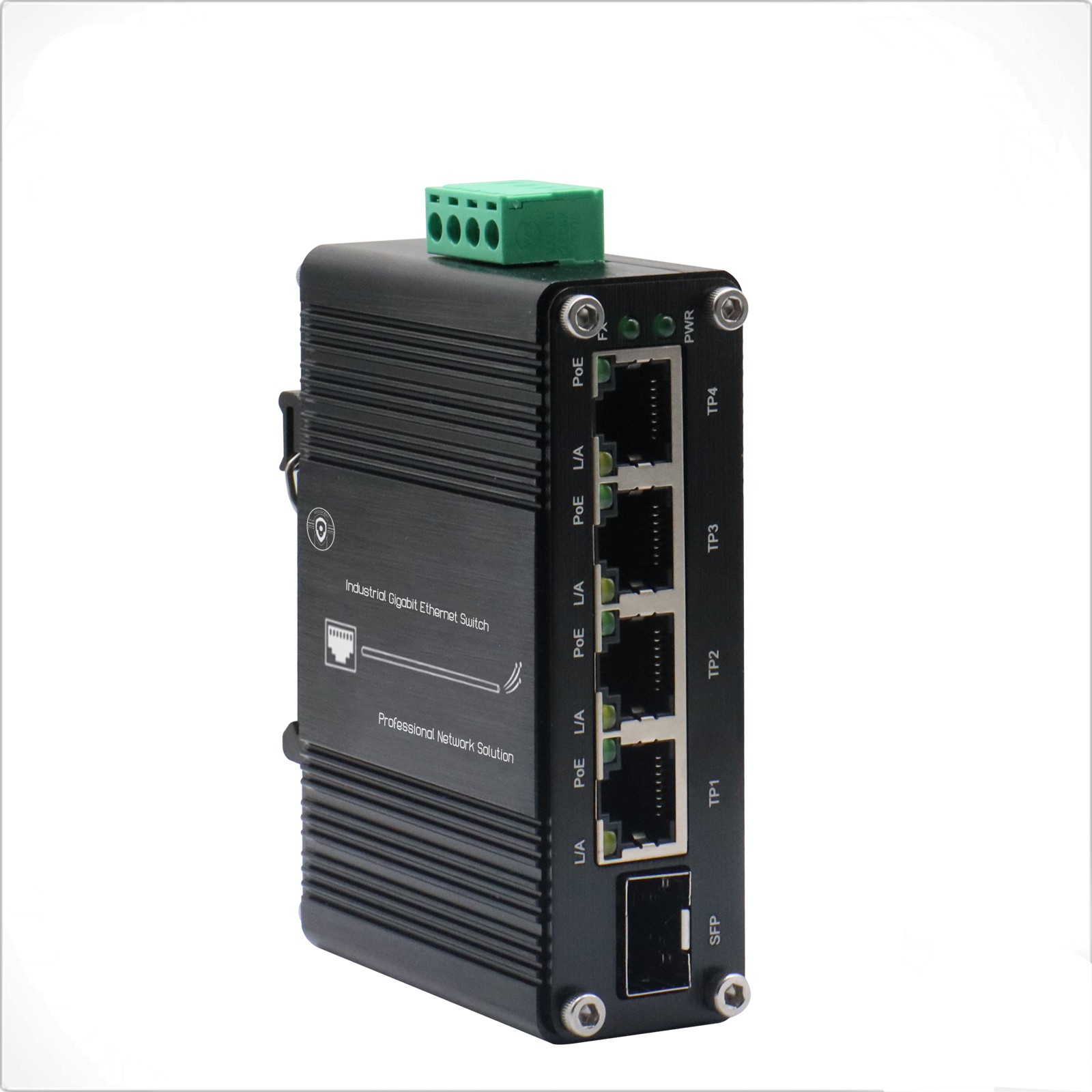
An industrial media converter is a networking device that converts electrical Ethernet signals transmitted over copper cables (RJ45) into optical signals for transmission over fiber optic cables, and vice versa.
Unlike commercial media converters, industrial models are designed to operate reliably in harsh environments. They feature rugged construction, wide operating temperature ranges, industrial-grade power protection, and enhanced resistance to electrical interference.
Industrial media converters are commonly used to extend Ethernet networks over long distances while maintaining stable communication.
How Does an Industrial Media Converter Work?
An industrial media converter acts as a bridge between copper Ethernet and fiber optic networks.
The basic process is:
A network device sends Ethernet data through an RJ45 cable.
The media converter receives the electrical Ethernet signal.
The converter transforms the electrical signal into an optical signal.
The optical signal travels through a fiber optic cable.
A second media converter converts the optical signal back into Ethernet for the destination device.
This conversion enables reliable, high-speed communication over much longer distances than copper cabling alone.
Why Use an Industrial Media Converter?
Extend Transmission Distance
Standard Ethernet cables are limited to approximately 100 meters (328 feet).
Fiber optic cables can extend communication from several hundred meters to tens of kilometers, depending on the fiber type and optical module.
Resist Electromagnetic Interference
Industrial environments often contain motors, heavy machinery, and high-voltage equipment that generate electromagnetic interference (EMI).
Fiber optic cables are immune to EMI, providing more stable communication than copper cables.
Improve Network Reliability
Industrial media converters are designed for continuous operation in demanding environments.
Features such as industrial-grade components, fanless cooling, and redundant power inputs help improve system reliability.
Reduce Installation Costs
Instead of replacing an entire network with fiber equipment, media converters allow existing Ethernet devices to communicate over fiber infrastructure, reducing upgrade costs.
Flexible Network Expansion
Industrial media converters make it easier to connect remote buildings, production lines, outdoor equipment, and surveillance systems without redesigning the entire network.
Industrial vs. Commercial Media Converter
| Feature | Industrial Media Converter | Commercial Media Converter |
|---|---|---|
| Operating Temperature | -40°C to +75°C | 0°C to +50°C |
| Housing | Industrial aluminum | Plastic or standard metal |
| Cooling | Fanless | Passive or fan-cooled |
| Power Input | Dual redundant DC (on supported models) | Single AC or DC |
| Surge Protection | Industrial-grade | Basic protection |
| Installation | DIN Rail or Wall Mount | Desktop |
| Designed For | Industrial environments | Office and commercial use |
Industrial models are built for reliability in harsh conditions, while commercial models are intended for controlled indoor environments.
Common Applications
Factory Automation
Connect PLCs, industrial controllers, production equipment, and monitoring systems across large manufacturing facilities.
Industrial Surveillance
Transmit high-definition IP camera video over long distances in factories, warehouses, ports, and outdoor security projects.
Smart Transportation
Provide fiber connectivity for traffic monitoring systems, railway communication, airports, and highway surveillance.
Energy and Utilities
Connect substations, wind farms, solar power stations, and remote monitoring equipment with reliable fiber communication.
Smart Cities
Support intelligent traffic systems, public surveillance, environmental monitoring, and municipal communication infrastructure.
Warehouse and Logistics Centers
Extend Ethernet connectivity between warehouses, distribution centers, and automated storage systems.
How to Choose the Right Industrial Media Converter
Ethernet Speed
Select a converter that matches your network speed.
Common options include:
Fast Ethernet (10/100 Mbps)
Gigabit Ethernet (10/100/1000 Mbps)
2.5 Gigabit Ethernet (available on some models)
Gigabit media converters are recommended for most modern industrial networks.
Fiber Type
Choose the appropriate fiber type for your installation.
Single Mode Fiber
Best for long-distance communication, often extending several kilometers or more.
Multi Mode Fiber
Suitable for shorter distances within campuses, factories, and commercial buildings.
Fiber Connector Type
Common connector options include:
SC
LC
ST
Select the connector that matches your existing fiber infrastructure.
Single Fiber or Dual Fiber
Single-fiber (BiDi) models transmit and receive data over one fiber strand using different wavelengths.
Dual-fiber models use separate fibers for transmission and reception.
The best choice depends on your available fiber resources and network design.
PoE or Non-PoE
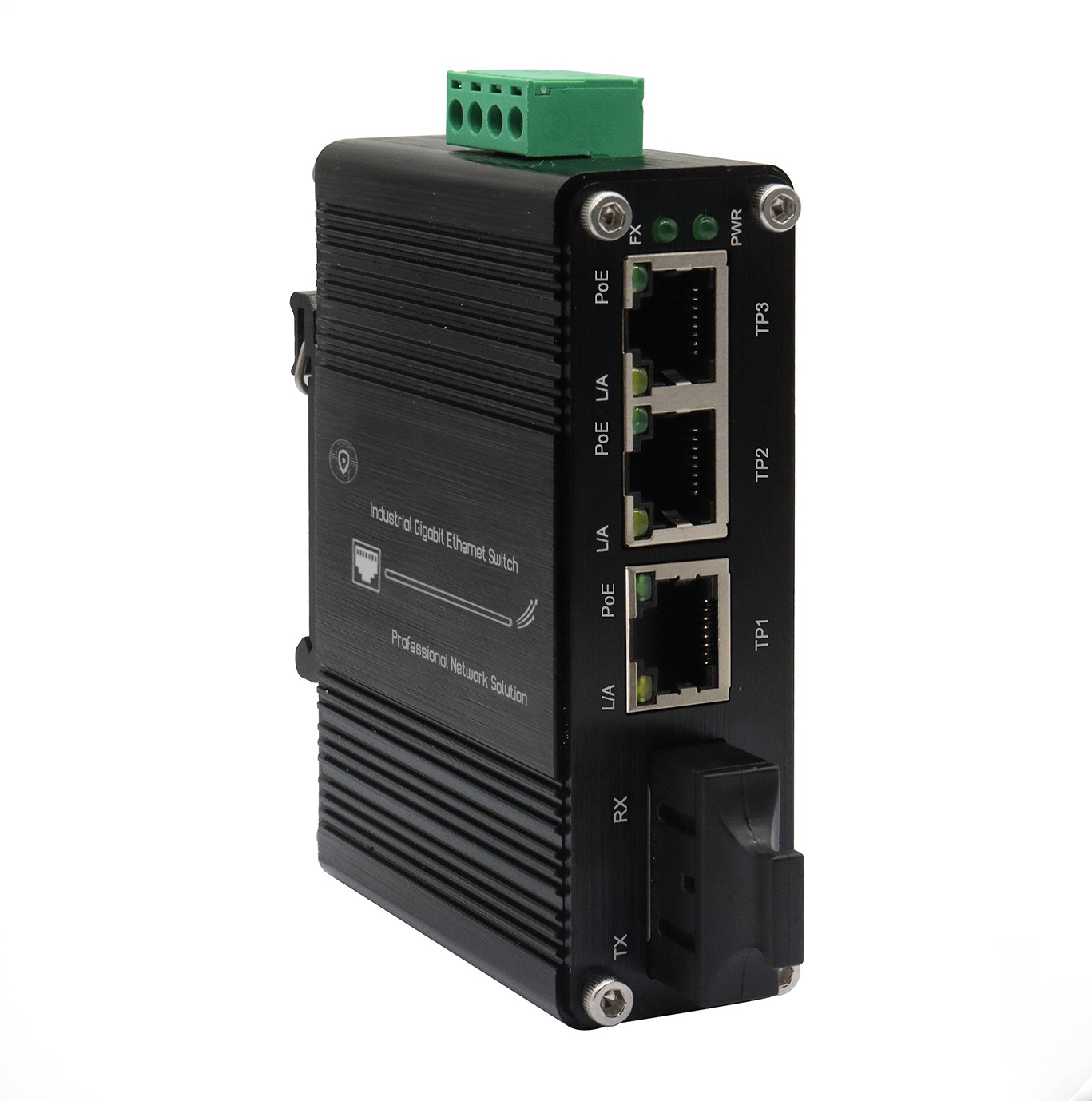
Some industrial media converters include PoE functionality, allowing them to provide both fiber connectivity and power to compatible devices such as IP cameras and wireless access points.
Choose a PoE media converter if your remote device requires Power over Ethernet.
Installation Environment
For harsh industrial environments, consider features such as:
Wide operating temperature (-40°C to +75°C)
Fanless cooling
Industrial-grade aluminum housing
Surge protection
ESD protection
DIN rail mounting
Dual redundant power inputs (on supported models)
These features improve long-term stability and reduce maintenance.
Why Choose WXA Industrial Media Converters?
WXA manufactures industrial networking products designed for demanding industrial and commercial applications.
Our advantages include:
More than 13 years of manufacturing experience
Industrial-grade hardware design
Fast Ethernet and Gigabit media converter solutions
Industrial PoE media converter models available
Single-mode and multi-mode fiber support
Single-fiber (BiDi) and dual-fiber options
SC and LC connector options
Wide operating temperature from -40°C to +75°C
Fanless industrial design
CE, FCC, and RoHS certified products
OEM and ODM customization services
Fast production and global delivery
Professional technical support
Five-year warranty for industrial networking products
Our industrial media converters are widely deployed in manufacturing, surveillance, transportation, energy, utilities, and smart city projects worldwide.
Frequently Asked Questions
What does an industrial media converter do?
An industrial media converter converts Ethernet signals carried over copper cables into optical signals for fiber optic transmission, and converts them back to Ethernet at the receiving end. This enables long-distance, high-speed communication while improving resistance to electromagnetic interference.
What is the difference between a media converter and a switch?
A media converter changes the transmission medium between copper Ethernet and fiber optic cable. A switch connects multiple network devices and manages data forwarding within a network. Media converters do not replace the switching functions of a network switch.
When should I use a fiber media converter?
A fiber media converter is ideal when network devices need to communicate over distances greater than 100 meters, when the installation environment has significant electromagnetic interference, or when integrating existing Ethernet equipment into a fiber optic network.
Can a media converter transmit PoE?
Standard media converters do not provide Power over Ethernet. However, industrial PoE media converters are available and can transmit both data and power to compatible powered devices, such as IP cameras and wireless access points.
How far can an industrial media converter transmit data?
Transmission distance depends on the fiber type and optical specifications. Multi-mode fiber is typically used for shorter distances, while single-mode fiber can support communication over tens of kilometers with the appropriate optical modules.
Industrial PoE Switch | Managed PoE Switch | Gigabit PoE Switch | DIN Rail PoE Switch | Industrial Ethernet Switch | Smart Transportation Network | Traffic Monitoring System | Outdoor PoE Switch | PoE for CCTV | Fiber Uplink PoE Switch