简体中文
简体中文 English
- PRODUCTSIndustrial PoE Media Converter Industrial Media Converter Industrial Unmanaged PoE Switch Industrial Managed PoE Switch Industrial Unmanaged Ethernet Switch Industrial Managed Ethernet Switch Industrial PoE Injector Industrial PoE Splitter Industrial PoE Extender DIN-Rail Power Supply Rackmount DIN-Rail BracketHDMI Over Fiber ConverterSDI Over Fiber ConverterSDI Over Fiber Converter 12G-SDI Over Fiber Converter 3G-SDI Over Fiber Converter HD-SDI Over Fiber ConverterDVI Over Fiber ConverterAHD/CVI/TVI Over Fiber
- SOLUTIONS
- Download
- ABOUT
- CONTACT


Water treatment facilities depend on reliable automation and communication systems to maintain continuous operation. From municipal water treatment plants to wastewater facilities, operators need real-time access to pumps, valves, sensors, PLCs, cameras, and SCADA systems.
As water infrastructure becomes increasingly automated, the industrial network becomes an essential part of plant operations.
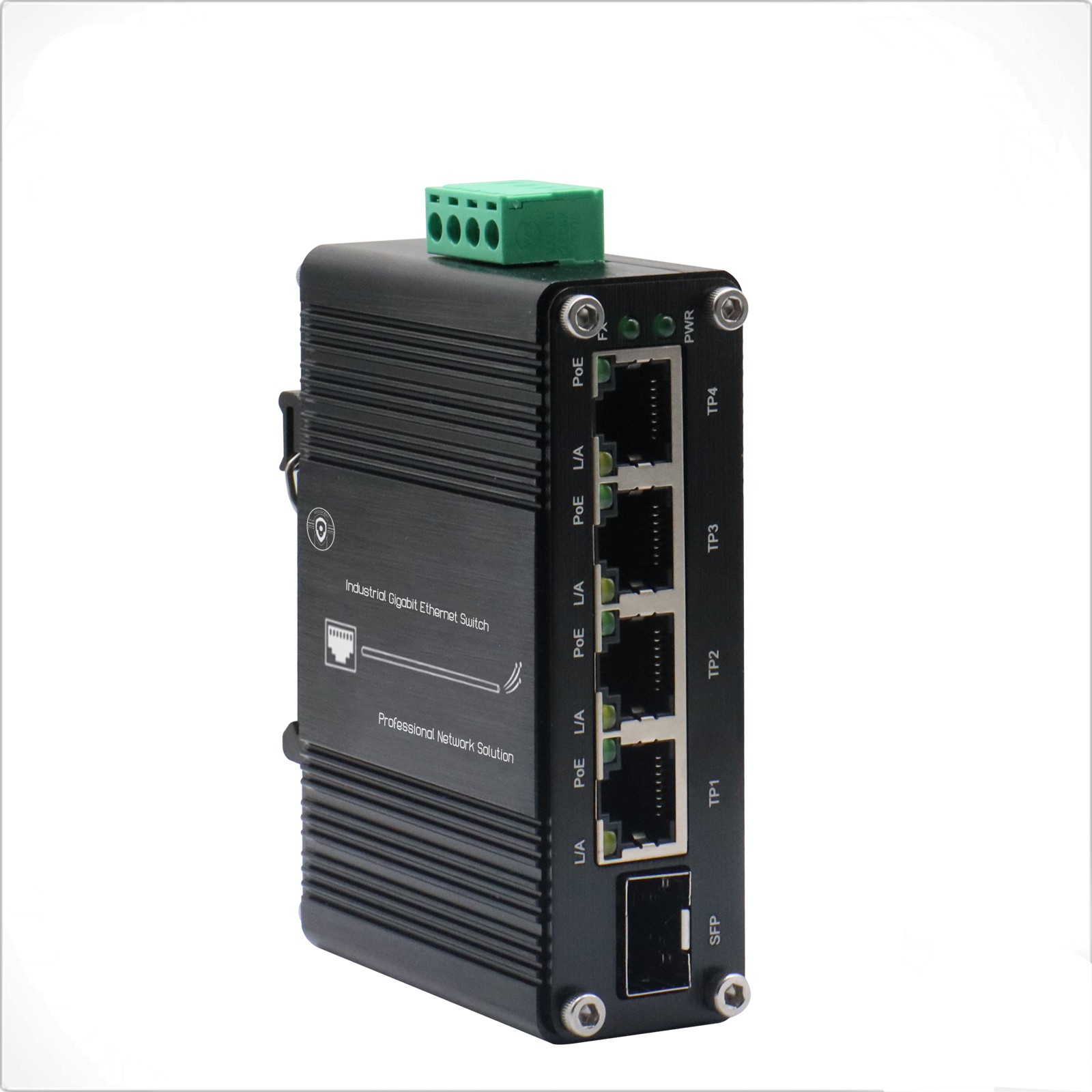
An industrial Ethernet switch provides the communication foundation that connects field equipment with control systems, helping operators monitor processes, manage equipment, and respond quickly to network or system failures.
1. Why Water Treatment Plants Need Industrial Ethernet Switches
Water treatment facilities often operate continuously and may contain equipment distributed across large areas.
Typical network devices include:
PLC controllers
SCADA systems
Industrial computers
Flow meters
Pressure sensors
Water quality sensors
Pump control systems
IP surveillance cameras
Remote I/O devices
A network interruption can affect monitoring and automation processes.
Industrial Ethernet switches are designed to provide stable communication for these demanding applications.
2. Industrial Ethernet Switch Applications in Water Treatment
PLC and SCADA Communication
PLC controllers collect information from field equipment and send process data to the SCADA system.
An industrial Ethernet switch connects:
Sensors → PLC → Ethernet Switch → SCADA → Control Center
This allows operators to monitor:
Water flow
Pressure
Tank levels
Pump status
Water quality
Valve operation
Real-time communication improves process visibility and operational efficiency.
Pump and Motor Control
Pumps are critical components of water treatment infrastructure.
Industrial Ethernet networks allow operators to monitor and control:
Pump operating status
Motor conditions
Flow rates
Pressure levels
Network connectivity also enables centralized equipment management.
IP Surveillance Systems
Water treatment plants often cover large areas, including:
Pump stations
Treatment facilities
Reservoirs
Chemical processing areas
Remote equipment rooms
Industrial PoE Ethernet switches can provide both power and network connectivity for IP cameras.
3. Key Features for Water Treatment Network Infrastructure
Industrial-Grade Reliability
Water treatment facilities may have:
High humidity
Temperature fluctuations
Electrical interference
Outdoor equipment cabinets
Remote installations
Industrial Ethernet switches with rugged construction can provide more reliable operation than standard commercial switches.
Wide Temperature Operation
Outdoor pumping stations and remote water infrastructure may experience significant temperature variations.
Wide-temperature industrial Ethernet switches can support applications in:
Outdoor cabinets
Pumping stations
Wastewater facilities
Reservoir monitoring systems
Fiber Optic Connectivity
Water treatment facilities may have equipment distributed over long distances.
Fiber Ethernet provides:
Long-distance transmission
High bandwidth
Resistance to electromagnetic interference
Reliable backbone communication
Fiber uplinks are particularly useful for connecting different buildings, control rooms, and remote stations.
4. Industrial Managed Ethernet Switches for SCADA Networks
Managed switches provide network engineers with greater control over industrial communication.
Important functions include:
VLAN
Separates different network services to improve traffic management and network organization.
QoS
Prioritizes important control and monitoring traffic.
SNMP
Allows network administrators to monitor switch status and network conditions remotely.
RSTP and ERPS
Provides network redundancy and rapid recovery when communication paths fail.
These functions are particularly valuable in large water treatment projects.
5. Industrial PoE Switches for Smart Water Infrastructure
PoE technology simplifies the installation of networked field devices.
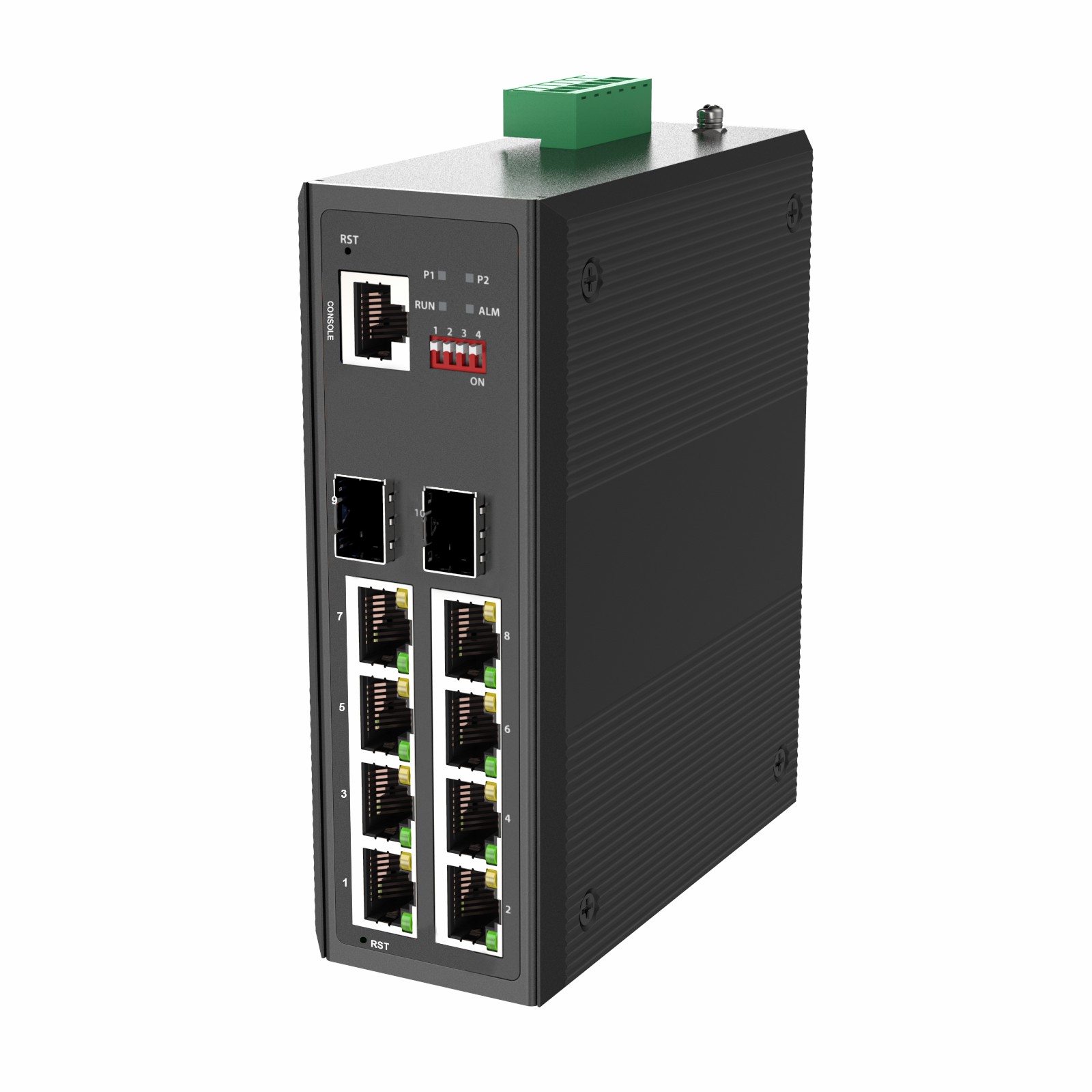
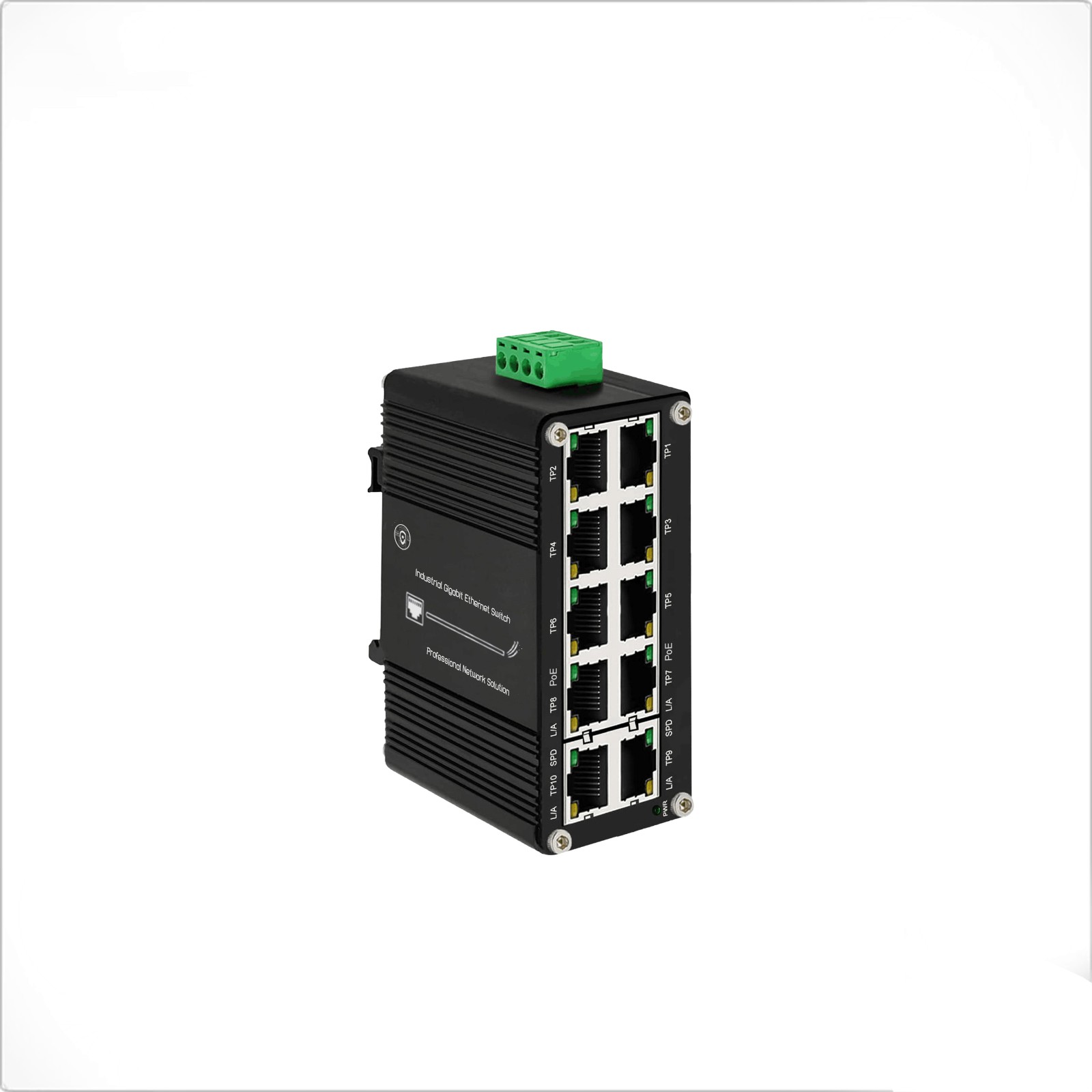
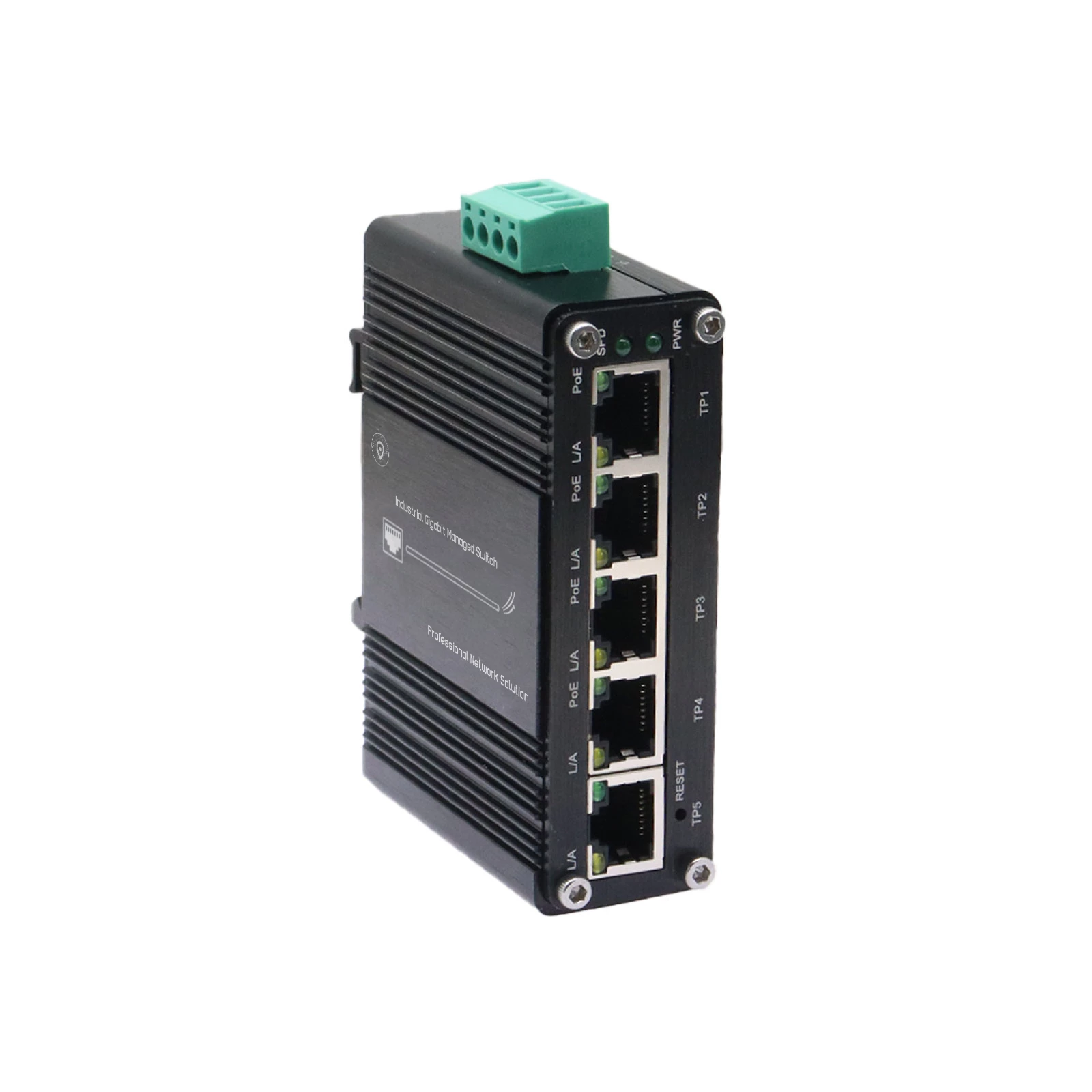
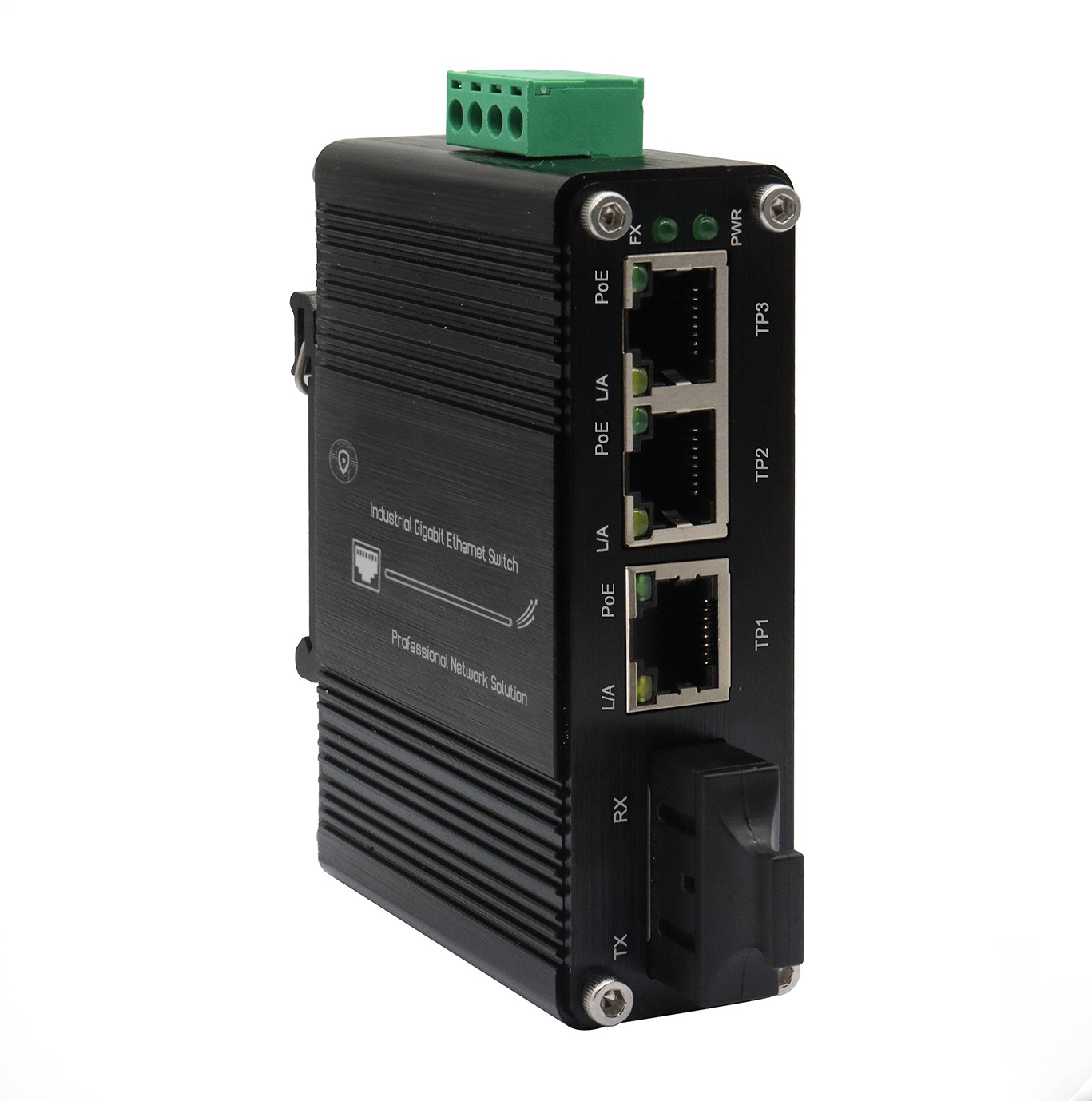
A PoE industrial Ethernet switch can provide both power and data through Ethernet cabling.
Typical applications include:
IP cameras
Wireless access points
Industrial IoT gateways
Access control devices
Monitoring terminals
This can reduce additional power cabling and simplify deployment.
6. Managed vs Unmanaged Ethernet Switches
Unmanaged Industrial Ethernet Switch
Suitable for:
Small pump stations
Basic monitoring systems
Simple field networks
Main advantages:
Plug-and-play installation
Simple operation
Cost-effective deployment
Managed Industrial Ethernet Switch
Recommended for:
Large water treatment plants
Municipal water networks
Wastewater treatment facilities
Critical SCADA infrastructure
Advantages include:
Network monitoring
VLAN configuration
Traffic prioritization
Redundancy
Remote diagnostics
7. How to Choose an Industrial Ethernet Switch for Water Treatment Projects
Port Configuration
Consider the number of connected devices and future expansion.
Typical options include:
5-port
8-port
16-port
24-port
48-port industrial Ethernet switches
Copper and Fiber Uplinks
RJ45 ports are suitable for local equipment connections.
SFP fiber ports are useful for:
Long-distance links
Plant backbone networks
Connections between buildings
Remote pumping stations
A combination of copper and fiber ports can provide greater flexibility for large projects.
Power Supply
Industrial projects may require different DC power configurations.
Depending on the application, consider:
Wide DC input
Dual power input
Redundant power design
8. Smart Water Management and Industrial IoT
Water infrastructure is increasingly adopting Industrial IoT technologies.
Connected sensors can provide real-time information about:
Water quality
Flow
Pressure
Energy consumption
Equipment condition
Industrial Ethernet switches connect these field devices with centralized monitoring platforms.
This enables:
Real-Time Monitoring → Data Analysis → Predictive Maintenance → Improved Efficiency
As smart water systems expand, reliable industrial networking will become increasingly important.
9. Benefits for Water Treatment System Integrators
For engineering contractors and system integrators, selecting the right industrial Ethernet switch can simplify project deployment.
Important benefits include:
Reliable long-term operation
Flexible port configurations
Copper and fiber connectivity
Industrial temperature support
Network redundancy
PoE device integration
Remote network management
A standardized industrial networking solution can also simplify maintenance across multiple water treatment projects.
Industrial PoE Switch | Managed PoE Switch | Gigabit PoE Switch | DIN Rail PoE Switch | Industrial Ethernet Switch | Smart Transportation Network | Traffic Monitoring System | Outdoor PoE Switch | PoE for CCTV | Fiber Uplink PoE Switch