简体中文
简体中文 English
- PRODUCTSIndustrial PoE Media Converter Industrial Media Converter Industrial Unmanaged PoE Switch Industrial Managed PoE Switch Industrial Unmanaged Ethernet Switch Industrial Managed Ethernet Switch Industrial PoE Injector Industrial PoE Splitter Industrial PoE Extender DIN-Rail Power Supply Rackmount DIN-Rail BracketHDMI Over Fiber ConverterSDI Over Fiber ConverterSDI Over Fiber Converter 12G-SDI Over Fiber Converter 3G-SDI Over Fiber Converter HD-SDI Over Fiber ConverterDVI Over Fiber ConverterAHD/CVI/TVI Over Fiber
- SOLUTIONS
- Download
- ABOUT
- CONTACT


Part 1: Introduction & What Is a Fiber Media Converter?
What Is a Fiber Media Converter?
A fiber media converter, also known as an Ethernet media converter or fiber Ethernet converter, is a networking device that converts Ethernet signals transmitted over copper cables into optical signals that travel through fiber optic cables. It also performs the reverse conversion at the receiving end, allowing seamless communication between copper-based and fiber-based networks.
In simple terms, a media converter acts as a bridge between two different transmission media:
Copper Ethernet (RJ45)
Fiber Optic Cable
By converting electrical signals into optical signals, media converters allow existing Ethernet devices to transmit data over much longer distances while benefiting from the high bandwidth, low signal loss, and EMI immunity of fiber optic communication.
Unlike replacing an entire network with fiber-capable equipment, installing media converters allows organizations to upgrade gradually, protecting existing investments while improving network performance.
Why Are Fiber Media Converters Important?
Modern networking projects often require communication between devices separated by hundreds or even thousands of meters.
Typical examples include:
Connecting security cameras across industrial parks
Linking multiple factory buildings
Extending networks across university campuses
Connecting remote warehouses
Deploying smart transportation infrastructure
Building utility and energy monitoring systems
In these scenarios, Ethernet cable limitations make fiber optic transmission essential. Fiber media converters provide an economical solution by allowing standard Ethernet devices to use fiber without requiring expensive hardware replacement.
Key Advantages of Fiber Media Converters
Modern fiber media converters provide several important benefits:
Extend Ethernet Transmission Distance
Copper Ethernet is generally limited to 100 meters.
Fiber media converters enable communication over:
550 meters (Multi-mode)
10 km (Single-mode)
20 km
40 km
80 km
120 km or more (depending on the optical module)
Protect Existing Network Investments
Organizations can continue using existing Ethernet switches, IP cameras, PLCs, and computers while upgrading only the transmission medium.
This reduces capital expenditure and simplifies network migration.
Improve Network Reliability
Fiber optic communication is immune to electromagnetic interference, making media converters ideal for:
Manufacturing facilities
Railways
Power substations
Mining operations
Oil & Gas sites
Flexible Deployment
Fiber media converters are available in various configurations, including:
Standalone desktop models
Industrial DIN-rail models
Rack-mounted chassis systems
Managed and unmanaged versions
PoE-enabled media converters
This flexibility allows them to meet the needs of a wide range of industrial and commercial applications.
Part 2: How Does a Fiber Media Converter Work?
A fiber media converter may appear to be a simple networking device, but it plays a vital role in modern communication systems. Its primary function is to convert electrical Ethernet signals into optical signals for transmission over fiber optic cables and then convert them back into electrical signals at the receiving end.
This conversion enables Ethernet devices that only support RJ45 interfaces to communicate across long distances using fiber optic infrastructure.
How Does a Fiber Media Converter Work?
A fiber media converter serves as the bridge between copper Ethernet networks and fiber optic networks.
It receives Ethernet data through an RJ45 port, converts the electrical signals into optical signals, transmits them through a fiber optic cable, and then converts them back into Ethernet signals at the opposite end.
Unlike routers or switches, a media converter does not process or route network traffic. Instead, it simply converts the transmission medium while preserving the original Ethernet protocol.
Basic Working Process
The communication process can be divided into four simple steps.
Step 1 – Ethernet Data Is Received
A connected device such as an:
Industrial Ethernet Switch
IP Camera
PLC Controller
Computer
Router
Network Video Recorder (NVR)
sends Ethernet data through a standard RJ45 network cable.
The media converter receives these electrical Ethernet signals through its copper port.
Step 2 – Electrical Signals Are Converted into Optical Signals
Inside the media converter is a fiber optic transceiver.
The transceiver converts electrical Ethernet signals into light pulses.
Depending on the installed optical module, the converter may use wavelengths such as:
850 nm (Multi-mode)
1310 nm (Single-mode)
1550 nm (Long-distance Single-mode)
These optical signals can travel much farther than electrical signals without significant attenuation.
Step 3 – Optical Transmission Through Fiber
The light signals travel through the fiber optic cable to the remote location.
Compared with copper Ethernet, fiber provides significant advantages:
Longer transmission distance
Higher bandwidth
Lower signal loss
Immunity to electromagnetic interference (EMI)
Improved reliability in harsh environments
This makes fiber the preferred medium for industrial and outdoor applications.
Step 4 – Optical Signals Are Converted Back into Ethernet
At the remote location, a second media converter receives the incoming optical signals.
The optical receiver converts the light pulses back into electrical Ethernet signals.
The connected device—such as a switch, camera, or server—can then process the data exactly as if it had been transmitted over a standard Ethernet cable.
To the connected devices, the conversion process is completely transparent.
Typical Network Architecture
A common deployment looks like this:
IP Camera
      │
RJ45 Ethernet Cable
      │
Fiber Media Converter
      │
Fiber Optic Cable
      │
Fiber Media Converter
      │
RJ45 Ethernet Cable
      │
PoE Switch / NVR / Server
This architecture allows copper-based devices to communicate over fiber without requiring any hardware modification.
Main Components of a Fiber Media Converter
Although compact, a media converter contains several important components.
RJ45 Ethernet Interface
The RJ45 port connects to copper Ethernet devices using Cat5e, Cat6, or Cat6A cables.
It supports standard Ethernet communication between connected devices.
Optical Transceiver
The optical transceiver performs the conversion between electrical and optical signals.
Depending on the model, it may support:
Multi-mode Fiber
Single-mode Fiber
BiDi Fiber
SFP Modules
Fixed Optical Ports
Some industrial models feature replaceable SFP slots, allowing users to select the appropriate optical module for different transmission distances.
Signal Processing Circuit
The internal signal processing circuitry ensures stable communication by:
Maintaining signal integrity
Synchronizing data transmission
Reducing transmission errors
Supporting automatic speed negotiation (on supported models)
Power Supply Circuit
Media converters are available with different power input options.
Commercial models typically use:
5 VDC
12 VDC
Industrial media converters often support:
12–48 VDC
Redundant dual power inputs
Reverse polarity protection
Overload protection
These features improve reliability in industrial environments.
Why Use Fiber Instead of Copper?
Standard Ethernet cables are suitable for short-distance communication, but fiber becomes the preferred choice as network requirements grow.
Longer Transmission Distance
Copper Ethernet is generally limited to 100 meters.
Fiber can support distances ranging from several hundred meters to more than 120 kilometers, depending on the optical module.
Higher Reliability
Fiber is immune to:
Electromagnetic interference (EMI)
Radio frequency interference (RFI)
Electrical surges
Ground potential differences
This makes it ideal for industrial facilities and outdoor installations.
Higher Bandwidth
Fiber supports significantly greater bandwidth than copper, making it suitable for:
High-resolution video surveillance
Industrial automation
Enterprise backbone networks
Cloud computing
Data centers
Better Security
Unlike copper cables, fiber optic cables do not emit electromagnetic signals that can be easily intercepted, providing improved protection for sensitive data.
Typical Industrial Application
Imagine a manufacturing facility with multiple production buildings separated by several hundred meters.
Each building contains:
Industrial switches
PLC controllers
IP surveillance cameras
Operator workstations
Installing copper Ethernet cables would not meet the distance requirements and could suffer from electromagnetic interference generated by heavy machinery.
By deploying industrial fiber media converters and fiber optic cabling, engineers can establish reliable, long-distance communication between buildings while maintaining stable network performance.
Benefits of Using Fiber Media Converters
Media converters offer several advantages for network expansion:
Extend existing Ethernet networks without replacing equipment
Reduce infrastructure upgrade costs
Increase communication distance
Improve network reliability
Support industrial environments
Enable gradual migration from copper to fiber
Simplify maintenance and future expansion
These benefits make fiber media converters an economical solution for both new installations and network upgrades.
Part 3: Types of Fiber Media Converters and How to Choose the Right Model
Fiber media converters are available in many different configurations to meet the requirements of industrial automation, enterprise networking, security surveillance, transportation, and telecommunications. Understanding the differences between these models helps network designers choose the most suitable solution for performance, reliability, and future expansion.
Types of Fiber Media Converters
Fiber media converters can be classified according to several factors:
Managed vs. Unmanaged
Industrial vs. Commercial
Standalone vs. Rack-Mount
Fixed Fiber Port vs. SFP Slot
PoE vs. Non-PoE
Gigabit vs. 2.5G/5G/10G
Each type serves different networking environments and project requirements.
Managed Fiber Media Converters
Managed fiber media converters provide advanced network management functions in addition to media conversion.
Typical management features include:
Web-based management
CLI (Command Line Interface)
SNMP
VLAN configuration
QoS (Quality of Service)
Port monitoring
Link fault detection
Loop prevention
Remote diagnostics
Advantages
Real-time network monitoring
Remote troubleshooting
Improved network security
Better traffic management
Easier maintenance
Typical Applications
Industrial automation
Smart city infrastructure
Enterprise networks
Campus networks
Transportation systems
Utility monitoring
Managed media converters are recommended when centralized monitoring and network management are required.
Unmanaged Fiber Media Converters
Unmanaged media converters operate as plug-and-play devices.
No software configuration is required.
Simply connect the Ethernet cable, fiber cable, and power supply, and communication begins automatically.
Advantages
Easy installation
Lower cost
Minimal maintenance
Ideal for small projects
Typical Applications
Small office networks
Retail stores
Residential buildings
Basic surveillance systems
Temporary network expansion
For straightforward point-to-point connections, unmanaged converters are often the most economical choice.
Industrial Fiber Media Converters
Industrial media converters are specifically engineered for harsh environments where standard commercial equipment may fail.
Typical features include:
Operating Temperature: -40°C to +75°C or -40°C to +85°C
IP40 aluminum housing
Fanless design
DIN-rail mounting
Wide voltage input (typically 12–48VDC)
Dual redundant power inputs
Surge protection
EMC/EMI resistance
Typical Applications
Manufacturing plants
Oil & gas facilities
Railway systems
Highway monitoring
Mining operations
Wind and solar farms
Power substations
Industrial models provide higher reliability and longer service life in demanding environments.
Commercial Fiber Media Converters
Commercial media converters are designed for climate-controlled indoor environments.
Typical features include:
Desktop installation
Standard temperature operation
External power adapter
Compact design
Cost-effective deployment
Typical Applications
Office buildings
Schools
Hospitals
Hotels
Small businesses
Indoor surveillance systems
These converters are suitable where environmental conditions are stable.
Standalone Fiber Media Converters
Standalone converters are individual units installed independently.
Advantages
Simple deployment
Low initial investment
Flexible installation
Easy replacement
Typical Applications
Building-to-building links
CCTV projects
Small industrial systems
Branch office connectivity
Standalone converters are ideal for point-to-point fiber connections.
Rack-Mount Fiber Media Converters
Rack-mounted systems allow multiple media converters to be installed in a centralized chassis.
Typical chassis capacities include:
14 Slots
16 Slots
18 Slots
Advantages
High port density
Centralized power management
Simplified maintenance
Cleaner cable management
Suitable for large-scale deployments
Typical Applications
Data centers
ISP equipment rooms
Campus networks
Enterprise server rooms
Large surveillance control centers
Fixed Fiber Port Media Converters
Some media converters include a built-in optical interface.
Common options include:
SC Connector
LC Connector
Advantages
Lower purchase cost
Simple installation
No additional SFP module required
Limitations
Fixed transmission distance
Fixed wavelength
Less flexibility for future upgrades
These models are suitable when project requirements are well defined.
SFP Slot Media Converters
Many modern converters include one or more SFP slots instead of fixed optical ports.
Users can install different SFP modules depending on project requirements.
Supported module types include:
Multi-mode SFP
Single-mode SFP
BiDi SFP
CWDM SFP
DWDM SFP
Long-distance SFP
Advantages
Flexible deployment
Easy future upgrades
Support for multiple transmission distances
Lower inventory requirements
SFP-based media converters are recommended for projects requiring scalability.
PoE Fiber Media Converters
PoE media converters combine media conversion with Power over Ethernet functionality.
They can supply power and network connectivity through a single Ethernet cable.
Common PoE standards include:
IEEE 802.3af
IEEE 802.3at
IEEE 802.3bt
Typical Powered Devices
IP Cameras
Wireless Access Points
VoIP Phones
Industrial Sensors
Access Control Systems
Advantages
Simplified installation
Reduced cabling
Lower installation cost
Centralized power management
PoE media converters are widely used in surveillance and industrial IoT projects.
Selecting the Right Speed
Modern media converters support different Ethernet speeds.
Fast Ethernet
10/100 Mbps
Suitable for legacy equipment.
Gigabit Ethernet
10/100/1000 Mbps
The most widely deployed option for industrial and enterprise networks.
Multi-Gigabit Ethernet
2.5G
5G
10G
Recommended for:
AI surveillance
High-density wireless networks
Data centers
High-bandwidth industrial applications
How to Choose the Right Fiber Media Converter
Before purchasing, consider the following factors:
1. Transmission Distance
Determine the required communication distance.
Examples:
550 m → Multi-mode
10 km → Single-mode
20 km or more → Long-distance Single-mode
2. Fiber Type
Verify whether your project uses:
Multi-mode Fiber (MMF)
Single-mode Fiber (SMF)
Incorrect fiber selection may prevent communication.
3. Operating Environment
Choose:
Commercial models for indoor office environments.
Industrial models for harsh or outdoor environments.
4. Power Requirements
Consider whether the installation requires:
Standard DC input
Wide voltage input
Dual redundant power supplies
PoE output
These features are particularly important in industrial applications.
5. Future Expansion
Projects that may expand over time benefit from:
SFP slot media converters
Managed models
Higher-speed uplinks
These options provide greater flexibility for future network growth.
Common Buying Mistakes
Avoid these common mistakes when selecting a media converter:
Choosing the wrong fiber type (SMF vs. MMF)
Ignoring transmission distance requirements
Selecting commercial equipment for industrial environments
Overlooking PoE power requirements
Purchasing fixed-port models when future upgrades are expected
Failing to verify switch and SFP compatibility
Proper planning helps reduce downtime, maintenance costs, and future replacement expenses.
Part 4: Single Mode vs. Multi Mode Fiber Media Converters
One of the most common questions when purchasing a fiber media converter is whether to choose a Single Mode or Multi Mode model. While both perform the same basic function of converting Ethernet signals to optical signals, they are designed for different fiber types, transmission distances, and deployment environments.
Selecting the wrong type can lead to communication failures, poor network performance, and unnecessary costs. Understanding the differences will help you choose the right media converter for your project.
What Is a Single Mode Fiber Media Converter?
A Single Mode Fiber Media Converter is designed to work with single-mode fiber (SMF), which has a small core diameter of approximately 9/125 μm.
Because light travels through a single optical path, signal attenuation is very low, making single-mode fiber ideal for long-distance communication.
Typical Specifications
| Feature | Single Mode Media Converter |
|---|---|
| Fiber Type | Single Mode (SMF) |
| Core Size | 9/125 μm |
| Typical Wavelength | 1310 nm / 1550 nm |
| Transmission Distance | 10 km to 120 km+ |
| Common Connector | SC or LC |
| Applications | Long-distance networks |
Advantages of Single Mode Media Converters
Single-mode solutions offer several important benefits:
Support long-distance transmission
Low optical signal loss
High bandwidth
Excellent reliability
Suitable for future network expansion
Ideal for outdoor installations
These advantages make single-mode media converters the preferred choice for large-scale industrial and enterprise networks.
Typical Applications of Single Mode Media Converters
Single-mode media converters are widely used in:
Industrial automation
Smart city infrastructure
Campus backbone networks
Building-to-building connections
Railway communication systems
Highway monitoring
Oil & gas facilities
Power substations
Metropolitan Area Networks (MAN)
Whenever transmission distance exceeds 550 meters, single-mode fiber is generally the recommended option.
What Is a Multi Mode Fiber Media Converter?
A Multi Mode Fiber Media Converter is designed to work with multi-mode fiber (MMF), which typically has a core diameter of 50/125 μm or 62.5/125 μm.
The larger core allows multiple light paths to travel simultaneously, making multi-mode fiber ideal for short-distance communication within buildings.
Typical Specifications
| Feature | Multi Mode Media Converter |
|---|---|
| Fiber Type | Multi Mode (MMF) |
| Core Size | 50/125 μm or 62.5/125 μm |
| Typical Wavelength | 850 nm |
| Transmission Distance | Up to 550 m |
| Common Connector | SC or LC |
| Applications | Indoor networks |
Advantages of Multi Mode Media Converters
Multi-mode solutions provide several benefits for short-distance deployments:
Lower installation cost
Easier optical alignment
High-speed communication over short distances
Suitable for existing enterprise fiber infrastructure
Ideal for indoor environments
For office buildings and server rooms, multi-mode media converters are often the most economical choice.
Typical Applications of Multi Mode Media Converters
Common deployment scenarios include:
Office buildings
Enterprise LANs
Schools and universities
Hospitals
Shopping malls
Data centers
Server rooms
Indoor surveillance systems
These environments generally require communication distances well within the capabilities of multi-mode fiber.
Single Mode vs. Multi Mode Comparison
| Feature | Single Mode | Multi Mode |
|---|---|---|
| Fiber Type | SMF | MMF |
| Core Diameter | 9/125 μm | 50/125 μm or 62.5/125 μm |
| Wavelength | 1310/1550 nm | 850 nm |
| Maximum Distance | Up to 120 km+ | Up to 550 m |
| Signal Attenuation | Very Low | Higher |
| Best For | Long-distance communication | Short-distance communication |
| Typical Environment | Outdoor & industrial | Indoor & enterprise |
How to Choose Between Single Mode and Multi Mode
Several factors should be considered before selecting a media converter.
1. Transmission Distance
Distance is the most important factor.
Multi Mode
Recommended for:
Less than 550 meters
Equipment within the same building
Campus buildings connected over short distances
Single Mode
Recommended for:
More than 550 meters
Building-to-building communication
Industrial facilities
Outdoor installations
2. Installation Environment
For harsh environments with extreme temperatures, vibration, or electromagnetic interference, industrial-grade single-mode media converters are typically the best choice.
Indoor office environments can usually use commercial multi-mode models.
3. Future Expansion
If your network is expected to expand over time, single-mode fiber provides greater flexibility because it supports much longer transmission distances without replacing the fiber infrastructure.
4. Budget Considerations
While single-mode optical modules generally cost more than multi-mode modules, the fiber cable itself is often less expensive.
The overall project cost depends on transmission distance, installation complexity, and future scalability.
Typical Deployment Examples
Example 1 – Office Building
Distance: 150 meters
Recommended Solution:
Multi-mode media converter
Multi-mode fiber
Gigabit Ethernet
Example 2 – Factory Campus
Distance: 3 kilometers
Recommended Solution:
Single-mode media converter
Industrial-grade design
Single-mode fiber
Example 3 – Smart City Surveillance
Distance: 20 kilometers
Recommended Solution:
Industrial single-mode media converter
Long-distance optical transceivers
Fiber optic backbone
Example 4 – Data Center
Distance: 100 meters
Recommended Solution:
Multi-mode fiber
High-speed Gigabit or 10G media converter
Common Mistakes
Many installation problems occur because of incorrect fiber selection.
Avoid these common mistakes:
Connecting a single-mode converter to multi-mode fiber
Using an 850 nm optical port with single-mode fiber
Choosing insufficient transmission distance
Mixing incompatible optical wavelengths
Ignoring future network expansion
Verifying all project requirements before purchasing helps avoid costly replacements and downtime.
Best Practices
Before selecting a media converter, confirm:
Required transmission distance
Fiber type (SMF or MMF)
Connector type (SC or LC)
Network speed
Operating environment
Power requirements
Future scalability
Careful planning ensures a reliable and cost-effective deployment.
Part 5: Common Applications and How to Choose the Right Fiber Media Converter
Fiber media converters are widely used across industrial, commercial, and enterprise networks. Whether you are extending an Ethernet connection between buildings or deploying an industrial automation system, selecting the right media converter is essential for stable and reliable communication.
This section explores the most common application scenarios and provides a practical buying guide to help you choose the best fiber media converter for your project.
Common Applications of Fiber Media Converters
1. IP Surveillance Systems
Fiber media converters are widely deployed in CCTV and IP surveillance networks because cameras are often installed far from the monitoring center.
Typical deployment scenarios include:
City surveillance
Highway monitoring
Airport security
Railway stations
School campuses
Industrial parks
Warehouses
Shopping malls
Recommended Configuration
Gigabit Fiber Media Converter
Single-Mode Fiber (for long-distance projects)
PoE Media Converter (when powering IP cameras)
Industrial Media Converter (for outdoor installations)
Benefits
Extend camera transmission distance
Improve video transmission stability
Eliminate electromagnetic interference
Reduce network latency
Support HD, 4K, and AI surveillance cameras
2. Industrial Automation
Manufacturing facilities often contain heavy machinery, electrical equipment, and high-voltage systems that generate significant electromagnetic interference (EMI).
Industrial fiber media converters provide reliable communication under these harsh conditions.
Typical applications include:
PLC communication
Industrial Ethernet
Production lines
SCADA systems
Robotic automation
Machine vision systems
Recommended Features
Industrial-grade design
Wide operating temperature (-40°C to +75°C or +85°C)
Dual redundant power inputs
DIN-rail mounting
IP40 aluminum housing
Surge protection
3. Building-to-Building Networks
Organizations frequently need to connect multiple buildings without replacing existing Ethernet equipment.
Examples include:
Office campuses
Hospitals
Universities
Government facilities
Manufacturing campuses
Using fiber media converters allows organizations to extend Ethernet networks over several kilometers while maintaining high bandwidth and excellent reliability.
4. Smart City Infrastructure
Modern smart cities rely on fiber communication to connect distributed systems.
Typical applications include:
Traffic signal control
Environmental monitoring
Public Wi-Fi
Emergency communication
Smart parking
Public security systems
Because these systems are spread over large geographic areas, fiber media converters provide a cost-effective solution for integrating copper-based devices into fiber optic networks.
5. Energy and Utility Networks
Power plants, substations, and renewable energy facilities require highly reliable communication.
Media converters are commonly used in:
Electrical substations
Solar power plants
Wind farms
Oil & gas pipelines
Water treatment facilities
Industrial models with wide operating temperatures and redundant power inputs are recommended for these critical applications.
6. Enterprise Networks
Many enterprises use fiber media converters to expand their internal networks without replacing existing switches and servers.
Typical scenarios include:
Server rooms
Office buildings
Campus networks
Branch office connections
Enterprise backbone upgrades
Fiber communication improves network reliability while supporting future bandwidth growth.
How to Choose the Right Fiber Media Converter
Selecting the correct media converter requires careful evaluation of several factors.
Step 1 – Determine the Transmission Distance
The required transmission distance is the first consideration.
| Distance | Recommended Solution |
|---|---|
| Up to 100 m | Standard Ethernet Cable |
| Up to 550 m | Multi-Mode Fiber Media Converter |
| Up to 10 km | Single-Mode Fiber Media Converter |
| 20–120 km | Long-Reach Single-Mode Media Converter |
Always choose a converter that supports your project's maximum communication distance.
Step 2 – Select the Fiber Type
Verify the fiber infrastructure before purchasing.
Choose:
Multi-Mode Fiber (MMF) for short indoor links.
Single-Mode Fiber (SMF) for long-distance and outdoor deployments.
Mixing the wrong converter with the wrong fiber type will prevent communication.
Step 3 – Choose the Required Network Speed
Media converters are available with different Ethernet speeds.
Common options include:
Fast Ethernet (10/100 Mbps)
Gigabit Ethernet (10/100/1000 Mbps)
2.5 Gigabit Ethernet
5 Gigabit Ethernet
10 Gigabit Ethernet
For most industrial automation and IP surveillance projects, Gigabit Ethernet provides an excellent balance between performance and cost.
Step 4 – Evaluate the Installation Environment
The operating environment determines whether a commercial or industrial model should be selected.
Choose a Commercial Media Converter When:
Installed indoors
Temperature is stable
No significant vibration
Minimal electromagnetic interference
Choose an Industrial Media Converter When:
Installed outdoors
Wide temperature range is required
High vibration is present
Electrical interference is significant
Continuous operation is critical
Step 5 – Consider Power Requirements
Some projects require advanced power features.
Examples include:
Wide voltage input (12–48VDC)
Dual redundant power supplies
Reverse polarity protection
Overload protection
PoE output
Selecting the appropriate power configuration improves system reliability and simplifies maintenance.
Step 6 – Decide Whether PoE Is Required
If the connected device requires power through the Ethernet cable, a PoE media converter can reduce installation costs and simplify cabling.
Typical powered devices include:
IP Cameras
Wireless Access Points
VoIP Phones
Access Control Devices
Industrial IoT Sensors
Step 7 – Plan for Future Expansion
Future network growth should always be considered during the initial design phase.
Choosing a media converter with:
SFP slots
Managed features
Higher-speed uplinks
provides greater flexibility for future upgrades.
Common Buying Mistakes
Avoid these common mistakes when purchasing a fiber media converter:
Selecting the wrong fiber type
Ignoring transmission distance requirements
Buying a commercial model for industrial environments
Overlooking PoE power requirements
Choosing fixed optical ports when flexible SFP slots are needed
Ignoring compatibility with existing switches
Failing to consider future network expansion
Proper planning reduces maintenance costs and minimizes future equipment replacement.
Best Practices
Before placing an order, confirm the following:
✔ Transmission distance
✔ Fiber type (SMF or MMF)
✔ Ethernet speed
✔ Connector type (SC or LC)
✔ Power input requirements
✔ Operating temperature
✔ Mounting method (Desktop or DIN-Rail)
✔ PoE requirements
✔ Switch compatibility
✔ Future scalability
Following these guidelines helps ensure a stable, efficient, and future-ready network.
Part 6: Frequently Asked Questions, Why Choose WXA, and Conclusion
Frequently Asked Questions (FAQ)
1. What is a fiber media converter?
A fiber media converter is a networking device that converts electrical Ethernet signals transmitted over copper cables into optical signals for fiber optic cables, and vice versa. It enables Ethernet devices with RJ45 ports to communicate over much longer distances using fiber optic infrastructure.
2. What is a fiber media converter used for?
Fiber media converters are commonly used to:
Extend Ethernet transmission beyond 100 meters
Connect copper Ethernet devices to fiber networks
Upgrade existing networks without replacing equipment
Improve communication reliability in industrial environments
Support long-distance IP surveillance and industrial automation systems
3. Do I need two fiber media converters?
Yes. In most applications, two media converters are required—one at each end of the fiber link. One converter changes Ethernet signals into optical signals, while the other converts them back into Ethernet signals.
4. What is the maximum transmission distance?
The maximum distance depends on the optical interface.
Typical transmission ranges include:
| Fiber Type | Maximum Distance |
|---|---|
| Multi-Mode | Up to 550 m |
| Single-Mode | 10 km |
| Long-Reach Single-Mode | 20 km |
| Extended-Reach Single-Mode | 40 km |
| Ultra Long-Reach | 60–120 km |
Always select a converter that meets or exceeds your project's transmission requirements.
5. Can I connect a media converter directly to a network switch?
Yes.
A fiber media converter can be connected directly to:
Ethernet switches
Industrial switches
Routers
Firewalls
Servers
PLC controllers
IP cameras
Network Video Recorders (NVRs)
No special configuration is required for unmanaged models.
6. What is the difference between a managed and an unmanaged media converter?
Managed media converters provide features such as VLAN configuration, SNMP, QoS, remote monitoring, and diagnostics.
Unmanaged media converters are plug-and-play devices designed for simple point-to-point connections without configuration.
7. Should I choose single-mode or multi-mode?
It depends on transmission distance.
Multi-mode is recommended for indoor links up to approximately 550 meters.
Single-mode is recommended for long-distance communication exceeding 550 meters, outdoor installations, and industrial environments.
8. What is the difference between a media converter and a network switch?
A media converter only converts the transmission medium between copper Ethernet and fiber optic cables.
A network switch connects multiple Ethernet devices and forwards network traffic between ports.
Some industrial switches include built-in fiber ports, eliminating the need for separate media converters.
9. Can a fiber media converter provide PoE?
Yes.
PoE fiber media converters can supply both data and power over a single Ethernet cable.
They are widely used for:
IP cameras
Wireless access points
VoIP phones
Access control systems
Industrial IoT devices
10. Can I use SFP modules with a media converter?
Many industrial media converters include one or more SFP slots, allowing users to install different SFP modules based on transmission distance, fiber type, and application.
This provides greater flexibility than fixed optical ports.
11. How do I choose the correct media converter?
Before purchasing, consider:
Transmission distance
Fiber type (SMF or MMF)
Ethernet speed
Connector type
Operating environment
Power input
PoE requirements
Switch compatibility
Future expansion
Selecting the correct specifications ensures reliable long-term operation.
12. Are industrial media converters different from commercial models?
Yes.
Industrial models are specifically designed for harsh environments and typically include:
Operating temperatures from -40°C to +75°C or +85°C
DIN-rail mounting
Fanless aluminum housing
Wide voltage input
Dual redundant power supplies
Enhanced EMC/EMI protection
Commercial models are intended for climate-controlled indoor environments.
13. Can fiber media converters be used outdoors?
Yes, provided that industrial-grade models are installed in suitable weatherproof enclosures when necessary.
Industrial media converters are commonly used in:
Smart city projects
Transportation systems
Highway surveillance
Utility networks
Outdoor industrial facilities
14. Are fiber media converters hot-swappable?
Most standalone media converters require power to be disconnected before replacement.
However, SFP modules installed in compatible media converters are typically hot-swappable, allowing replacement without shutting down the entire system.
Always follow the manufacturer's maintenance recommendations.
15. What industries commonly use fiber media converters?
Fiber media converters are widely used in:
Industrial automation
Manufacturing
Security surveillance
Transportation
Telecommunications
Smart cities
Energy and utilities
Campus networks
Enterprise networking
Data centers
Why Choose WXA Fiber Media Converters?
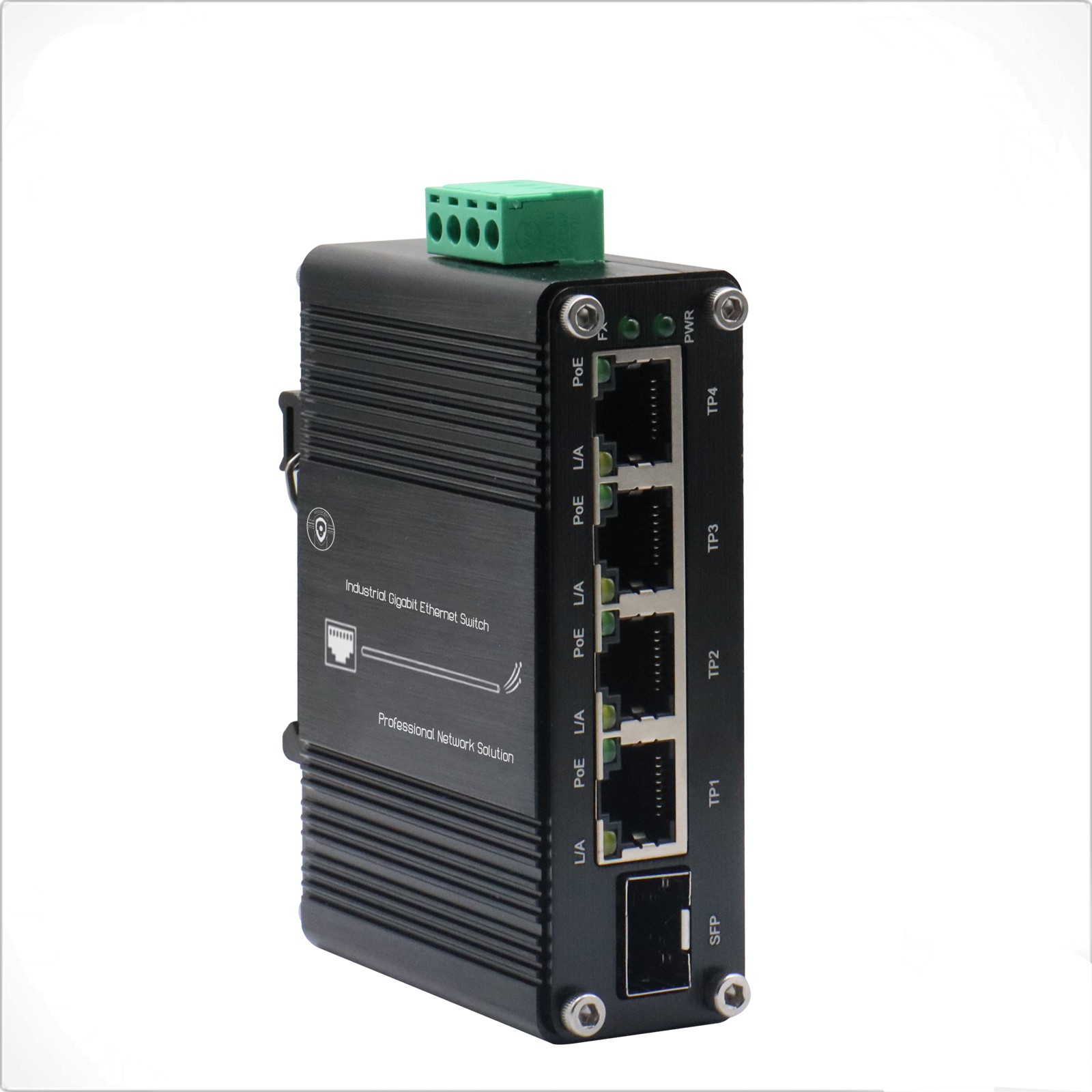
At Shenzhen WeiXiangAn Technology Co., Ltd., we specialize in designing and manufacturing high-performance networking products for industrial and commercial applications.
Comprehensive Product Portfolio
We offer a wide range of networking solutions, including:
Fiber Media Converters
Industrial Fiber Media Converters
PoE Fiber Media Converters
Industrial Ethernet Switches
Managed & Unmanaged PoE Switches
PoE Injectors
PoE Splitters
SFP & SFP+ Optical Transceivers
PCIe Network Interface Cards
OEM & ODM Manufacturing
We support customized solutions for distributors, system integrators, and global brands, including:
Private Label Branding
Custom Product Configuration
Firmware Customization
Packaging Design
Logo Printing
Strict Quality Assurance
Every product undergoes rigorous testing before shipment, including:
Network communication testing
Fiber transmission testing
PoE power testing
Burn-in testing
Temperature and stability testing
Compatibility verification
Designed for Industrial Reliability
Our industrial networking products are engineered for demanding environments with features such as:
Wide operating temperature
Fanless aluminum housing
DIN-rail installation
Redundant power input
Surge protection
Long-term stable operation
Professional Technical Support
From product selection to deployment, our experienced technical team provides prompt assistance to help customers design reliable, scalable networking solutions.
Conclusion
Fiber media converters are a practical and cost-effective solution for extending Ethernet networks over fiber optic infrastructure. They allow organizations to connect copper-based equipment across long distances while improving network reliability, reducing electromagnetic interference, and protecting existing hardware investments.
Whether you are building an industrial automation network, upgrading a surveillance system, connecting multiple buildings, or deploying a smart city project, choosing the right fiber media converter is critical for long-term network performance.
By evaluating transmission distance, fiber type, Ethernet speed, operating environment, and future scalability, you can select a solution that meets today's requirements while supporting tomorrow's growth.
Need Help Choosing the Right Fiber Media Converter?
If you're planning a new installation or upgrading an existing network, Shenzhen WeiXiangAn Technology Co., Ltd. can provide professional support and reliable networking solutions.
We offer:
OEM & ODM Manufacturing
Industrial Networking Solutions
Fast Production & Global Delivery
Professional Technical Support
Flexible Solutions for Distributors and System Integrators
Contact us today to discuss your project and find the right fiber media converter for your application.
Industrial PoE Switch | Managed PoE Switch | Gigabit PoE Switch | DIN Rail PoE Switch | Industrial Ethernet Switch | Smart Transportation Network | Traffic Monitoring System | Outdoor PoE Switch | PoE for CCTV | Fiber Uplink PoE Switch