简体中文
简体中文 English
- PRODUCTSIndustrial PoE Media Converter Industrial Media Converter Industrial Unmanaged PoE Switch Industrial Managed PoE Switch Industrial Unmanaged Ethernet Switch Industrial Managed Ethernet Switch Industrial PoE Injector Industrial PoE Splitter Industrial PoE Extender DIN-Rail Power Supply Rackmount DIN-Rail BracketHDMI Over Fiber ConverterSDI Over Fiber ConverterSDI Over Fiber Converter 12G-SDI Over Fiber Converter 3G-SDI Over Fiber Converter HD-SDI Over Fiber ConverterDVI Over Fiber ConverterAHD/CVI/TVI Over Fiber
- SOLUTIONS
- Download
- ABOUT
- CONTACT


Part 1: Introduction & What Is an Industrial Ethernet Switch?
What Is an Industrial Ethernet Switch?
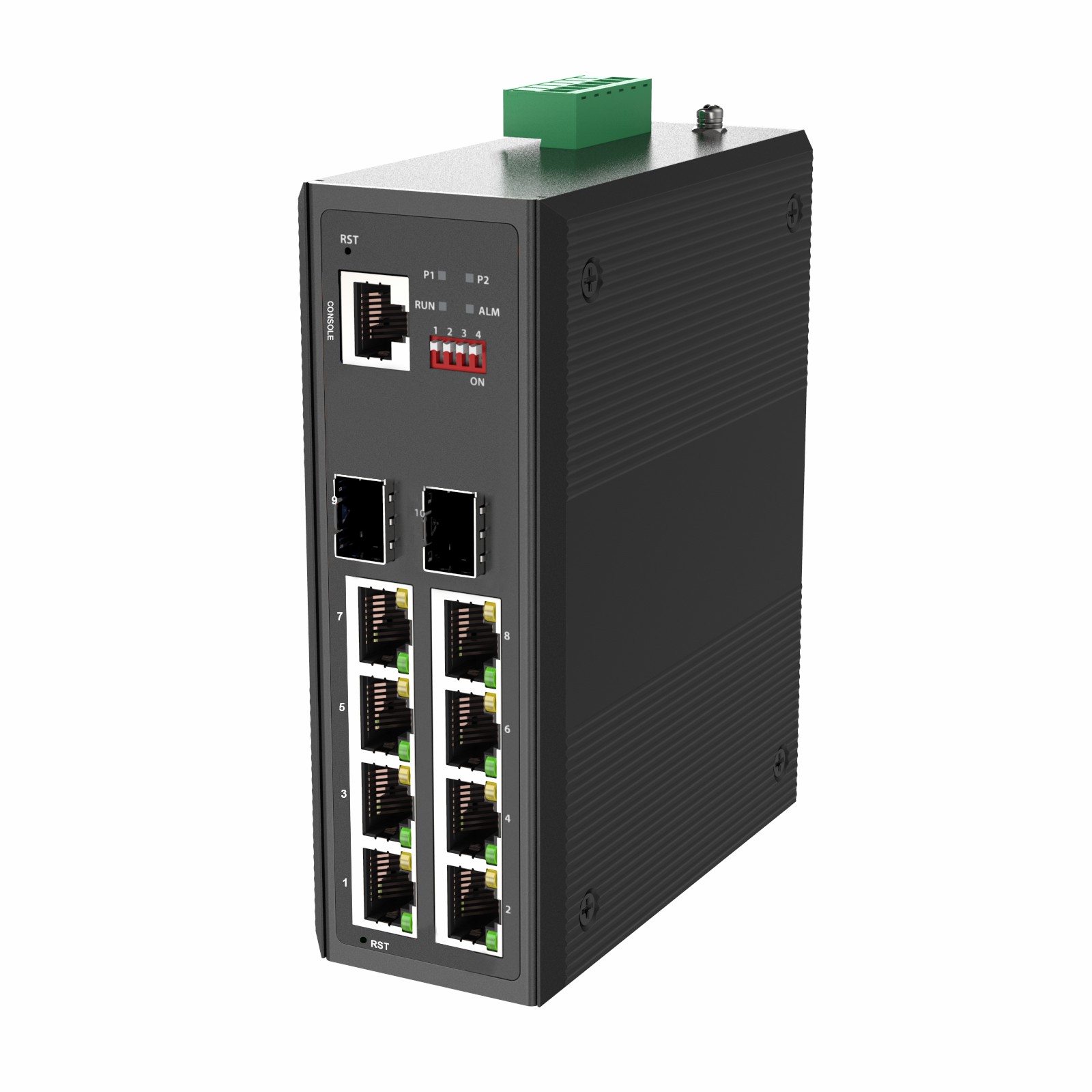
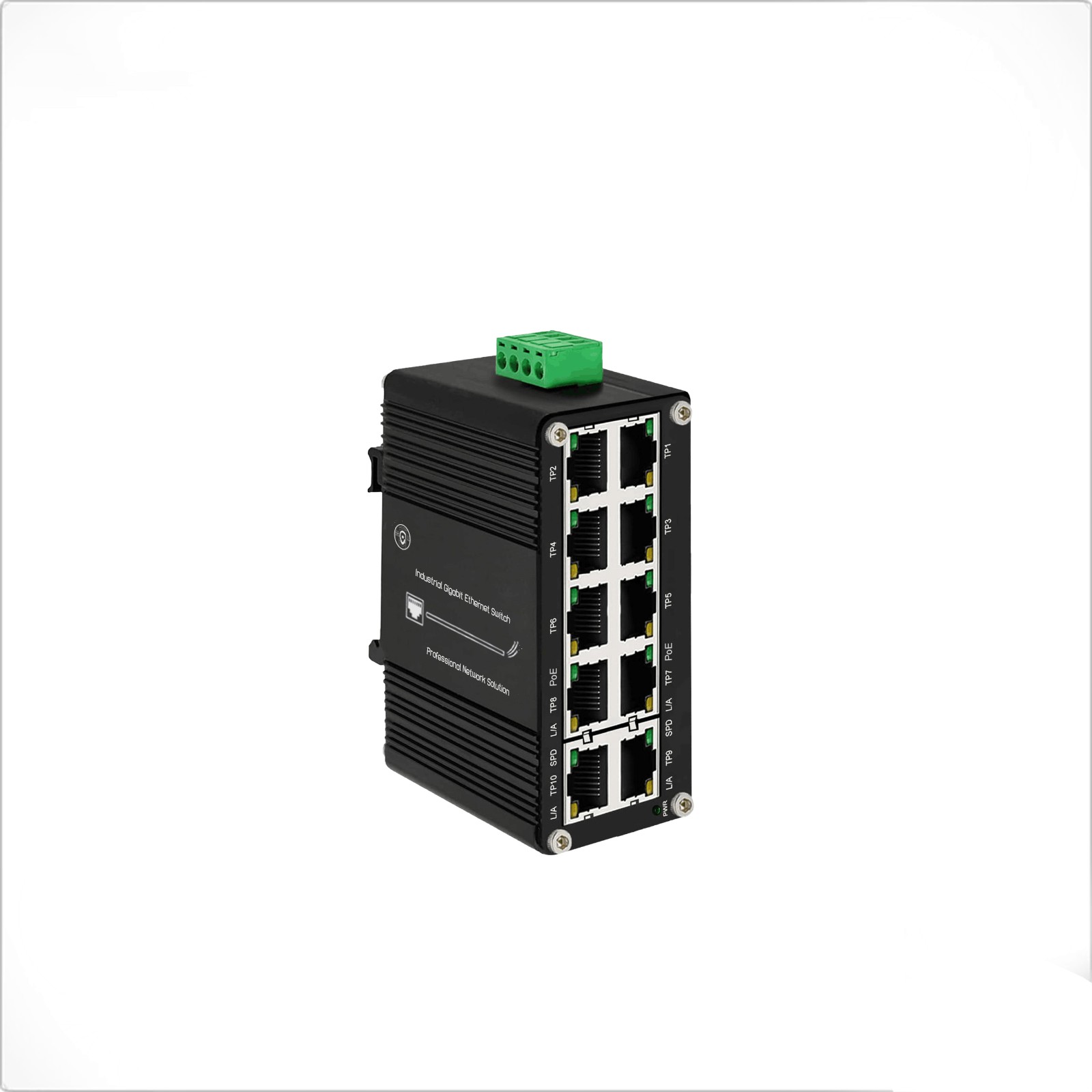
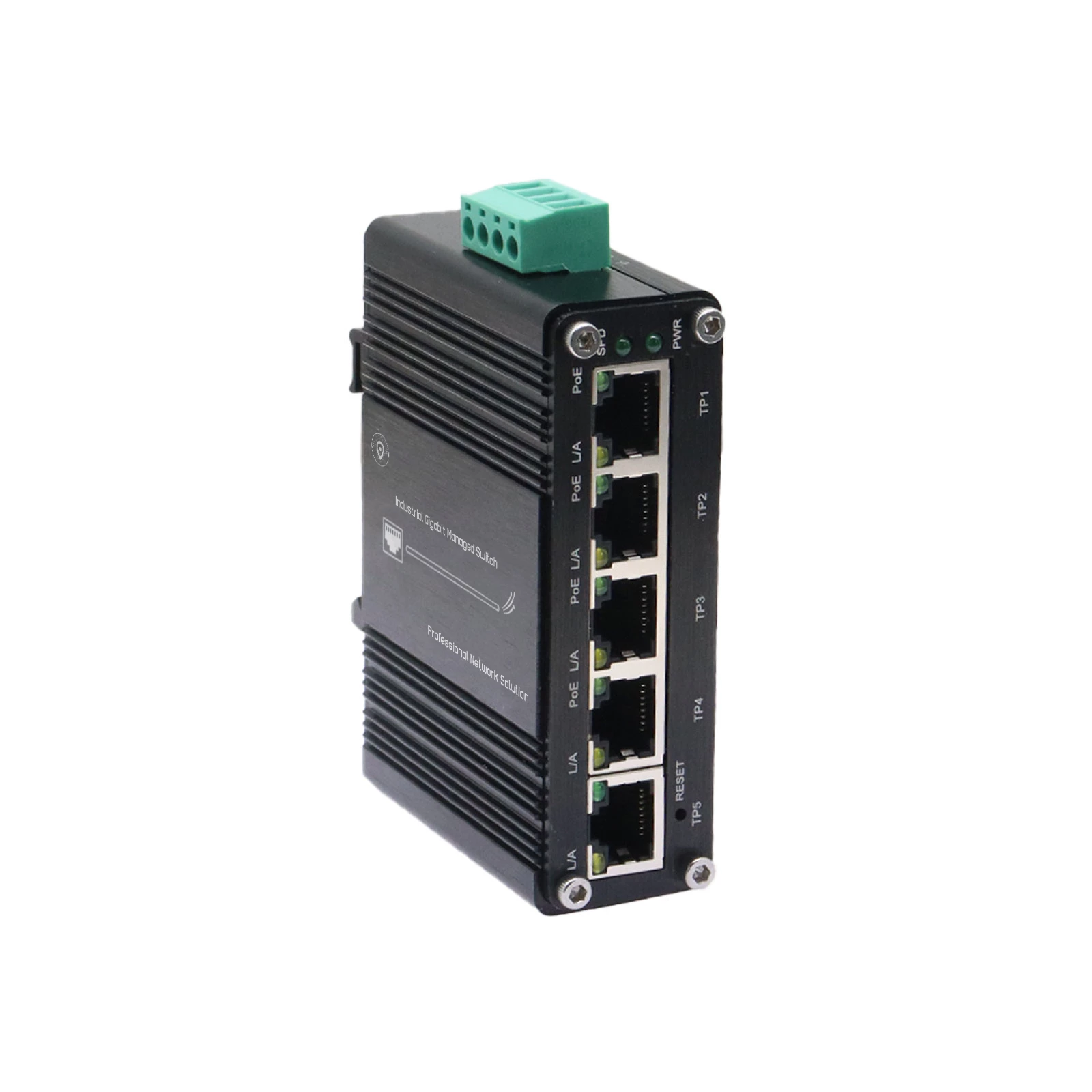
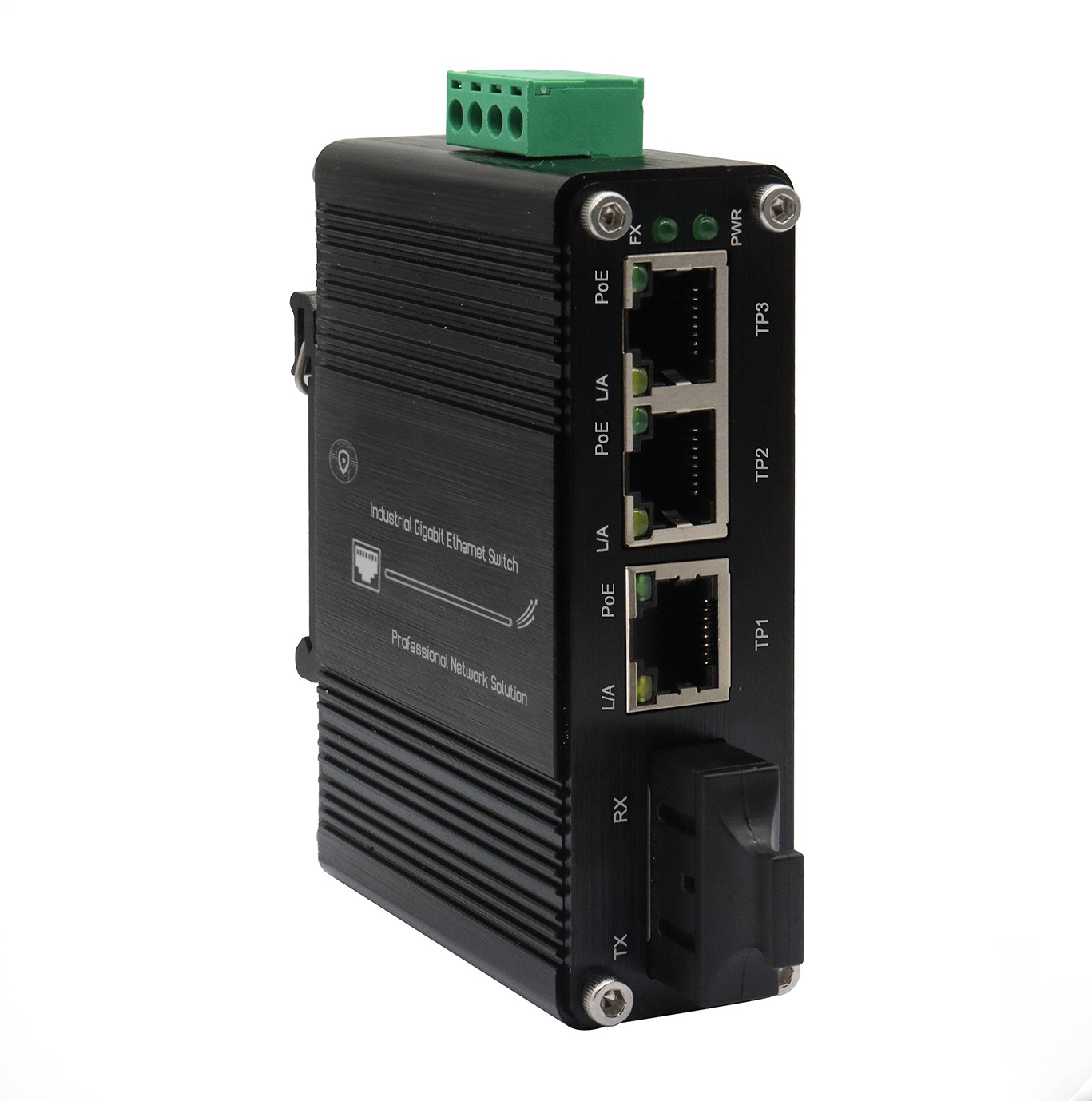
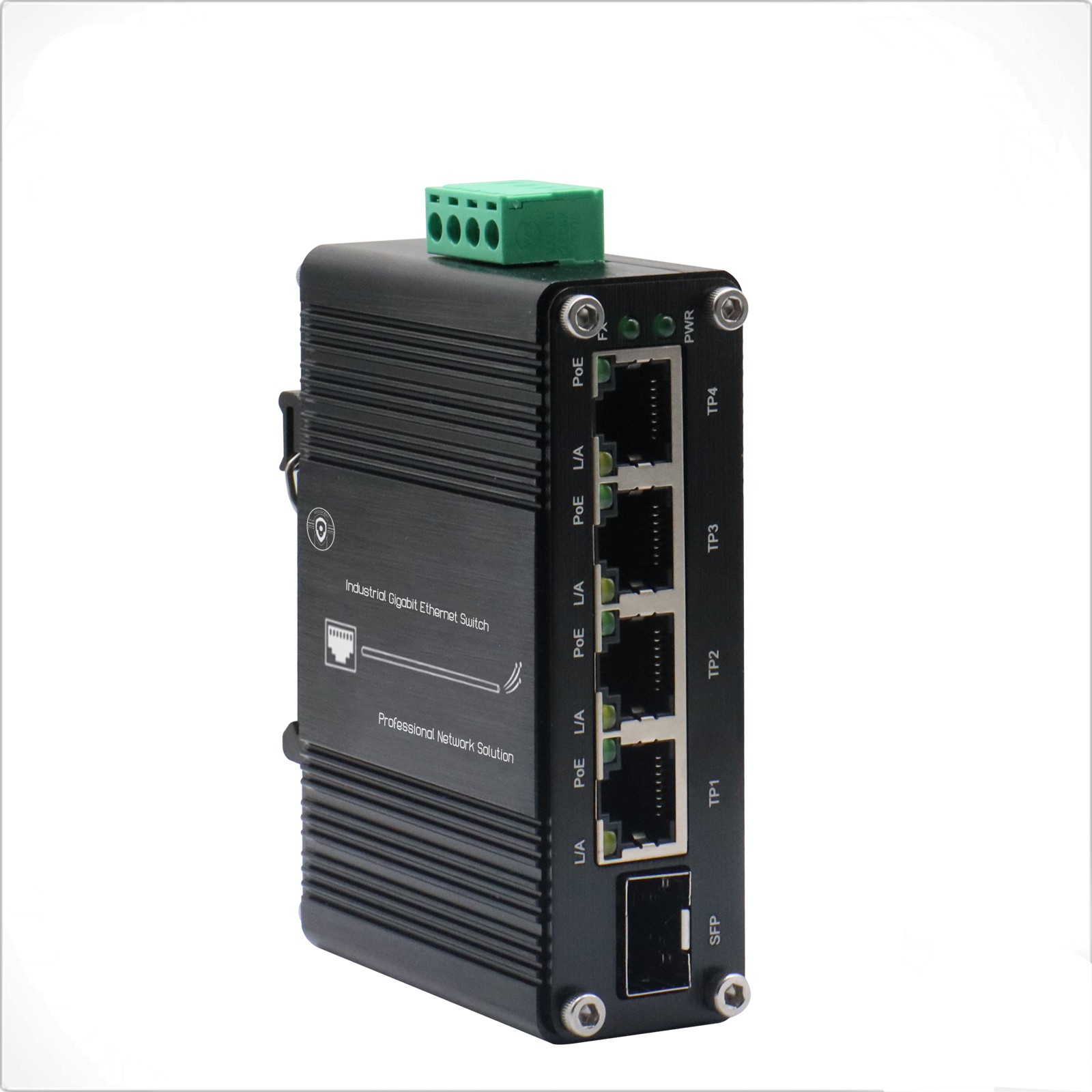
An Industrial Ethernet Switch is a network switch specifically designed for harsh operating environments where standard commercial networking equipment cannot provide reliable performance.
Unlike conventional office switches, industrial Ethernet switches are built using industrial-grade components and rugged enclosures to ensure stable operation under challenging conditions. They are commonly deployed in factories, transportation systems, utility substations, mining sites, oil and gas facilities, and outdoor surveillance networks.
Industrial switches are typically designed with features such as:
Wide operating temperature ranges (commonly -40°C to +75°C or -40°C to +85°C)
Fanless cooling for improved reliability
IP40 aluminum housing for durability
DIN-rail or wall mounting options
Wide voltage input (such as 12–48VDC)
Dual redundant power inputs for uninterrupted operation
Enhanced EMC/EMI protection
Surge and ESD protection
Long service life with continuous 24/7 operation
Many industrial Ethernet switches also support advanced networking functions, including VLAN, QoS, Ring Redundancy, IGMP Snooping, SNMP, and Layer 2 or Layer 3 management, making them suitable for mission-critical industrial communication systems.
Why Are Industrial Ethernet Switches Important?
Modern industrial networks require much more than basic data transmission. Production lines, industrial robots, programmable logic controllers (PLCs), machine vision systems, and remote monitoring equipment all rely on stable, real-time communication.
Industrial Ethernet switches help organizations achieve:
Continuous network availability
Reduced downtime
High reliability in harsh environments
Long-distance fiber communication
Easy integration with industrial automation systems
Scalable network architecture
Because network failures can interrupt production and cause significant financial losses, industrial-grade switching equipment has become an essential component of modern industrial infrastructure.
Key Advantages of Industrial Ethernet Switches
Industrial Ethernet switches provide several significant benefits over standard commercial switches:
Reliable Operation in Harsh Environments
Designed to withstand extreme temperatures, vibration, dust, humidity, and electrical noise.
Extended Service Life
Industrial-grade components support continuous 24/7 operation and offer longer product lifecycles.
Flexible Installation
Available with DIN-rail mounting, wall mounting, and compact fanless designs for installation inside industrial control cabinets.
Enhanced Network Stability
Support for redundant power inputs, rapid ring recovery protocols, and industrial network management helps minimize downtime.
Scalable Industrial Networking
Available in unmanaged, managed, Layer 2, Layer 2+, and Layer 3 configurations with Fast Ethernet, Gigabit Ethernet, 2.5G, 5G, and 10G uplinks.
Part 2: Industrial Ethernet Switch vs. Commercial Ethernet Switch – Key Differences
Although industrial and commercial Ethernet switches perform the same basic networking function, they are designed for completely different operating environments and application requirements.
Understanding their differences is essential for selecting the right switch for your project. Choosing the wrong type may lead to network instability, unexpected downtime, shortened equipment life, and higher maintenance costs.
This section compares the most important differences between industrial and commercial Ethernet switches.
Overview Comparison
| Feature | Industrial Ethernet Switch | Commercial Ethernet Switch |
|---|---|---|
| Operating Temperature | -40°C to +75°C / +85°C | 0°C to +50°C |
| Installation | DIN-Rail / Wall Mount | Desktop / Rack Mount |
| Housing | Aluminum IP40 | Plastic or Metal |
| Cooling | Fanless | Fan or Passive Cooling |
| Power Input | Wide Voltage, Dual Power | Single AC Adapter |
| EMI Protection | High | Standard |
| Vibration Resistance | Excellent | Limited |
| Application | Industrial | Office & Commercial |
| Service Life | 24/7 Continuous Operation | Standard Business Use |
Although they appear similar, their internal design and reliability differ significantly.
1. Operating Temperature
One of the biggest differences is the operating temperature range.
Industrial Ethernet Switch
Industrial switches are built to operate reliably in harsh environments.
Typical operating temperature:
-40°C to +75°C
-40°C to +85°C (depending on the model)
These switches maintain stable communication in environments exposed to:
Freezing winters
Hot summers
Outdoor cabinets
Factory workshops
High-temperature equipment rooms
Commercial Ethernet Switch
Commercial switches are intended for climate-controlled indoor environments.
Typical operating temperature:
0°C to +50°C
Exposing commercial switches to extreme temperatures may result in:
Communication errors
Reduced lifespan
Unexpected shutdowns
Hardware failure
2. Housing and Mechanical Design
Industrial networking equipment must withstand much harsher physical conditions.
Industrial Switch
Typical features include:
IP40 aluminum enclosure
Corrosion-resistant housing
Fanless design
Shock-resistant construction
Dust-resistant structure
These features improve durability and reduce maintenance requirements.
Commercial Switch
Commercial models typically use:
Plastic housing
Thin metal enclosure
Desktop design
Lightweight construction
They are suitable for offices but are not designed for demanding industrial environments.
3. Power Input
Reliable power supply is essential for industrial communication.
Industrial Ethernet Switch
Most industrial switches support:
Wide voltage input (typically 12–48VDC)
Dual redundant power inputs
Reverse polarity protection
Over-voltage protection
Over-current protection
Dual power inputs allow continuous operation even if one power source fails.
Commercial Ethernet Switch
Commercial switches generally provide:
Single AC adapter
Standard AC power input
Limited redundancy
These solutions are adequate for office environments but may not meet industrial reliability requirements.
4. Cooling Method
Heat management directly affects equipment lifespan.
Industrial Switch
Industrial switches usually feature:
Fanless cooling
Aluminum housing for heat dissipation
Passive thermal design
Without moving parts, fanless switches are:
More reliable
Quieter
Less prone to dust accumulation
Better suited for continuous 24/7 operation
Commercial Switch
Commercial switches may use:
Internal cooling fans
Passive ventilation
Cooling fans improve airflow but introduce additional maintenance because dust accumulation and fan wear can reduce reliability over time.
5. Electromagnetic Interference (EMI) Protection
Factories often contain heavy electrical equipment that generates electromagnetic interference.
Examples include:
Electric motors
Welding equipment
Variable Frequency Drives (VFDs)
High-voltage transformers
Industrial Ethernet switches are designed with enhanced EMC/EMI protection to maintain stable communication in these environments.
Commercial switches generally provide only standard EMC protection suitable for office environments.
6. Vibration and Shock Resistance
Industrial applications frequently involve continuous vibration.
Typical environments include:
Railway systems
Mining equipment
Production lines
Marine applications
Construction machinery
Industrial switches undergo rigorous vibration and shock testing to ensure stable operation.
Commercial switches are not designed for continuous mechanical stress.
7. Network Reliability
Industrial automation systems often operate 24 hours a day, 365 days a year.
Unexpected network interruptions can stop production and lead to significant financial losses.
Industrial switches therefore support features such as:
Dual power redundancy
Ring redundancy protocols
Rapid network recovery
Industrial-grade components
Long product lifecycle
Commercial switches generally focus on cost-effective networking for standard business operations.
8. Installation Methods
Installation environments also differ significantly.
Industrial Ethernet Switch
Common installation methods include:
DIN-Rail mounting
Wall mounting
Industrial control cabinets
These options simplify installation inside industrial electrical panels.
Commercial Ethernet Switch
Commercial switches are typically designed for:
Desktop placement
Rack-mounted cabinets
Office equipment rooms
They are not optimized for industrial control cabinets.
9. Service Life
Industrial networking equipment is expected to operate continuously for many years.
Industrial switches typically feature:
Industrial-grade chipsets
High-quality capacitors
Long-life components
Extended product lifecycle
Commercial switches are designed for typical office workloads and generally have shorter expected service lives under continuous heavy-duty operation.
Which Switch Should You Choose?
The best choice depends on your application.
Choose an Industrial Ethernet Switch If You Need:
Outdoor deployment
Factory automation
Transportation systems
Utility infrastructure
Oil & gas facilities
Mining operations
Wide temperature operation
Continuous 24/7 reliability
Redundant power input
Choose a Commercial Ethernet Switch If You Need:
Office networking
Retail stores
Hotels
Schools
Residential buildings
Indoor surveillance
Small business networks
Commercial switches provide a cost-effective solution where environmental conditions are stable.
Common Buying Mistakes
Avoid these common purchasing errors:
Selecting a commercial switch for outdoor installations
Ignoring operating temperature requirements
Overlooking power redundancy needs
Choosing plastic-housed equipment for industrial environments
Failing to consider vibration and EMI exposure
Purchasing based only on price rather than application requirements
Carefully evaluating the installation environment helps ensure long-term network stability and reduces maintenance costs.
Part 3: Key Features of Industrial Ethernet Switches
Industrial Ethernet switches are specifically designed to deliver reliable, uninterrupted communication in demanding environments where commercial switches cannot operate consistently. From rugged hardware to advanced network management, these switches provide the performance and durability required for industrial automation, intelligent transportation, energy, and outdoor networking.
This section explores the key features that make industrial Ethernet switches the preferred choice for mission-critical applications.
1. Wide Operating Temperature
One of the defining characteristics of an industrial Ethernet switch is its ability to operate in extreme temperatures.
Unlike commercial switches that are designed for climate-controlled environments, industrial switches maintain stable performance in both extremely cold and extremely hot conditions.
Typical Operating Temperature
-40°C to +75°C
-40°C to +85°C (depending on the model)
Benefits
Reliable operation in outdoor cabinets
Suitable for factories with high ambient temperatures
Stable communication in cold storage facilities
Reduced risk of overheating or freezing
2. Rugged Industrial Housing
Industrial Ethernet switches are built with durable metal enclosures designed to protect internal components.
Typical features include:
IP40-rated aluminum housing
Corrosion-resistant construction
Dust-resistant design
Excellent heat dissipation
High mechanical strength
The rugged enclosure improves durability and extends product lifespan in harsh environments.
3. Fanless Cooling Design
Most industrial Ethernet switches use a fanless cooling system.
Instead of relying on moving fans, heat is dissipated through the aluminum enclosure.
Advantages
Silent operation
Reduced maintenance
No fan failure
Less dust accumulation
Longer service life
Improved reliability for 24/7 operation
This design is especially important in dusty industrial facilities where cooling fans can become clogged over time.
4. Wide Voltage Input
Industrial power systems often differ from standard office power supplies.
Industrial switches typically support:
12VDC
24VDC
48VDC
Wide input ranges such as 12–48VDC
This flexibility allows the switch to integrate easily with industrial control systems and power supplies.
5. Dual Redundant Power Inputs
Network interruptions caused by power failures can lead to costly production downtime.
Many industrial Ethernet switches feature dual power inputs, allowing two independent power sources to be connected simultaneously.
Benefits
Continuous operation during power failure
Increased system reliability
Reduced downtime
Ideal for critical infrastructure
Dual power redundancy is commonly required in transportation, utilities, manufacturing, and security systems.
6. Enhanced EMC and EMI Protection
Industrial environments contain many sources of electromagnetic interference.
Examples include:
Electric motors
Variable Frequency Drives (VFDs)
High-voltage equipment
Welding machines
Industrial generators
Industrial Ethernet switches are designed with enhanced electromagnetic compatibility (EMC) and electromagnetic interference (EMI) protection to ensure stable communication under these conditions.
7. Surge and ESD Protection
Outdoor and industrial installations are more susceptible to electrical surges caused by lightning, switching equipment, and unstable power systems.
Industrial switches typically include:
Surge protection
Electrostatic discharge (ESD) protection
Over-voltage protection
Reverse polarity protection
These features help protect both the switch and connected devices from electrical damage.
8. Flexible Mounting Options
Industrial control cabinets often have limited installation space.
Industrial Ethernet switches usually support:
DIN-Rail mounting
Wall mounting
Cabinet installation
These mounting options simplify deployment in industrial control panels and automation systems.
9. Industrial-Grade Components
Industrial switches use high-quality components that are designed for continuous operation.
Typical industrial-grade components include:
Long-life capacitors
High-performance processors
Industrial memory chips
High-reliability power modules
These components contribute to:
Longer product lifespan
Higher network stability
Lower maintenance costs
10. Advanced Network Management
Managed industrial Ethernet switches provide a variety of software features that improve network performance and simplify administration.
Common functions include:
VLAN
QoS (Quality of Service)
Port Mirroring
Link Aggregation
SNMP
RSTP/STP/MSTP
ERPS Ring Redundancy
IGMP Snooping
DHCP
IPv4/IPv6 Support
Web GUI
CLI Management
These features are particularly valuable in large industrial networks where centralized management is required.
11. Fiber Connectivity
Many industrial Ethernet switches include SFP or SFP+ uplink ports.
These fiber interfaces provide:
Long-distance communication
High bandwidth
Immunity to electromagnetic interference
Flexible network expansion
Industrial fiber uplinks are widely used in:
Factory backbone networks
Smart transportation
Utility monitoring
Campus networks
City surveillance systems
12. Power over Ethernet (PoE)
Industrial PoE switches combine data transmission and power delivery through a single Ethernet cable.
Common PoE standards include:
IEEE 802.3af
IEEE 802.3at
IEEE 802.3bt
Typical powered devices include:
IP Cameras
Wireless Access Points
VoIP Phones
Industrial Sensors
Access Control Systems
Benefits
Simplified installation
Reduced cabling costs
Centralized power management
Faster deployment
Common Industrial Applications
Industrial Ethernet switches are widely deployed in:
Manufacturing
Production lines
PLC communication
Robotics
Machine vision
Transportation
Railway communication
Highway monitoring
Metro systems
Intelligent traffic control
Energy
Power substations
Wind farms
Solar power stations
Oil & gas facilities
Security
City surveillance
Airport monitoring
Port security
Industrial CCTV systems
Smart Infrastructure
Smart factories
Smart buildings
Industrial IoT
Utility automation
Why Industrial Switches Cost More
Industrial Ethernet switches generally have a higher purchase price than commercial switches because they include:
Industrial-grade components
Rugged aluminum enclosures
Wide temperature support
Enhanced EMC protection
Redundant power design
Longer product lifecycle
Extensive reliability testing
Although the initial investment is higher, industrial switches often reduce maintenance costs and minimize unplanned downtime, resulting in a lower total cost of ownership (TCO).
Part 4: Common Applications of Industrial and Commercial Ethernet Switches
While industrial and commercial Ethernet switches both provide network connectivity, they are designed for very different environments and business requirements. Understanding where each type is commonly used helps ensure the right equipment is selected for long-term reliability, performance, and cost efficiency.
Industrial Ethernet Switch Applications
Industrial Ethernet switches are built for mission-critical networks where communication failures can interrupt production, compromise safety, or result in significant financial losses.
These switches are designed to withstand harsh environmental conditions while maintaining stable network performance 24 hours a day.
1. Factory Automation
Modern manufacturing facilities rely heavily on Industrial Ethernet for real-time communication between production equipment.
Typical connected devices include:
PLC Controllers
Industrial Robots
CNC Machines
HMI Panels
Barcode Scanners
Industrial Sensors
Machine Vision Cameras
Why Industrial Switches?
Factory environments often contain:
High temperatures
Heavy vibration
Electrical interference
Dust
Continuous operation
Industrial Ethernet switches provide reliable communication despite these challenging conditions.
2. Industrial PoE Surveillance Systems
Large factories, warehouses, ports, and industrial parks require reliable surveillance systems.
Industrial PoE switches are commonly used to connect:
IP Cameras
PTZ Cameras
Thermal Cameras
AI Security Cameras
Video Recorders
Advantages
Long-distance fiber uplinks
Centralized power supply
Stable 24/7 operation
Reduced installation costs
Simplified maintenance
3. Intelligent Transportation Systems
Transportation infrastructure requires highly reliable networking equipment.
Industrial switches are widely deployed in:
Railway stations
Metro systems
Highway monitoring
Toll stations
Airports
Seaports
Connected equipment may include:
Traffic cameras
Variable Message Signs (VMS)
Ticketing systems
Passenger information displays
Access control devices
Industrial switches ensure uninterrupted communication in outdoor environments exposed to vibration, dust, and temperature extremes.
4. Smart City Projects
Cities increasingly rely on industrial networking equipment to support intelligent infrastructure.
Typical applications include:
Smart street lighting
Traffic management
Environmental monitoring
Public Wi-Fi
Emergency communication
Parking management
Video surveillance
Industrial Ethernet switches provide the durability and scalability required for these large-scale deployments.
5. Energy and Utilities
Reliable communication is essential for electrical power generation and distribution.
Industrial Ethernet switches are commonly installed in:
Power substations
Solar power plants
Wind farms
Hydroelectric stations
Oil & gas facilities
Water treatment plants
Key features such as redundant power inputs, fiber connectivity, and wide operating temperatures make them well suited for critical infrastructure.
6. Mining and Heavy Industry
Mining sites expose networking equipment to some of the harshest operating conditions.
Challenges include:
Extreme temperatures
Dust
Vibration
Moisture
Electrical noise
Industrial switches with rugged housings and industrial-grade components ensure dependable communication in these demanding environments.
Commercial Ethernet Switch Applications
Commercial Ethernet switches are optimized for clean, climate-controlled indoor environments where operating conditions are relatively stable.
They provide reliable connectivity at a lower cost for standard business networks.
1. Office Networks
Commercial switches are commonly used in office environments to connect:
Desktop Computers
Laptops
Printers
IP Phones
Wireless Access Points
File Servers
Typical requirements include:
Stable LAN connectivity
Internet access
File sharing
Voice communication
2. Retail Stores
Retail businesses use commercial switches to connect:
POS Systems
Security Cameras
Inventory Terminals
Payment Devices
Wi-Fi Access Points
Commercial switches provide sufficient performance for these indoor business environments.
3. Schools and Universities
Educational institutions commonly deploy commercial switches for:
Classrooms
Computer Labs
Libraries
Administrative Offices
Campus Wi-Fi
Higher-performance models may also support network segmentation using VLANs.
4. Hotels and Hospitality
Hotels rely on Ethernet switches for:
Guest Internet Access
IP Telephony
Smart TVs
Building Management Systems
Security Cameras
Commercial managed switches often provide enough functionality for hospitality networks.
5. Hospitals and Medical Offices
Healthcare facilities use commercial Ethernet switches to connect:
Medical Workstations
Electronic Health Record Systems
IP Phones
Network Printers
Wireless Access Points
Critical hospital infrastructure may use industrial switches in equipment rooms or utility systems, but office and administrative areas typically use commercial models.
6. Small and Medium Businesses
SMBs frequently deploy commercial Ethernet switches for:
Employee Workstations
Conference Rooms
Cloud Services
NAS Storage
Video Conferencing
These applications generally operate within controlled indoor environments.
Industrial vs. Commercial: Which Environment Fits Your Project?
| Application | Industrial Switch | Commercial Switch |
|---|---|---|
| Factory Automation | ✔ | ✘ |
| Industrial Robotics | ✔ | ✘ |
| Oil & Gas | ✔ | ✘ |
| Mining | ✔ | ✘ |
| Railway Systems | ✔ | ✘ |
| Outdoor Surveillance | ✔ | ✘ |
| Smart City Projects | ✔ | ✘ |
| Office Networks | ✘ | ✔ |
| Retail Stores | ✘ | ✔ |
| Schools | ✘ | ✔ |
| Hotels | ✘ | ✔ |
| Small Business LAN | ✘ | ✔ |
How to Choose Based on Your Application
Choose an Industrial Ethernet Switch if your project involves:
Extreme temperatures
Outdoor deployment
High vibration
Electromagnetic interference
Industrial automation
Continuous 24/7 operation
Mission-critical communication
Choose a Commercial Ethernet Switch if your project involves:
Office environments
Climate-controlled buildings
General business networking
Indoor surveillance
Standard enterprise LANs
Budget-sensitive deployments
Selecting the correct switch for the operating environment improves network stability, reduces maintenance costs, and extends equipment lifespan.
Industry Trends
As Industry 4.0, Industrial IoT (IIoT), and smart manufacturing continue to grow, demand for industrial Ethernet switches is increasing rapidly.
Modern industrial networks increasingly require:
Gigabit and 10G uplinks
Fiber optic connectivity
PoE support
Layer 2 and Layer 3 management
Ring redundancy
Remote monitoring
Cybersecurity features
Organizations investing in industrial networking infrastructure today are better prepared for future automation and digital transformation.
Part 5: How to Choose the Right Ethernet Switch for Your Project
Choosing between an industrial Ethernet switch and a commercial Ethernet switch is not simply a matter of price. The right choice depends on your operating environment, network requirements, connected devices, future expansion plans, and reliability expectations.
This section provides a practical buying guide to help engineers, system integrators, distributors, and project contractors select the most suitable Ethernet switch for their applications.
Step 1: Evaluate the Installation Environment
The operating environment is the most important factor when choosing an Ethernet switch.
Choose an Industrial Ethernet Switch if your project involves:
Outdoor installations
Industrial factories
High humidity
Heavy dust
Strong vibration
Extreme temperatures
Electrical interference
Continuous 24/7 operation
Choose a Commercial Ethernet Switch if your project involves:
Office buildings
Retail stores
Hotels
Schools
Hospitals
Indoor server rooms
Climate-controlled environments
Tip: Never select a commercial switch for harsh industrial environments simply because it has a lower purchase price. Equipment failure can cost far more than the initial savings.
Step 2: Determine the Required Number of Ports
Estimate both your current and future network requirements.
Common configurations include:
| Ports | Typical Applications |
|---|---|
| 5-Port | Small automation systems, CCTV |
| 8-Port | Small factories, branch offices |
| 16-Port | Production lines, surveillance systems |
| 24-Port | Enterprise and industrial networks |
| 48-Port | Large-scale network deployments |
Choosing a switch with spare ports allows future expansion without replacing the existing equipment.
Step 3: Choose the Right Network Speed
Modern Ethernet switches support different transmission speeds.
Fast Ethernet
10/100 Mbps
Suitable for:
Legacy equipment
Basic automation systems
Gigabit Ethernet
10/100/1000 Mbps
Recommended for:
IP surveillance
Industrial automation
Enterprise networks
Manufacturing facilities
Gigabit Ethernet is currently the most widely used option.
Multi-Gigabit and 10G
Available options include:
2.5G
5G
10G
Recommended for:
AI video surveillance
Data centers
Smart manufacturing
High-density wireless networks
Industrial backbone networks
Step 4: Decide Whether PoE Is Required
Power over Ethernet (PoE) simplifies installation by delivering both power and data through a single Ethernet cable.
Common PoE-powered devices include:
IP Cameras
Wireless Access Points
VoIP Phones
Access Control Systems
Industrial IoT Sensors
Digital Signage
Common PoE Standards
| Standard | Max Power per Port |
|---|---|
| IEEE 802.3af | 15.4W |
| IEEE 802.3at (PoE+) | 30W |
| IEEE 802.3bt (PoE++) | 60W / 90W |
Always calculate the total PoE power budget to ensure it meets the combined power requirements of all connected devices.
Step 5: Copper or Fiber?
Network distance plays a key role in selecting uplink ports.
Copper Ethernet (RJ45)
Suitable for:
Up to 100 meters
Indoor office networks
Local equipment connections
Fiber Optic (SFP / SFP+)
Recommended for:
Long-distance transmission
Building-to-building links
Factory backbone networks
Outdoor installations
High EMI environments
Many industrial Ethernet switches include SFP or SFP+ slots for flexible fiber connectivity.
Step 6: Managed or Unmanaged?
Unmanaged Ethernet Switch
Advantages:
Plug-and-play
Easy installation
Lower cost
Minimal maintenance
Suitable for:
Small networks
Basic surveillance systems
Simple industrial applications
Managed Ethernet Switch
Features:
VLAN
QoS
SNMP
Port Mirroring
Link Aggregation
IGMP Snooping
Ring Redundancy
Remote Management
Suitable for:
Enterprise networks
Industrial automation
Transportation systems
Utility networks
Large surveillance projects
Step 7: Consider Power Supply Requirements
Industrial applications often require greater power reliability.
Look for features such as:
Wide voltage input (12–48VDC)
Dual redundant power inputs
Reverse polarity protection
Over-current protection
Surge protection
These features reduce the risk of network interruptions caused by unstable power conditions.
Step 8: Plan for Future Expansion
When selecting a switch, think beyond your current requirements.
Consider future needs such as:
Additional network devices
Higher bandwidth
Fiber expansion
More PoE devices
Remote management
Redundant networking
Choosing a scalable solution can significantly reduce future upgrade costs.
Common Buying Mistakes
Many buyers focus only on specifications such as port count or price while overlooking critical project requirements.
Avoid these common mistakes:
Choosing a commercial switch for outdoor use
Ignoring operating temperature requirements
Purchasing too few ports
Selecting insufficient PoE power
Ignoring future expansion plans
Overlooking fiber uplink requirements
Buying unmanaged switches when network management is required
A thorough assessment before purchase helps avoid unnecessary downtime and costly replacements.
Project Selection Examples
Example 1 – Small Office
Requirements:
15 computers
2 printers
Wi-Fi access points
Recommended Solution:
24-Port Commercial Gigabit Ethernet Switch
Example 2 – Factory Automation
Requirements:
PLC communication
Industrial robots
Machine vision cameras
Outdoor cabinets
Recommended Solution:
Industrial Managed Gigabit Ethernet Switch
DIN-Rail mounting
Dual power input
Fiber uplinks
Example 3 – IP Surveillance Project
Requirements:
32 IP cameras
Long-distance transmission
Outdoor installation
Recommended Solution:
Industrial PoE Switch
Gigabit Ethernet
SFP fiber uplinks
High PoE power budget
Example 4 – Smart Transportation
Requirements:
Traffic cameras
Variable message signs
Outdoor cabinets
Fiber backbone
Recommended Solution:
Industrial Managed PoE Switch
Wide operating temperature
Ring redundancy
Fiber uplinks
Dual redundant power
Final Buying Checklist
Before ordering an Ethernet switch, confirm the following:
✔ Installation environment
✔ Number of ports
✔ Ethernet speed
✔ PoE requirements
✔ Total PoE power budget
✔ Fiber uplink requirements
✔ Managed or unmanaged
✔ Power input type
✔ Mounting method
✔ Future expansion
✔ Environmental protection requirements
✔ Network redundancy needs
Part 6: Frequently Asked Questions, Why Choose WXA, and Conclusion
Frequently Asked Questions (FAQ)
1. What is the difference between an industrial Ethernet switch and a commercial Ethernet switch?
An industrial Ethernet switch is designed for harsh environments with features such as wide operating temperatures, rugged metal housing, redundant power inputs, and enhanced EMI protection. A commercial Ethernet switch is intended for indoor environments like offices, schools, and retail stores where conditions are stable.
2. Can I use a commercial Ethernet switch in a factory?
It is not recommended.
Factories often expose networking equipment to dust, vibration, extreme temperatures, and electrical interference. Commercial switches are not designed for these conditions and may experience reduced reliability or premature failure.
3. Why do industrial Ethernet switches cost more?
Industrial switches use higher-quality components and include features such as:
Industrial-grade chipsets
Wide temperature support
Fanless aluminum housing
Redundant power inputs
Enhanced surge and EMI protection
Longer service life
Although the initial investment is higher, they reduce maintenance costs and downtime over the product's lifetime.
4. What operating temperature do industrial Ethernet switches support?
Most industrial Ethernet switches operate within:
-40°C to +75°C
-40°C to +85°C (depending on the model)
This makes them suitable for outdoor cabinets, factories, and other demanding environments.
5. Should I choose a managed or unmanaged Ethernet switch?
An unmanaged switch is ideal for simple plug-and-play networks with minimal configuration.
A managed switch is recommended when you need:
VLAN
QoS
SNMP
Ring redundancy
Remote monitoring
Traffic management
Network diagnostics
Managed switches are commonly used in industrial automation, enterprise networks, and smart city projects.
6. When should I choose an Industrial PoE Switch?
Choose an Industrial PoE Switch when your project includes powered devices such as:
IP cameras
Wireless access points
Access control systems
VoIP phones
Industrial IoT devices
Industrial PoE switches simplify installation by delivering both power and data through a single Ethernet cable.
7. What is the maximum transmission distance of an Ethernet switch?
RJ45 Ethernet ports typically support transmission distances of up to 100 meters.
For longer distances, industrial switches equipped with SFP or SFP+ fiber uplink ports can support fiber optic communication over distances ranging from several kilometers to more than 120 kilometers, depending on the optical module used.
8. Why are fiber uplinks important?
Fiber uplinks provide several advantages:
Long-distance transmission
Higher bandwidth
Immunity to electromagnetic interference
Improved network stability
Flexible network expansion
They are widely used in industrial automation, transportation, surveillance, and campus networks.
9. Can industrial Ethernet switches operate continuously?
Yes.
Industrial Ethernet switches are designed for 24/7 continuous operation and are commonly deployed in mission-critical systems where uninterrupted communication is essential.
10. What industries use industrial Ethernet switches?
Industrial Ethernet switches are widely used in:
Manufacturing
Industrial automation
Transportation
Oil & gas
Mining
Utilities
Smart cities
Security surveillance
Renewable energy
Marine applications
11. Do industrial Ethernet switches support Layer 2 and Layer 3 functions?
Yes.
Depending on the model, industrial managed switches may support:
Layer 2 Switching
Layer 2+
Layer 3 Routing
Static Routing
RIP
OSPF
VLAN
QoS
ACL
SNMP
ERPS Ring Redundancy
These features improve network performance, scalability, and reliability.
12. What mounting options are available?
Industrial Ethernet switches typically support:
DIN-Rail Mounting
Wall Mounting
Commercial switches are usually designed for:
Desktop Installation
Rack Mount Installation
13. How long do industrial Ethernet switches last?
With proper installation and maintenance, industrial Ethernet switches are designed for long-term operation and often provide service lives significantly longer than standard commercial networking equipment.
14. What certifications should I look for?
Depending on your market and application, common certifications include:
CE
FCC
RoHS
UKCA (where applicable)
Additional certifications may be required for specialized industrial or transportation projects.
15. How do I choose the right industrial Ethernet switch?
Before purchasing, evaluate:
Installation environment
Number of ports
Network speed
PoE requirements
Fiber uplink needs
Managed or unmanaged features
Operating temperature
Power input
Future expansion plans
Selecting the right switch improves network reliability and protects your long-term investment.
Why Choose Shenzhen WeiXiangAn Technology Co., Ltd.?
Shenzhen WeiXiangAn Technology Co., Ltd. is a professional manufacturer specializing in industrial networking products for customers worldwide. We provide reliable OEM and ODM solutions for distributors, system integrators, project contractors, and industrial equipment manufacturers.
Professional Manufacturing
We specialize in the production of:
Industrial Ethernet Switches
Industrial PoE Switches
Managed Ethernet Switches
Unmanaged Ethernet Switches
Industrial PoE Injectors
PoE Splitters
Fiber Media Converters
SFP & SFP+ Optical Transceivers
PCIe Network Interface Cards
OEM & ODM Services
We support flexible customization, including:
Private Label Manufacturing
Logo Printing
Customized Hardware Configuration
Firmware Customization
Packaging Design
Product Label Customization
Helping partners build their own networking brands.
Strict Quality Control
Every product undergoes comprehensive quality testing before shipment, including:
Functional testing
PoE output verification
Fiber communication testing
Burn-in testing
Temperature testing
Compatibility testing
This ensures consistent quality and dependable performance in real-world applications.
Designed for Industrial Applications
Our industrial networking products are built for demanding environments with features such as:
Wide operating temperature
Fanless aluminum housing
DIN-Rail installation
Dual redundant power inputs
Surge and ESD protection
Stable 24/7 operation
These characteristics make our products ideal for industrial automation, transportation, surveillance, and energy projects.
Global Business Support
We work closely with customers around the world by providing:
Fast response times
Professional technical support
Flexible OEM/ODM cooperation
Efficient production scheduling
Reliable global delivery
Our goal is to help customers complete projects successfully while reducing deployment and maintenance costs.
Industrial PoE Switch | Managed PoE Switch | Gigabit PoE Switch | DIN Rail PoE Switch | Industrial Ethernet Switch | Smart Transportation Network | Traffic Monitoring System | Outdoor PoE Switch | PoE for CCTV | Fiber Uplink PoE Switch