简体中文
简体中文 English
- PRODUCTSIndustrial PoE Media Converter Industrial Media Converter Industrial Unmanaged PoE Switch Industrial Managed PoE Switch Industrial Unmanaged Ethernet Switch Industrial Managed Ethernet Switch Industrial PoE Injector Industrial PoE Splitter Industrial PoE Extender DIN-Rail Power Supply Rackmount DIN-Rail BracketHDMI Over Fiber ConverterSDI Over Fiber ConverterSDI Over Fiber Converter 12G-SDI Over Fiber Converter 3G-SDI Over Fiber Converter HD-SDI Over Fiber ConverterDVI Over Fiber ConverterAHD/CVI/TVI Over Fiber
- SOLUTIONS
- Download
- ABOUT
- CONTACT


Modern transportation infrastructure increasingly depends on connected communication networks. Railway systems, traffic control equipment, surveillance cameras, passenger information systems, and intelligent transportation systems all require reliable data transmission.
Unlike conventional office networks, transportation networks may operate outdoors, in tunnels, stations, roadside cabinets, and other demanding environments. Equipment may also need to operate continuously while communicating over long distances.
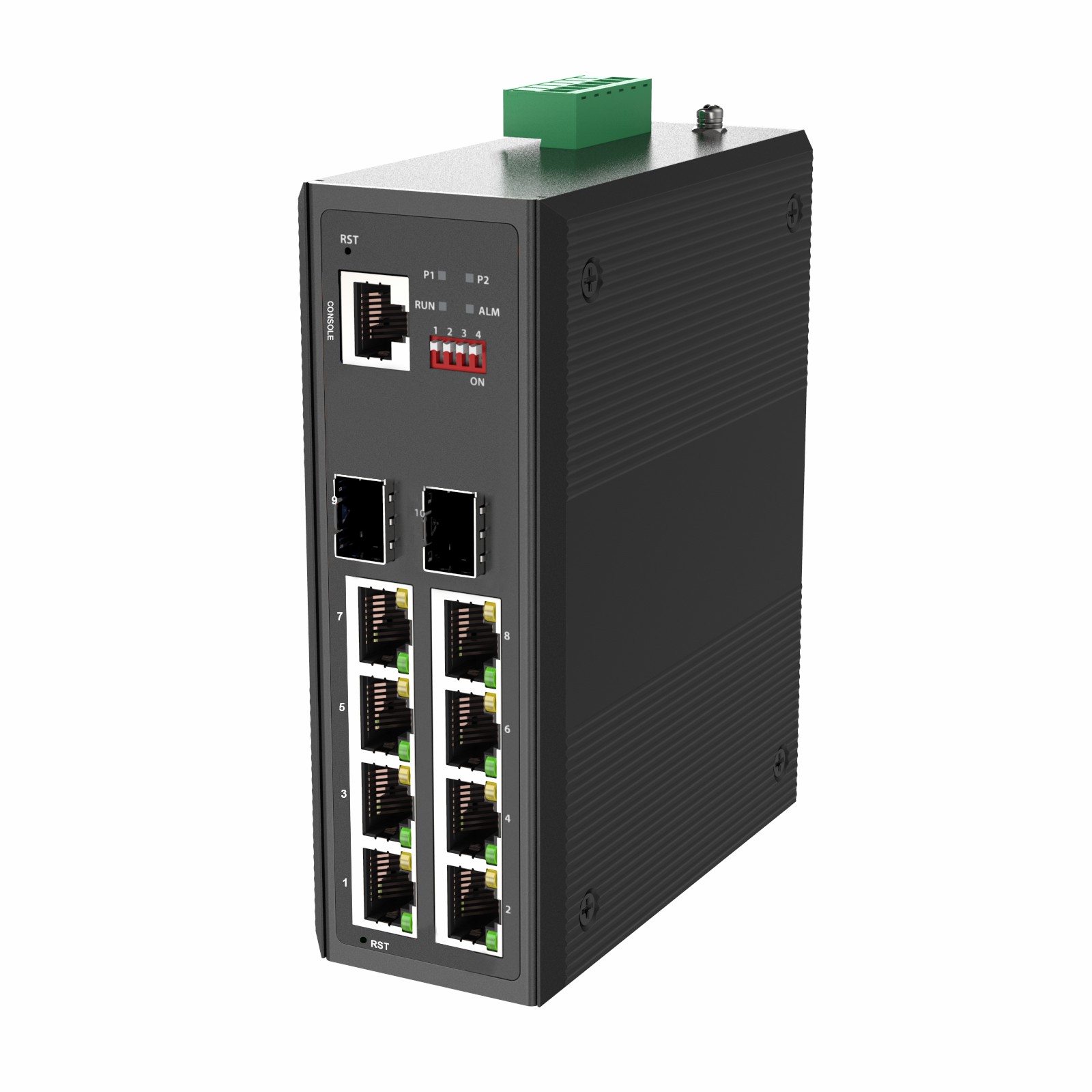
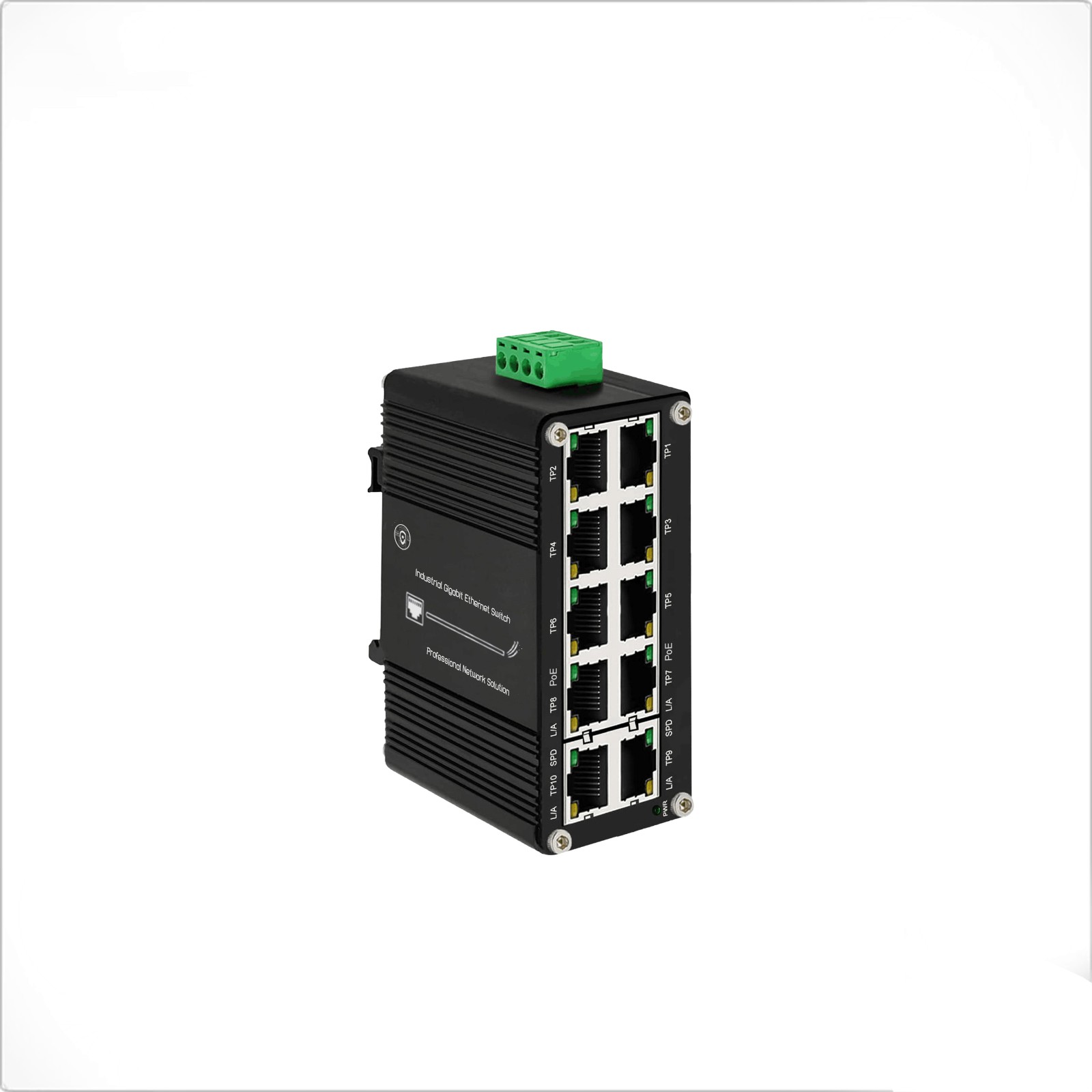
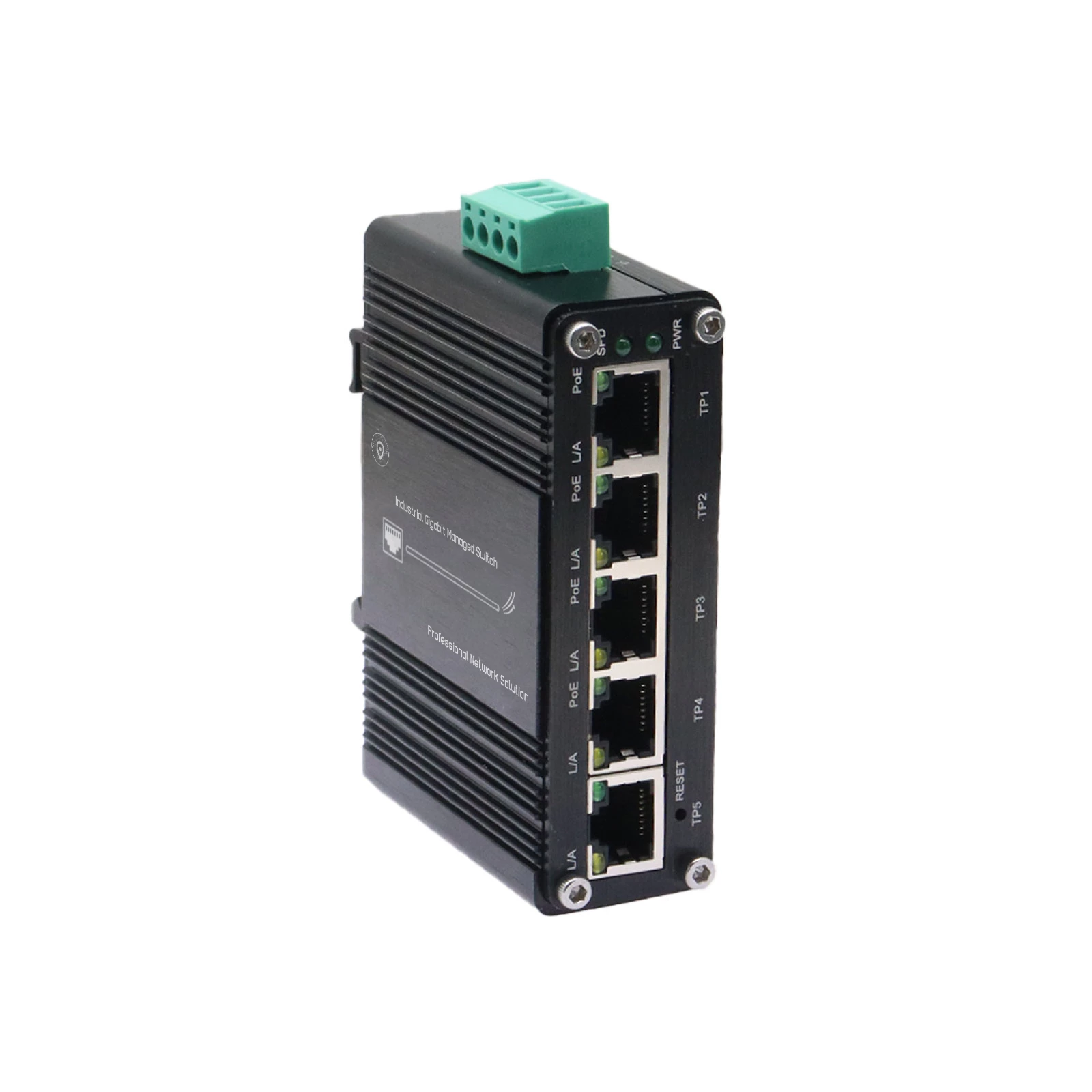
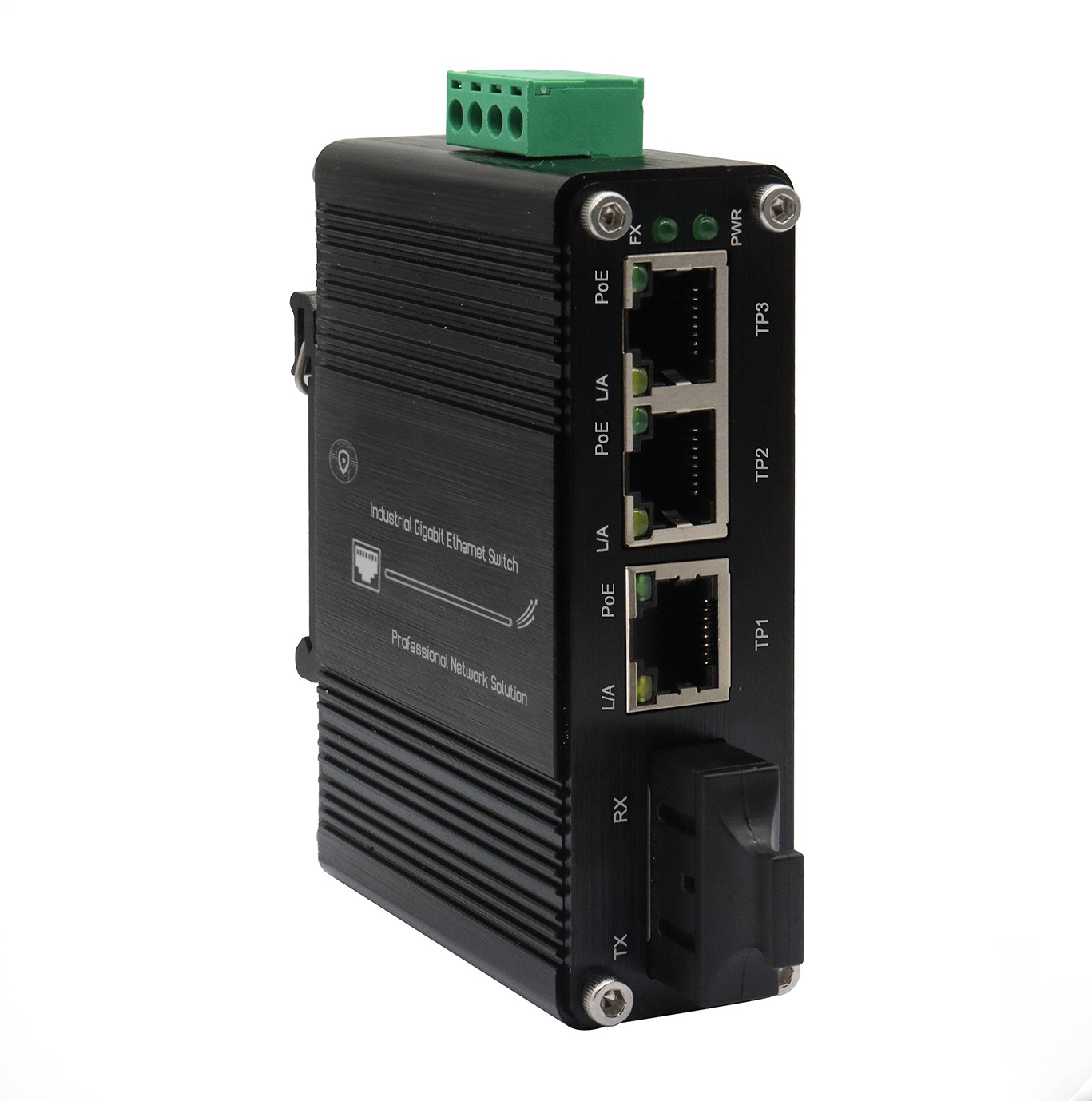
An Industrial Ethernet Switch provides a reliable networking solution for connecting transportation equipment and control systems. With Gigabit Ethernet, fiber optic uplinks, network redundancy, VLAN, QoS, and industrial-grade construction, industrial Ethernet switches can support modern transportation communication infrastructure.
What Is an Industrial Ethernet Switch for Transportation?
An industrial Ethernet switch for transportation is a network communication device designed to connect Ethernet-enabled equipment used in transportation and infrastructure systems.
A transportation network may include:
Traffic cameras
Roadside controllers
Traffic signal controllers
Variable message signs
Railway equipment
Passenger information systems
Industrial computers
Control center servers
Access control systems
Environmental sensors
Emergency communication equipment
The industrial Ethernet switch provides connectivity between field equipment and centralized monitoring or control systems.
Why Transportation Networks Need Industrial Ethernet
Transportation infrastructure presents several networking challenges.
Equipment may be installed in:
Outdoor roadside cabinets
Railway stations
Train platforms
Tunnels
Bridges
Traffic control centers
Industrial control rooms
Remote monitoring locations
These environments can expose networking equipment to temperature variations, electrical interference, vibration, moisture, and continuous operating requirements.
Industrial Ethernet switches are designed for more demanding deployment conditions than typical office switches.
Fiber Optic Connectivity for Transportation Networks
Transportation infrastructure can cover large geographic areas.
For example, a railway communication network may connect multiple stations, signaling systems, control rooms, and trackside equipment.
Fiber optic Ethernet provides an effective solution for long-distance communication.
Industrial Ethernet switches with SFP interfaces can provide fiber connectivity between:
Field Equipment → Industrial Switch → Fiber Backbone → Control Center
Fiber connections can also provide electrical isolation and improved resistance to electromagnetic interference, which can be useful around railway and industrial electrical equipment.
Industrial Ethernet Switches for Railway Networks
Railway systems use communication networks for many different applications.
Industrial Ethernet switches can connect:
Railway surveillance cameras
Passenger information displays
Station control systems
Network monitoring equipment
Access control systems
Environmental monitoring devices
Industrial computers
Communication gateways
For distributed railway infrastructure, fiber uplinks and network redundancy can help create a reliable communication backbone.
Industrial Ethernet Switches for Traffic Management
Modern traffic management systems use connected devices to monitor and control road conditions.
A typical intelligent transportation network may include:
Traffic cameras
Traffic signal controllers
Vehicle detection sensors
Variable message signs
Roadside communication equipment
Traffic management computers
Central control systems
Industrial Ethernet switches can connect these devices and transmit information to a traffic management center.
Network Redundancy for Transportation Applications
Transportation systems often require high network availability.
A communication failure can affect traffic monitoring, surveillance, passenger information, or other infrastructure services.
Industrial Ethernet switches with network redundancy functions can provide alternative communication paths.
Ring network architectures can connect multiple switches around a transportation route or facility. If one network link fails, traffic can be redirected through another path, depending on the redundancy technology and network configuration.
Managed Industrial Ethernet Switches for Transportation
Managed switches provide additional network management capabilities for larger transportation networks.
Common functions may include:
VLAN
VLAN can separate different types of transportation traffic.
For example:
CCTV traffic
Traffic control data
Management traffic
Passenger information systems
Access control
IoT monitoring
QoS
QoS can prioritize important network traffic when multiple applications share the same infrastructure.
SNMP
SNMP allows network administrators to monitor industrial switches and network conditions from a centralized management platform.
IGMP Snooping
IGMP Snooping can help manage multicast traffic, which may be used by video surveillance and other network applications.
Network Redundancy
Ring redundancy can help improve network availability in distributed transportation networks.
Industrial Ethernet Switches for CCTV and Surveillance
Video surveillance is an important part of modern transportation infrastructure.
Railway stations, tunnels, highways, intersections, and transportation facilities may use multiple IP cameras.
An industrial Ethernet switch can connect cameras to a local network and provide uplinks to centralized monitoring systems.
Gigabit Ethernet ports provide bandwidth for high-resolution IP camera traffic, while fiber uplinks can connect remote surveillance locations to control centers.
For larger systems, managed switches can provide VLAN, QoS, IGMP Snooping, and network monitoring functions.
Industrial Ethernet for Intelligent Transportation Systems
Intelligent Transportation Systems, or ITS, integrate communication, sensing, monitoring, and control technologies to improve transportation management.
An ITS network may connect:
Traffic Sensors → Industrial Ethernet Switch → Fiber Network → Traffic Control Center
Other devices such as cameras, traffic lights, information displays, and environmental sensors can also be integrated into the network.
This creates a connected transportation infrastructure capable of centralized monitoring and distributed control.
Key Features to Consider
When selecting an industrial Ethernet switch for transportation projects, consider the following features.
Gigabit Ethernet
Gigabit Ethernet provides sufficient bandwidth for many modern transportation applications, including IP surveillance and industrial monitoring.
SFP Fiber Ports
SFP interfaces allow flexible fiber optic connectivity for long-distance communication and network backbone deployment.
Industrial Temperature Range
Transportation equipment may be installed outdoors or in areas without climate control. A suitable operating temperature range is therefore important.
Surge Protection
Outdoor and roadside equipment can be exposed to electrical disturbances. Appropriate surge protection can improve equipment resilience.
Redundant Power
Critical network equipment may benefit from redundant power inputs to improve network availability.
Rugged Housing
A rugged metal housing can provide mechanical protection for industrial and transportation deployments.
Network Management
For larger projects, managed functions such as VLAN, QoS, SNMP, and network diagnostics can simplify network administration.
Transportation Network Architecture
A typical transportation communication architecture may look like:
Roadside / Trackside Devices
↓
Industrial Ethernet Switch
↓
Fiber Optic Network
↓
Aggregation Network
↓
Transportation Control Center
↓
SCADA / Monitoring / Management Platform
This architecture can support both local equipment communication and centralized monitoring.
Applications of Industrial Ethernet Switches in Transportation
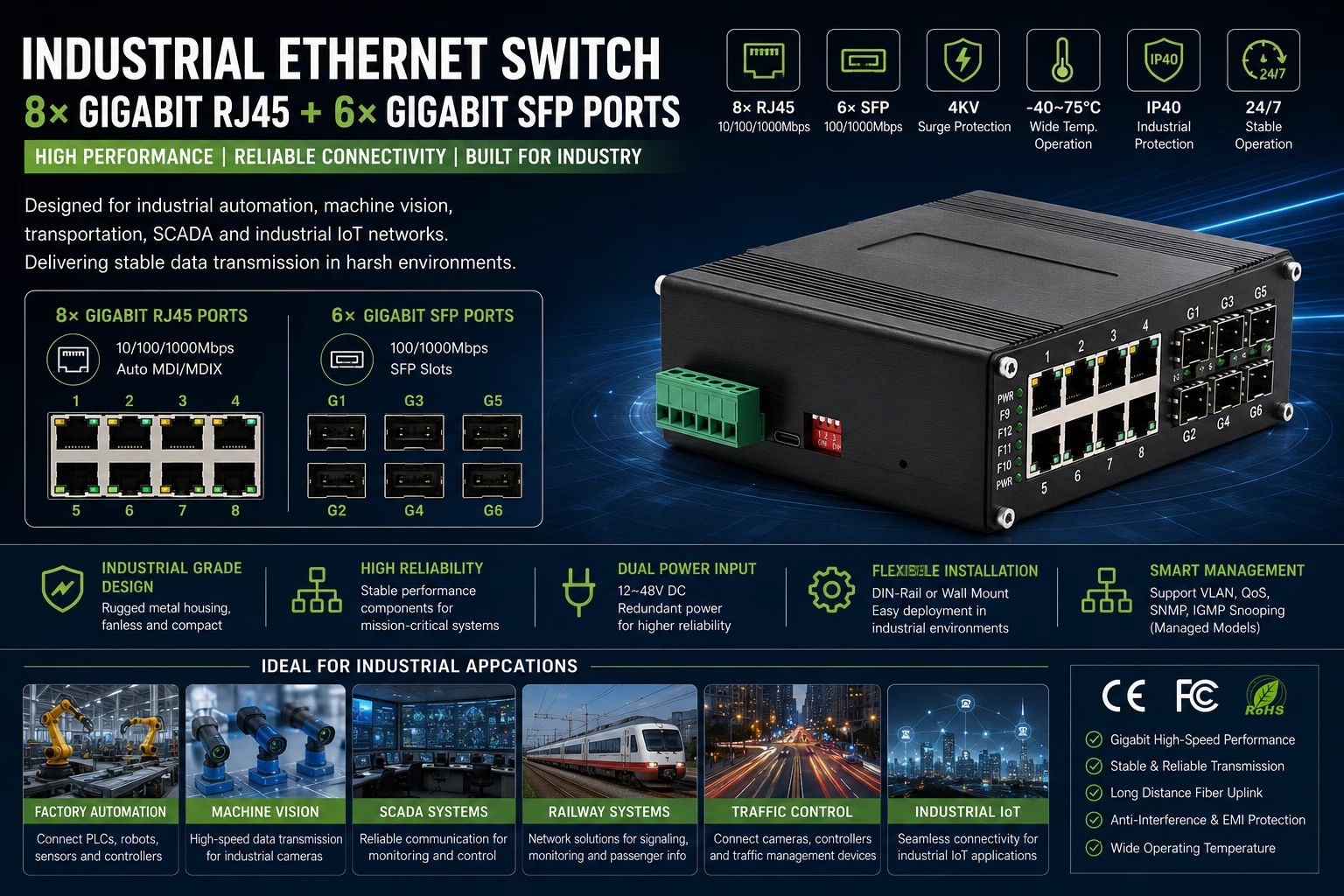
Railway Systems
Connect railway communication, surveillance, monitoring, and station equipment.
Traffic Management
Connect traffic cameras, signal controllers, sensors, and roadside equipment.
Highway Infrastructure
Support communication between roadside equipment and centralized highway management systems.
Railway Stations
Connect passenger information displays, surveillance systems, access control, and monitoring equipment.
Tunnels
Provide network connectivity for cameras, environmental sensors, emergency systems, and control equipment.
Smart City Transportation
Connect transportation infrastructure with broader smart city communication networks.
How to Choose the Right Industrial Ethernet Switch
Before selecting an industrial Ethernet switch, project engineers should evaluate:
Port Count: Determine the number of cameras, sensors, controllers, and other Ethernet devices.
Port Speed: Select Fast Ethernet, Gigabit Ethernet, or higher-speed uplinks based on network requirements.
Fiber Connectivity: Consider SFP interfaces for long-distance transportation networks.
Managed Functions: Select managed switches when VLAN, QoS, SNMP, multicast management, or diagnostics are required.
Redundancy: Consider ring redundancy for networks where continuous communication is important.
Environmental Conditions: Check temperature, electrical interference, installation environment, and power requirements.
Industrial PoE Switch | Managed PoE Switch | Gigabit PoE Switch | DIN Rail PoE Switch | Industrial Ethernet Switch | Smart Transportation Network | Traffic Monitoring System | Outdoor PoE Switch | PoE for CCTV | Fiber Uplink PoE Switch