简体中文
简体中文 English
- PRODUCTSIndustrial PoE Media Converter Industrial Media Converter Industrial Unmanaged PoE Switch Industrial Managed PoE Switch Industrial Unmanaged Ethernet Switch Industrial Managed Ethernet Switch Industrial PoE Injector Industrial PoE Splitter Industrial PoE Extender DIN-Rail Power Supply Rackmount DIN-Rail BracketHDMI Over Fiber ConverterSDI Over Fiber ConverterSDI Over Fiber Converter 12G-SDI Over Fiber Converter 3G-SDI Over Fiber Converter HD-SDI Over Fiber ConverterDVI Over Fiber ConverterAHD/CVI/TVI Over Fiber
- SOLUTIONS
- Download
- ABOUT
- CONTACT


Factory automation depends on reliable communication between machines, controllers, sensors, HMIs, industrial computers, and monitoring systems. As manufacturing facilities become more connected, traditional office Ethernet switches may not provide the reliability, environmental durability, and network management capabilities required for industrial environments.
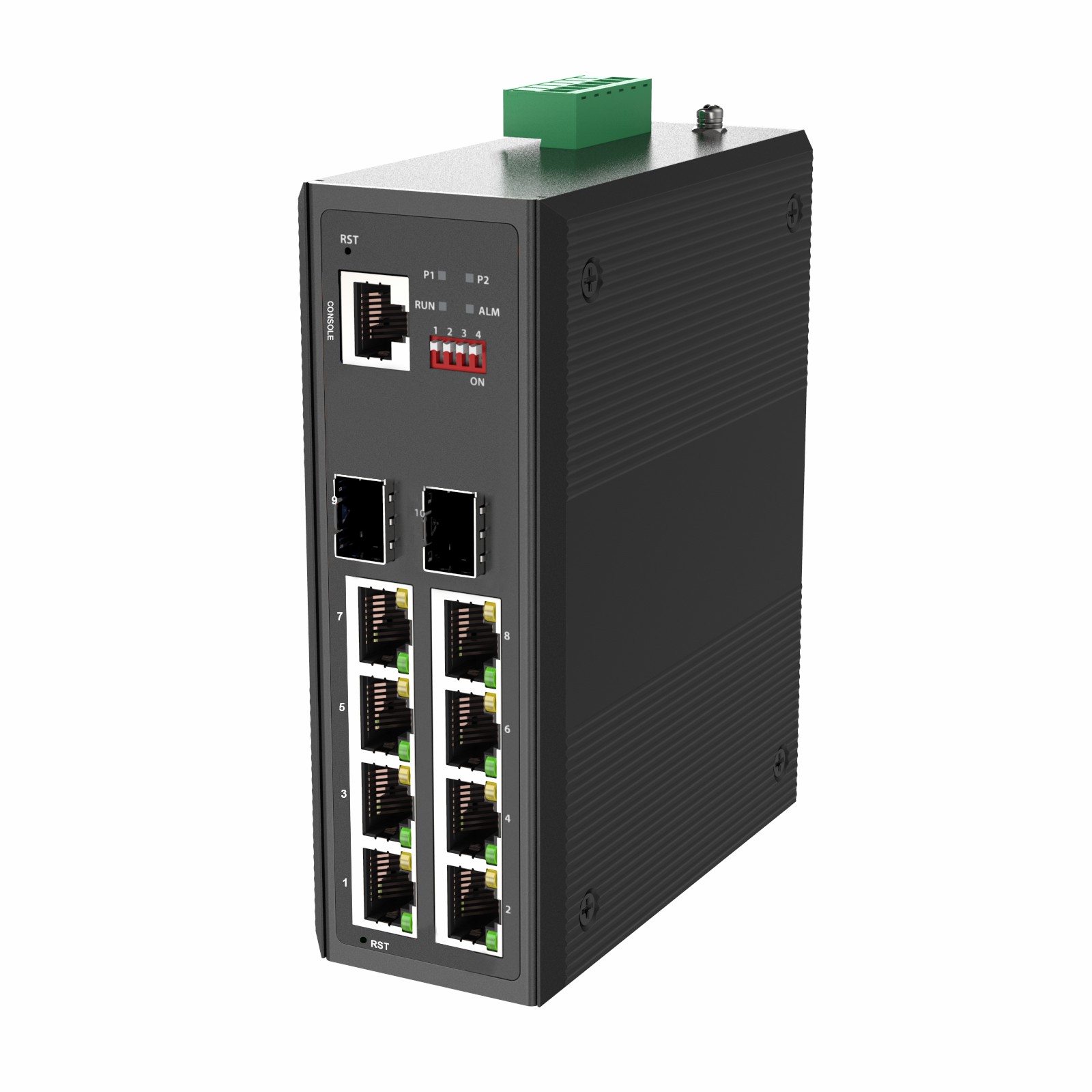
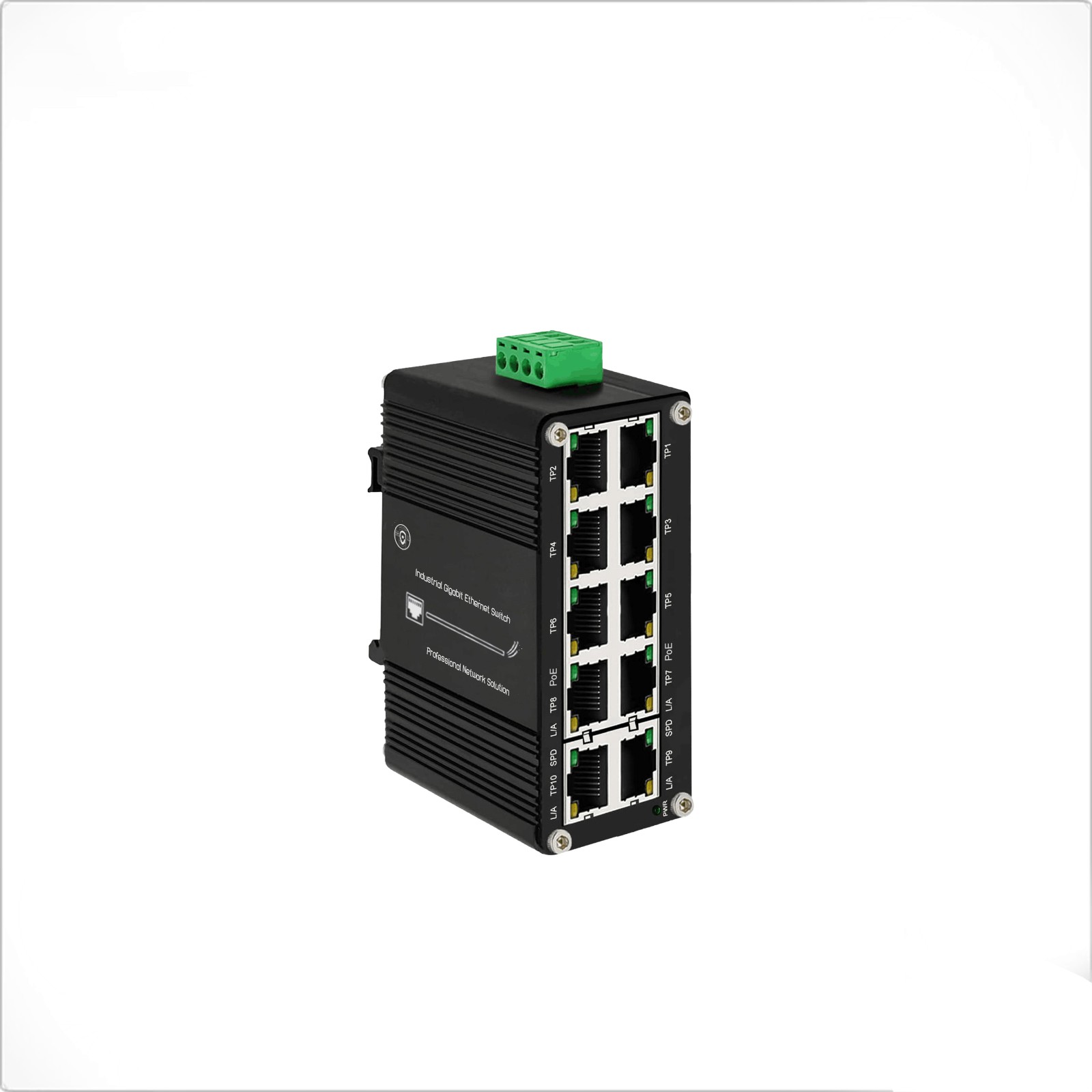
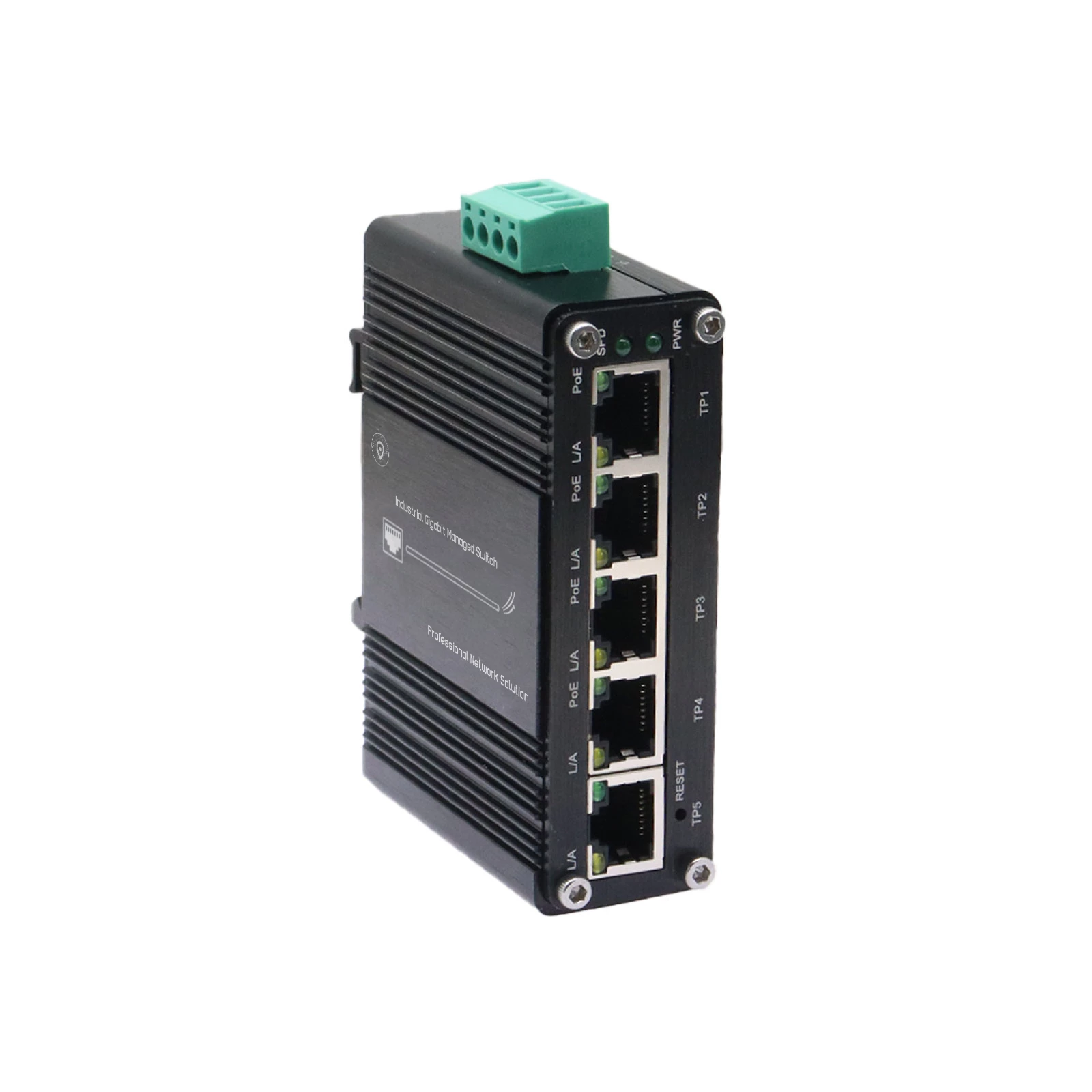
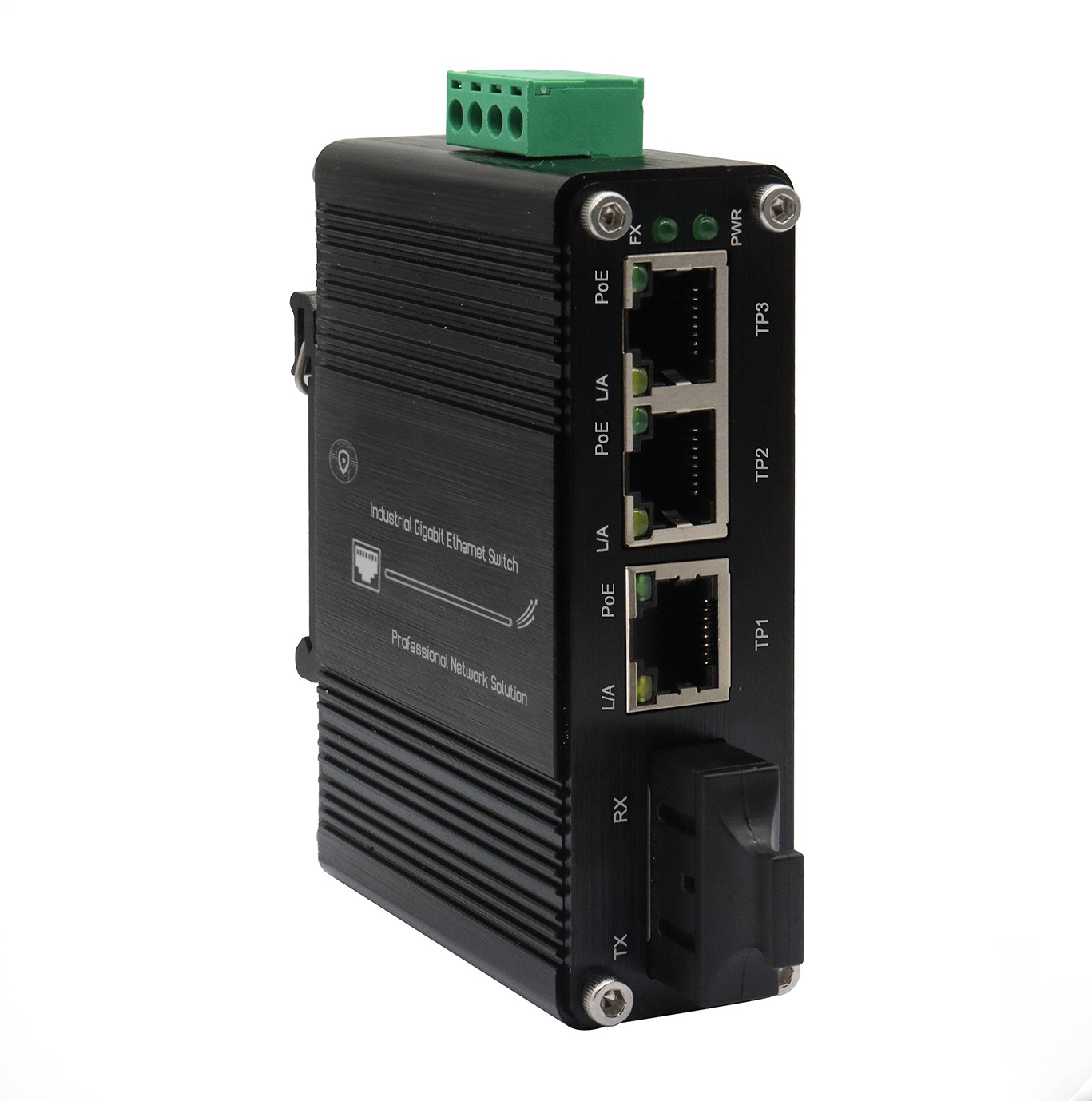
An Industrial Ethernet Switch provides a robust networking solution for connecting PLCs, HMIs, robots, industrial computers, machine vision systems, sensors, and other automation equipment. With features such as Gigabit Ethernet, fiber uplinks, VLAN, QoS, network redundancy, and wide-temperature operation, industrial Ethernet switches can help build stable and scalable factory automation networks.
What Is an Industrial Ethernet Switch for Factory Automation?
An industrial Ethernet switch is a network communication device specifically designed for industrial environments. It connects multiple Ethernet-enabled devices and allows them to exchange data across the factory network.
In a factory automation system, an industrial Ethernet switch may connect:
PLC controllers
HMI panels
Industrial PCs
Robot controllers
Machine vision cameras
Sensors and I/O devices
SCADA systems
Industrial servers
Network gateways
Access control and monitoring equipment
Compared with standard commercial switches, industrial Ethernet switches are typically designed with more durable housings, wider operating temperature ranges, stronger electrical protection, and flexible mounting options for industrial installations.
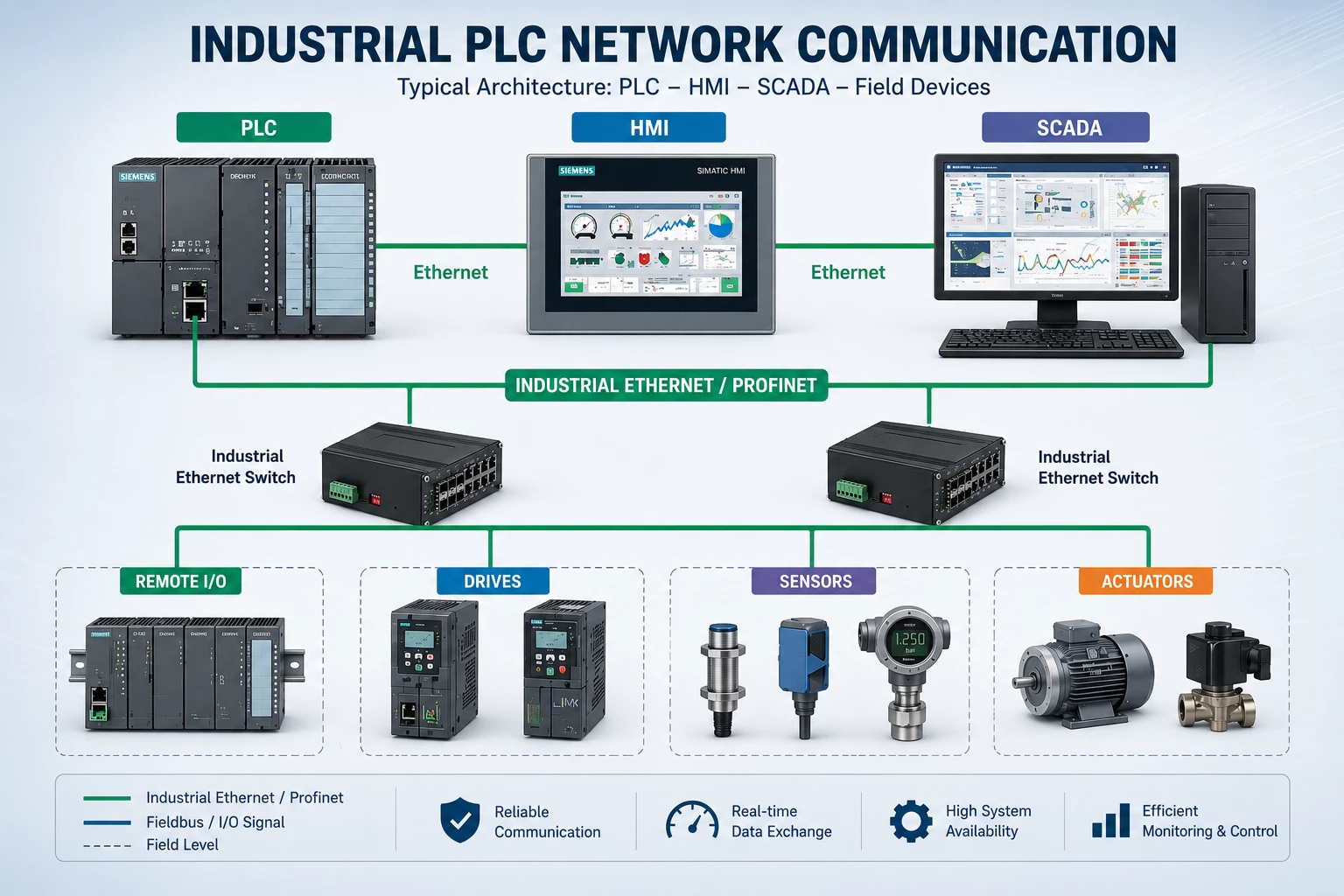
How Industrial Ethernet Switches Connect PLC and HMI Systems
PLC and HMI devices are fundamental components of many factory automation systems.
The PLC collects information from sensors and controls machines, motors, valves, conveyors, and other equipment. The HMI allows operators to monitor production processes and interact with the control system.
An industrial Ethernet switch provides the communication infrastructure between these devices.
For example, a production line can use an industrial Ethernet switch to connect multiple PLC controllers, HMI terminals, industrial PCs, and machine vision systems. Fiber uplinks can then connect the production-floor network to a central control room or factory backbone.
This architecture allows automation equipment to communicate efficiently while providing a scalable network structure for future expansion.
Key Requirements for Factory Automation Networks
Factory environments are significantly different from office environments. Machinery, motors, variable-frequency drives, electrical equipment, temperature changes, and electromagnetic interference can create challenging networking conditions.
A suitable industrial Ethernet switch should therefore consider several important factors.
1. Stable Ethernet Communication
Reliable communication is essential for automation systems. Network interruptions can affect machine monitoring, production data transmission, and control operations.
Industrial Ethernet switches with Gigabit Ethernet ports provide high bandwidth for modern automation networks and can support increasing numbers of connected devices.
2. Industrial Temperature Operation
Factory equipment may be installed in areas exposed to high or low temperatures.
Industrial Ethernet switches designed for wide-temperature operation can provide more reliable network connectivity in production environments where ordinary commercial switches may not be suitable.
3. Fiber Optic Connectivity
Fiber optic communication is useful when long-distance transmission, electrical isolation, or resistance to electromagnetic interference is required.
Industrial switches with SFP or SFP+ uplink ports can connect production lines, control rooms, and different factory areas through fiber optic networks.
4. Network Redundancy
Production networks may require continuous communication even when a network link fails.
Industrial Ethernet switches can support redundancy technologies and ring network architectures to improve network availability and reduce the impact of link failures.
5. VLAN and Network Segmentation
Large automation networks often contain different types of devices and services.
VLAN technology can separate network traffic between control systems, monitoring systems, management devices, and other applications. This helps improve network organization and traffic management.
6. QoS Traffic Prioritization
Automation networks may carry different types of data simultaneously.
Quality of Service (QoS) can prioritize important network traffic, helping critical industrial communication receive appropriate network resources when network traffic increases.
Managed vs. Unmanaged Industrial Ethernet Switches
Both managed and unmanaged industrial Ethernet switches can be used in factory automation, but they serve different requirements.
Unmanaged Industrial Ethernet Switch
An unmanaged switch is designed for simple plug-and-play networking.
It is suitable for applications where advanced network configuration is not required, such as:
Small production machines
Simple automation systems
Basic device connectivity
Small CCTV networks
Machine-level Ethernet connections
The main advantages are simple installation, easy operation, and lower configuration requirements.
Managed Industrial Ethernet Switch
A managed industrial Ethernet switch provides advanced network management functions.
Depending on the model, features may include:
VLAN
QoS
SNMP
IGMP Snooping
Port monitoring
Network diagnostics
Ring redundancy
ERPS
Traffic management
Managed switches are particularly suitable for larger production lines and factory networks where network monitoring, segmentation, redundancy, and centralized management are important.
Industrial Ethernet Switch Features for Automation Networks
Different factory automation projects have different networking requirements. Common industrial Ethernet switch features include:
VLAN
VLAN allows network administrators to logically separate devices and traffic within the same physical network infrastructure.
QoS
QoS helps prioritize selected traffic and is useful when multiple industrial applications share the same network.
SNMP
SNMP enables network administrators to monitor switch status and network conditions from a centralized management system.
IGMP Snooping
IGMP Snooping can help manage multicast traffic and reduce unnecessary multicast transmission across Ethernet networks.
ERPS and Ring Redundancy
Ring redundancy can provide an alternative communication path when a network connection fails. This is useful for production lines and distributed industrial networks where network availability is important.
SFP and SFP+ Uplinks
SFP and SFP+ interfaces provide flexible fiber connectivity for connecting remote production areas, control rooms, and high-bandwidth industrial network backbones.
Typical Factory Automation Network Architecture
A factory automation network can be structured into several layers.
Field Level → Control Level → Monitoring Level → Factory Network
At the field level, sensors, actuators, cameras, and other industrial devices collect and transmit data.
At the control level, PLCs and controllers process information and control production equipment.
At the monitoring level, HMIs, SCADA systems, and industrial PCs allow operators and engineers to monitor production processes.
Industrial Ethernet switches provide connectivity between these layers and can also connect the factory network to enterprise systems or industrial data platforms.
For larger facilities, fiber optic uplinks can connect multiple production areas to a central network backbone.
Applications of Industrial Ethernet Switches in Factory Automation
PLC Control Systems
Industrial Ethernet switches connect multiple PLC controllers and related automation devices, supporting communication throughout production lines.
HMI Systems
HMI terminals can communicate with PLCs and industrial servers through the Ethernet network, allowing operators to monitor equipment and production processes.
Robotic Production Lines
Industrial robots and robotic controllers require reliable network connectivity for monitoring, configuration, and data exchange.
Machine Vision
Industrial cameras can generate large amounts of image data. Gigabit Ethernet and fiber uplinks can provide the bandwidth required for machine vision applications.
SCADA Systems
Industrial Ethernet switches can connect field equipment and control devices with SCADA servers for centralized monitoring and data collection.
Conveyor and Material Handling Systems
Automated conveyor systems can use industrial Ethernet networks to connect controllers, sensors, drives, and monitoring equipment.
Smart Manufacturing
Industrial Ethernet infrastructure provides the foundation for connecting machines and production equipment in smart manufacturing environments.
Industrial Ethernet Switch vs. Standard Commercial Ethernet Switch
Standard commercial Ethernet switches are generally designed for offices, data rooms, and other controlled environments.
Factory environments can introduce additional challenges such as:
Wide temperature variations
Electrical noise
Industrial vibration
High-density equipment
Long-distance communication
Continuous operation requirements
Network redundancy requirements
Industrial Ethernet switches are designed with these conditions in mind.
Depending on the model, an industrial switch may provide a rugged metal housing, fanless design, wide-temperature operation, redundant power inputs, fiber connectivity, and industrial network management functions.
How to Choose the Right Industrial Ethernet Switch
Before selecting an industrial Ethernet switch for a factory automation project, consider the following factors.
Port Number
Calculate the number of PLCs, HMIs, sensors, cameras, controllers, and other Ethernet devices that need to be connected.
Port Speed
Choose between Fast Ethernet, Gigabit Ethernet, or higher-speed uplinks according to network bandwidth requirements.
Fiber Connectivity
For long-distance connections or areas with strong electromagnetic interference, consider industrial switches with SFP or SFP+ interfaces.
Managed or Unmanaged
Choose an unmanaged switch for simple plug-and-play networks and a managed switch when VLAN, QoS, monitoring, redundancy, or advanced network configuration is required.
Operating Temperature
Select an industrial switch with an operating temperature range appropriate for the installation environment.
Power Supply
Check the required DC or AC input voltage and consider redundant power options for critical applications.
Network Redundancy
For production networks requiring high availability, consider switches supporting ring redundancy or other network recovery technologies.
Building a More Reliable Factory Network
A reliable industrial network is not simply about adding more Ethernet ports. The network should be designed according to the production environment, communication requirements, equipment distribution, and future expansion plans.
A well-designed industrial Ethernet network can provide:
Stable communication between automation devices
Flexible network expansion
Improved network visibility
Better traffic management
Fiber-based long-distance connectivity
Network redundancy
Easier troubleshooting
Support for smart manufacturing applications
For factories upgrading from traditional automation systems to connected manufacturing environments, industrial Ethernet switches provide an important networking foundation.
Industrial PoE Switch | Managed PoE Switch | Gigabit PoE Switch | DIN Rail PoE Switch | Industrial Ethernet Switch | Smart Transportation Network | Traffic Monitoring System | Outdoor PoE Switch | PoE for CCTV | Fiber Uplink PoE Switch