简体中文
简体中文 English
- PRODUCTSIndustrial PoE Media Converter Industrial Media Converter Industrial Unmanaged PoE Switch Industrial Managed PoE Switch Industrial Unmanaged Ethernet Switch Industrial Managed Ethernet Switch Industrial PoE Injector Industrial PoE Splitter Industrial PoE Extender DIN-Rail Power Supply Rackmount DIN-Rail BracketHDMI Over Fiber ConverterSDI Over Fiber ConverterSDI Over Fiber Converter 12G-SDI Over Fiber Converter 3G-SDI Over Fiber Converter HD-SDI Over Fiber ConverterDVI Over Fiber ConverterAHD/CVI/TVI Over Fiber
- SOLUTIONS
- Download
- ABOUT
- CONTACT


Smart manufacturing is transforming traditional factories into connected production environments. Machines, sensors, PLCs, robots, industrial computers, and monitoring systems can now exchange data across a unified industrial network.
At the center of this transformation is reliable industrial communication.
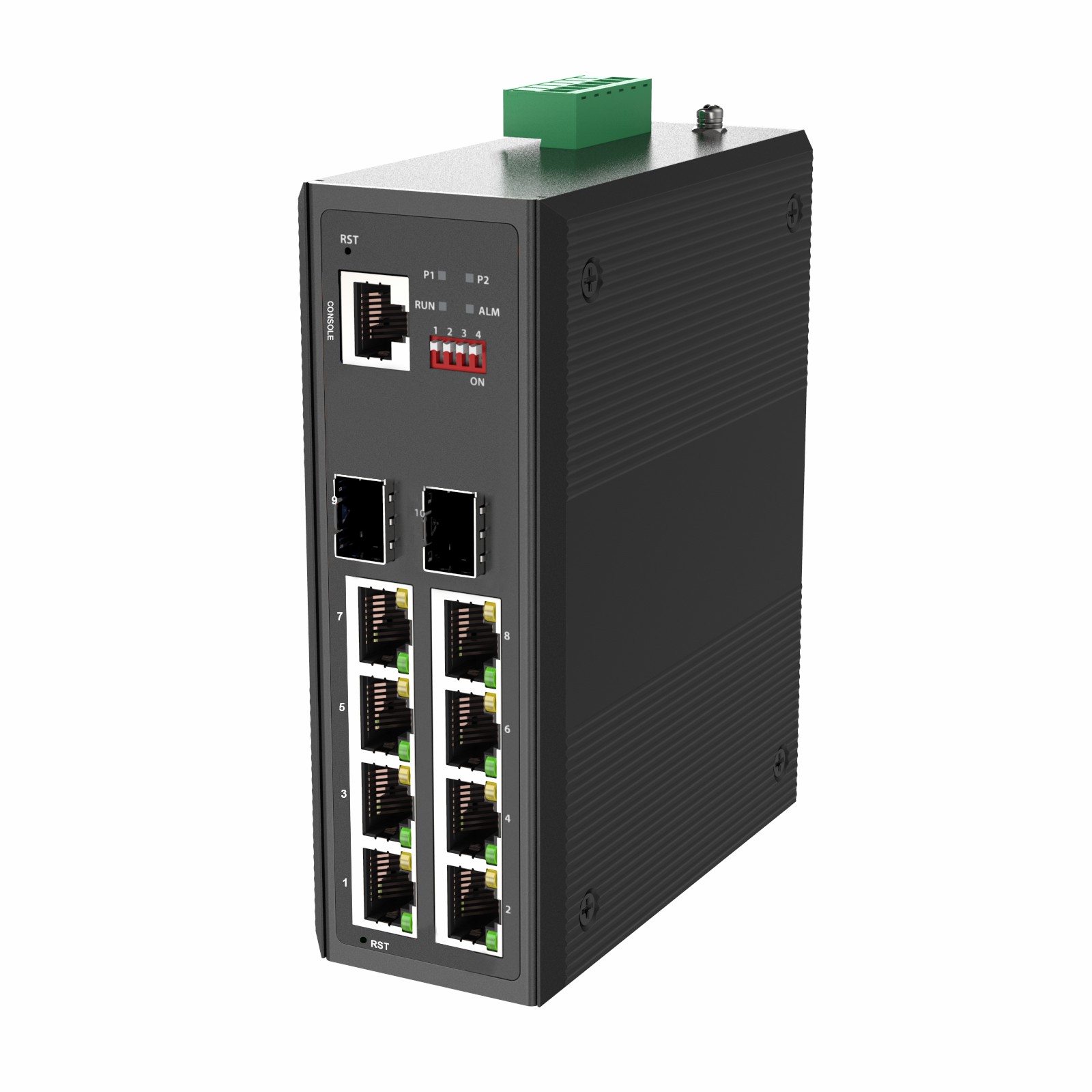
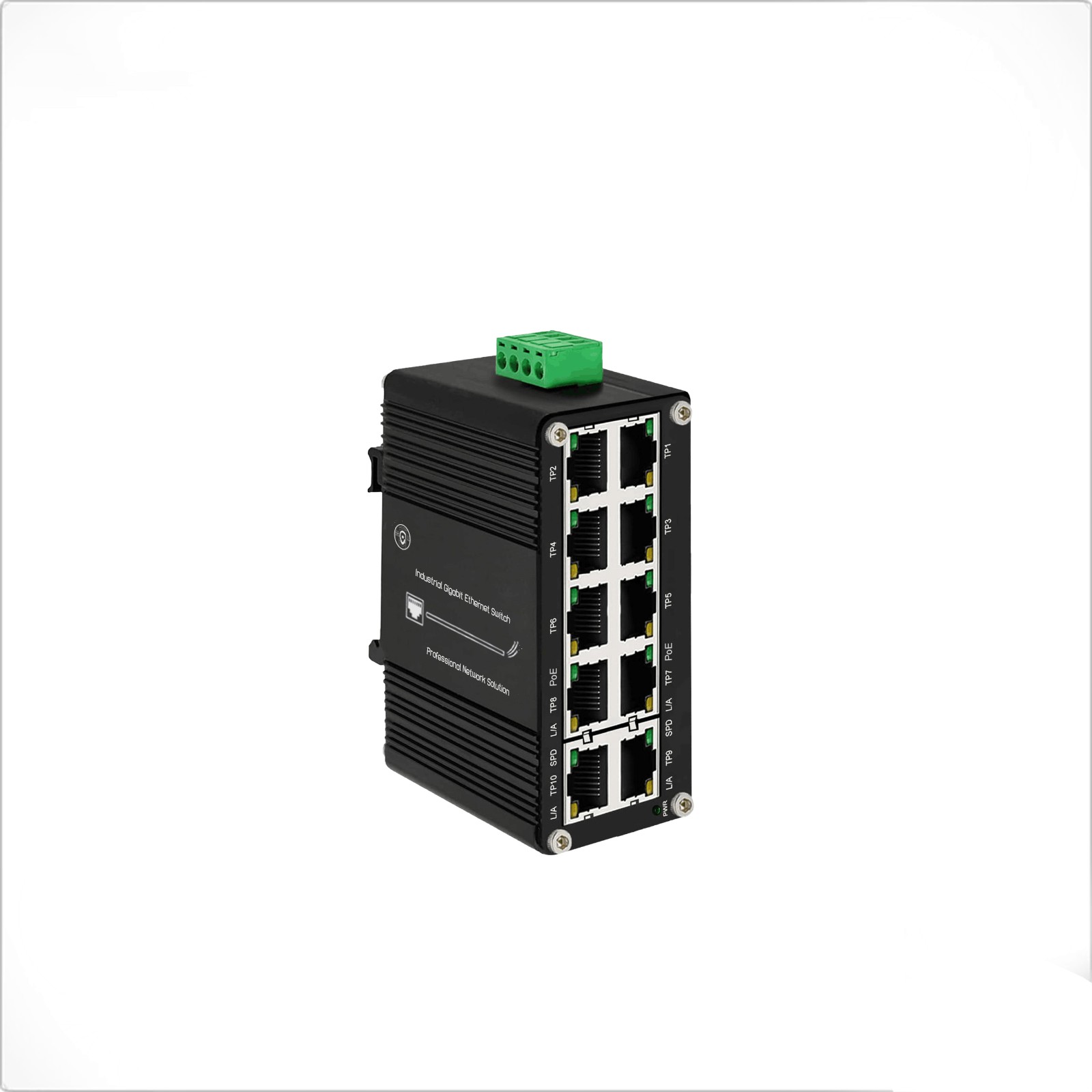
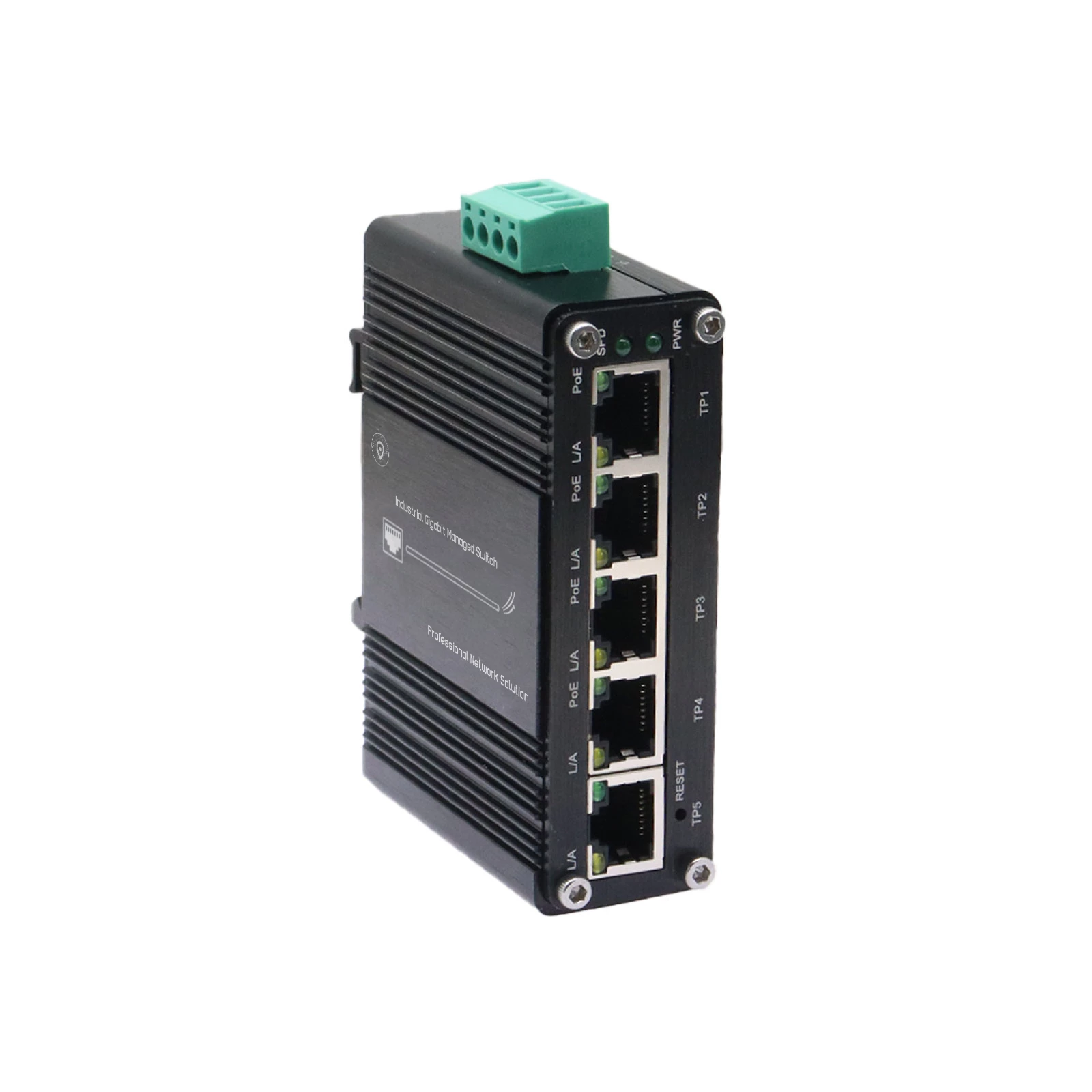
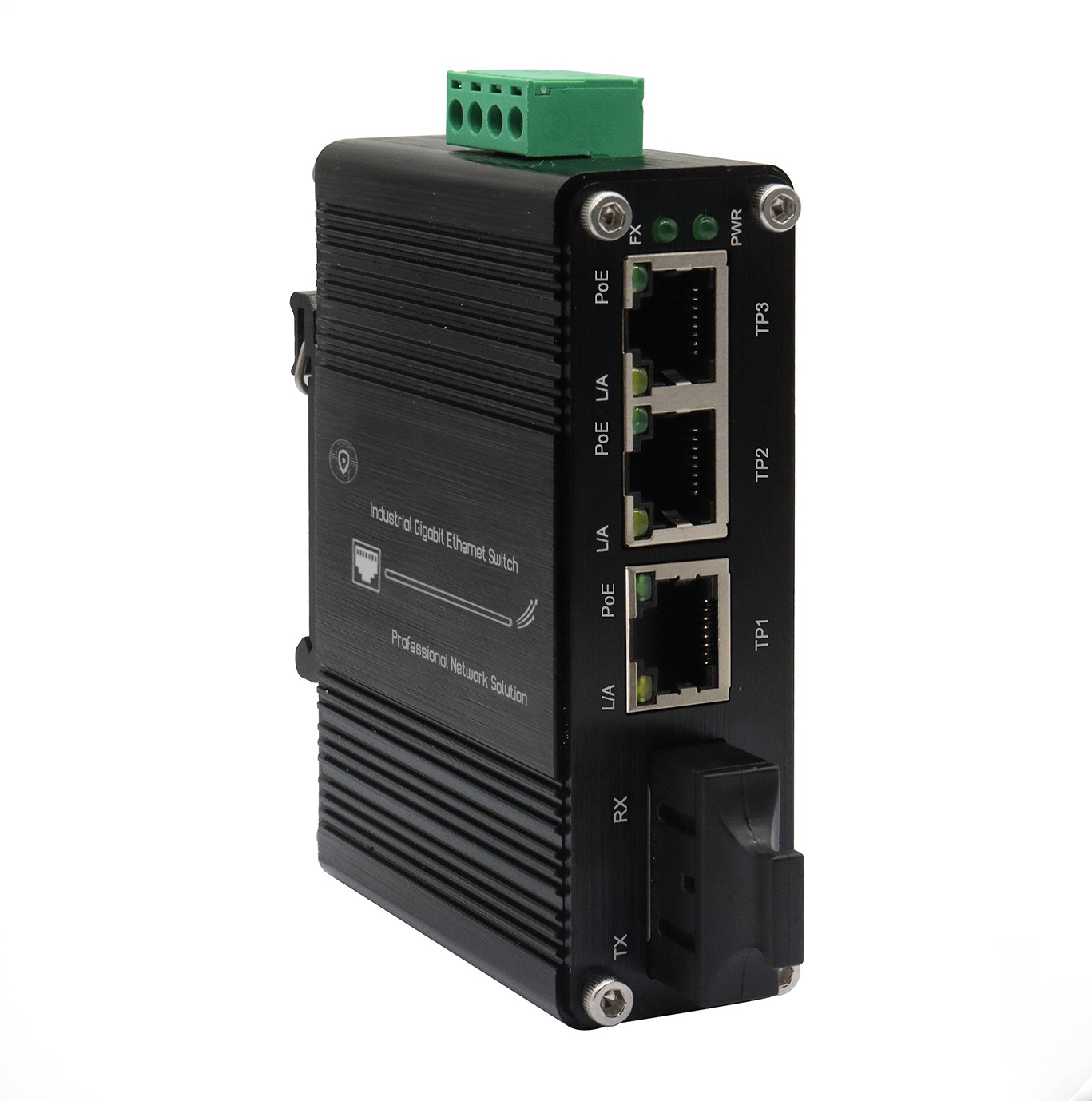
An Industrial Ethernet Switch provides the network connectivity required to connect production equipment and Industrial IoT devices. With Gigabit Ethernet, fiber uplinks, VLAN, QoS, network management, and redundancy features, industrial Ethernet switches can provide a strong networking foundation for smart factories.
What Is a Smart Factory Network?
A smart factory network connects production equipment, control systems, sensors, computers, and data platforms so that information can move efficiently throughout the manufacturing environment.
A typical smart factory may include:
PLC controllers
HMI terminals
Industrial PCs
Robots
Machine vision cameras
Sensors
Remote I/O
Variable frequency drives
SCADA systems
Industrial servers
IoT gateways
Cloud or data platforms
Industrial Ethernet switches connect these devices and help create a structured communication network.
Why Industrial Ethernet Is Important for Smart Manufacturing
Traditional factory networks were often designed around individual production machines. Modern smart factories require communication between machines, production lines, control systems, and higher-level data platforms.
This creates several networking requirements.
Reliable Communication
Production equipment must maintain stable communication to support monitoring, control, and data collection.
High Bandwidth
Machine vision, production monitoring, industrial PCs, and other applications can generate significant amounts of network traffic.
Gigabit Ethernet and high-speed fiber uplinks can provide the bandwidth required for modern manufacturing networks.
Network Segmentation
Different production systems may require separate network segments.
VLAN technology can help organize network traffic and separate different types of devices.
Network Visibility
As the number of connected devices increases, network administrators need better visibility into network conditions.
Managed industrial Ethernet switches can provide monitoring and management functions to simplify network maintenance.
How Industrial Ethernet Switches Connect a Smart Factory
A smart factory network can be organized into several layers.
Device Layer
This layer includes sensors, actuators, meters, machine vision devices, and other field equipment.
Control Layer
PLCs, controllers, drives, and remote I/O systems operate at the control level.
Production Layer
Industrial PCs, HMIs, robots, and production equipment exchange operational data through the network.
Supervisory Layer
SCADA systems and monitoring platforms collect information from production equipment and provide centralized visualization.
Management and Data Layer
Production data can be transferred to industrial servers, MES platforms, analytics systems, or other factory management applications.
Industrial Ethernet switches provide communication between these layers.
Key Features for Smart Factory Ethernet Networks
Gigabit Ethernet Ports
Gigabit Ethernet provides higher bandwidth for modern industrial applications and helps support increasing numbers of connected devices.
SFP Fiber Uplinks
Fiber uplinks can connect different production areas, workshops, control rooms, and factory buildings.
They are especially useful for long-distance communication and environments with significant electromagnetic interference.
VLAN
VLAN enables logical network segmentation without requiring separate physical networks.
For example, a factory may create separate VLANs for:
Production equipment
SCADA systems
CCTV
Engineering computers
Network management
Industrial IoT devices
QoS
QoS can prioritize important network traffic when multiple applications share the same Ethernet infrastructure.
This is particularly useful when automation data and high-bandwidth applications operate on the same network.
SNMP
SNMP provides network monitoring capabilities for managed industrial Ethernet switches.
Network administrators can monitor switch status, port activity, and other network information from a centralized management platform.
Ring Redundancy
Smart factories often require high network availability.
Industrial Ethernet switches supporting ring redundancy can provide an alternative communication path if a network connection fails, helping reduce network downtime.
Managed vs. Unmanaged Industrial Ethernet Switches
Unmanaged Switches
Unmanaged industrial Ethernet switches are suitable for simple machine-level applications.
They provide plug-and-play Ethernet connectivity without requiring advanced network configuration.
Typical applications include:
Small production machines
Simple automation systems
Basic sensor networks
Small equipment networks
Managed Switches
Managed industrial Ethernet switches are better suited to larger smart factory networks.
They may support:
VLAN
QoS
SNMP
IGMP Snooping
Network diagnostics
Ring redundancy
Port management
Traffic control
These functions provide greater flexibility when the factory network becomes larger and more complex.
Industrial Ethernet for Machine-to-Machine Communication
Smart manufacturing depends heavily on communication between machines.
For example, a production line may include:
PLC → Industrial Ethernet Switch → Robot → Vision System → Industrial PC → SCADA
The Ethernet network allows these devices to exchange production information.
A reliable industrial switch can help provide stable communication between equipment while allowing additional devices to be integrated as the factory expands.
Industrial Ethernet Switches for Machine Vision
Machine vision systems are increasingly used for automated inspection, quality control, measurement, and positioning.
Industrial cameras can generate large amounts of image data. This makes network bandwidth an important consideration.
Gigabit Ethernet ports and high-speed fiber uplinks can help support machine vision applications while providing connectivity between cameras, industrial PCs, and production systems.
Industrial Ethernet Switches for Industrial IoT
Industrial IoT connects traditional production equipment with data collection and analytics systems.
An industrial Ethernet switch can connect:
Sensors
PLCs
IoT gateways
Industrial PCs
Data acquisition equipment
SCADA systems
Edge computing devices
This allows production information to move from the factory floor to higher-level monitoring and analytics systems.
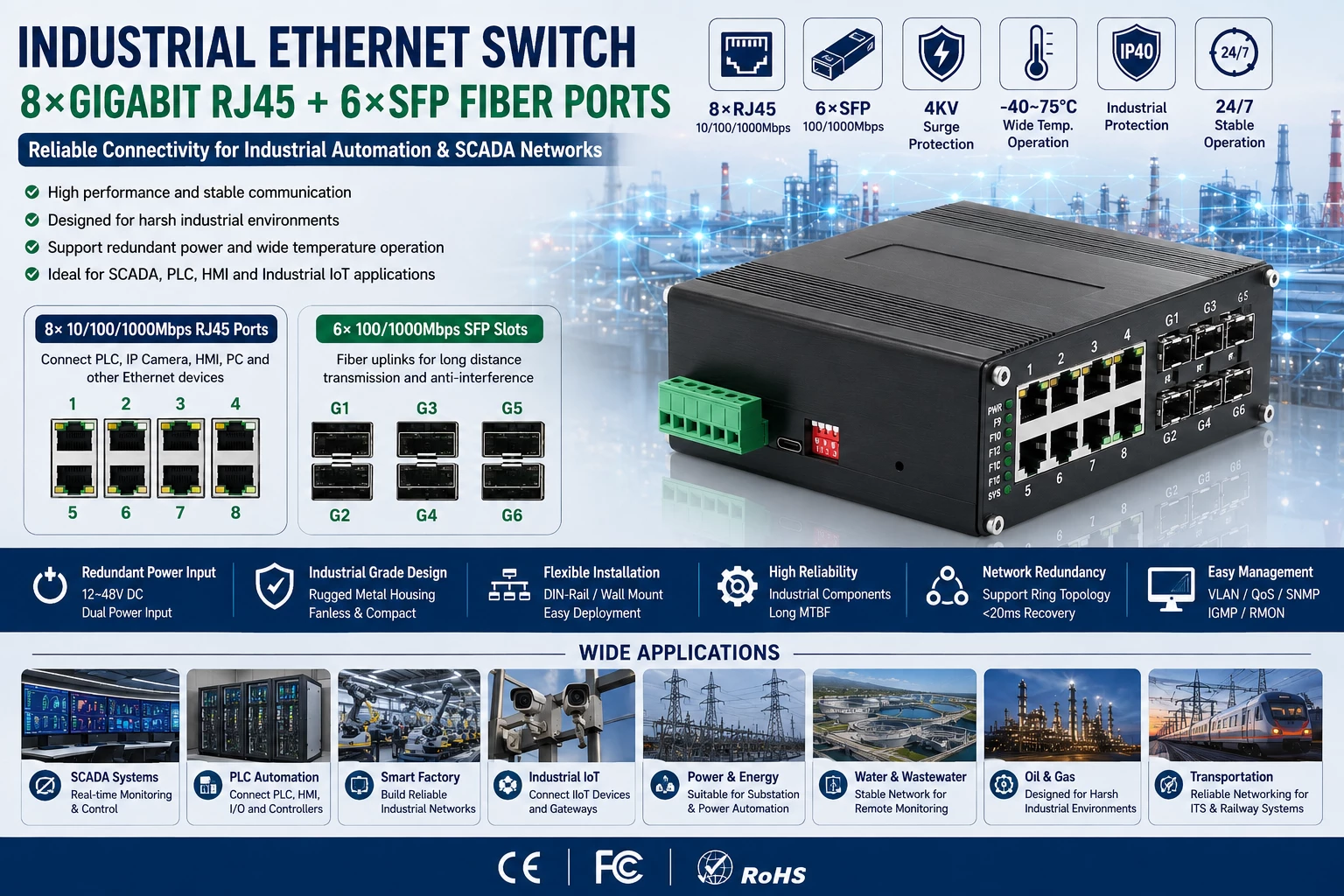
Industrial Ethernet Switches for Different Smart Factory Applications
Automated Production Lines
Industrial Ethernet switches connect PLCs, sensors, drives, robots, and monitoring systems across automated production lines.
Robotic Manufacturing
Robots and controllers require reliable Ethernet communication for production coordination and monitoring.
Machine Vision Inspection
High-speed Ethernet connectivity supports communication between industrial cameras and vision-processing computers.
Predictive Maintenance
Sensors can collect equipment data and transfer information through industrial networks to monitoring and analytics systems.
Warehouse Automation
Automated conveyors, robotic systems, scanners, and controllers can communicate through industrial Ethernet networks.
Process Manufacturing
Industrial Ethernet switches can connect distributed control equipment, sensors, PLCs, and SCADA systems in process industries.
Why Use Industrial Ethernet Switches in Smart Factories?
Smart factories may operate continuously and contain equipment distributed across large production areas.
Industrial Ethernet switches can provide advantages such as:
Industrial Reliability: Designed for demanding manufacturing environments.
Flexible Connectivity: Support copper Ethernet and fiber optic communication.
Network Management: Managed models provide VLAN, QoS, SNMP, and other network functions.
High Availability: Redundancy features can help reduce the impact of network failures.
Scalability: Additional switches and devices can be integrated as production networks expand.
Industrial Deployment: Rugged construction and wide-temperature options are available for different factory environments.
How to Choose an Industrial Ethernet Switch for a Smart Factory
Before selecting a switch, evaluate the following factors.
Port Count
Determine the number of PLCs, robots, sensors, cameras, PCs, and other devices that need network connectivity.
Network Speed
Select Fast Ethernet, Gigabit Ethernet, or higher-speed uplinks based on application requirements.
Fiber Connectivity
Consider SFP or SFP+ uplinks when connecting remote production areas or building a high-speed industrial backbone.
Network Management
Managed switches are recommended when the project requires VLAN, QoS, SNMP, diagnostics, or traffic management.
Redundancy
For production networks where downtime can affect manufacturing operations, consider industrial switches with network redundancy functions.
Environmental Requirements
Check operating temperature, power input, housing construction, and installation conditions before deployment.
Building a Future-Ready Smart Factory Network
A smart factory network should not only satisfy today's connectivity requirements but also allow future expansion.
As factories add more sensors, machines, cameras, robots, and Industrial IoT devices, the number of network connections will continue to increase.
A scalable industrial Ethernet architecture can make it easier to add:
New production lines
Additional sensors
Industrial cameras
Edge computing devices
IoT gateways
Monitoring systems
Remote management equipment
Choosing the right industrial Ethernet switches at the beginning of a project can therefore reduce the need for major network restructuring later.
Industrial PoE Switch | Managed PoE Switch | Gigabit PoE Switch | DIN Rail PoE Switch | Industrial Ethernet Switch | Smart Transportation Network | Traffic Monitoring System | Outdoor PoE Switch | PoE for CCTV | Fiber Uplink PoE Switch